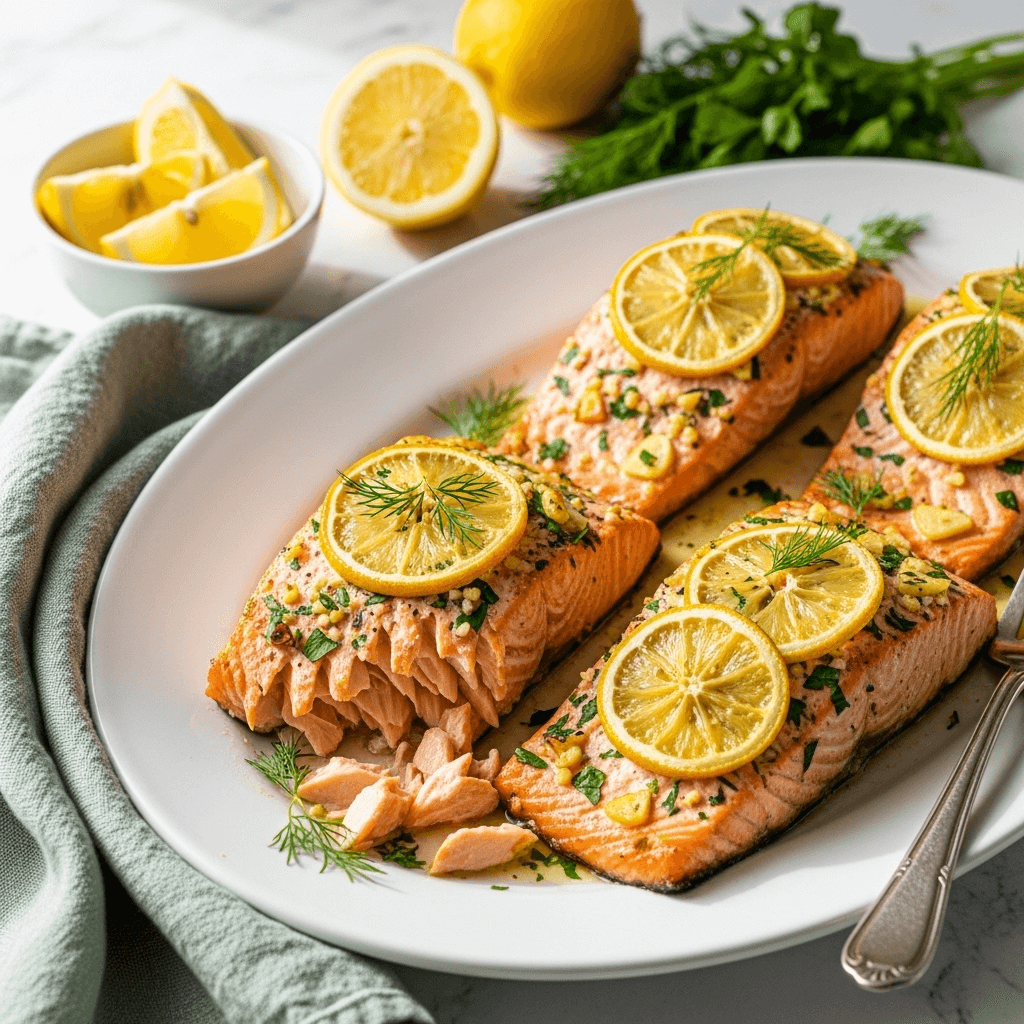

If you’re looking for a simple yet elegant dinner that comes together in under 30 minutes, this baked salmon with lemon recipe is about to become your new favorite weeknight staple. Tender, flaky salmon fillets infused with bright lemon flavor, aromatic herbs, and just the right touch of garlic create a restaurant-quality meal that’s surprisingly easy to make at home.
This healthy baked salmon recipe is perfect for busy weeknights when you want something nutritious and delicious without spending hours in the kitchen. It’s also impressive enough to serve to dinner guests, making it ideal for date nights, holiday meals, or special occasions. The best part? You only need a handful of simple ingredients and one baking dish to create this show-stopping main course.
Whether you’re a seasoned cook or just starting your culinary journey, this easy baked salmon with lemon delivers consistent, foolproof results every single time. The gentle oven heat cooks the fish to perfection while keeping it moist and tender, and the fresh lemon adds a bright, zesty flavor that complements the rich salmon beautifully. Pair it with your favorite sides, and you’ve got a complete, balanced meal that’s as nutritious as it is delicious.
History / Background
Salmon has been a prized food source for thousands of years, particularly among indigenous peoples of the Pacific Northwest and coastal regions worldwide. Native American tribes along the Columbia River and Alaska have celebrated salmon as a sacred fish, central to their culture, ceremonies, and survival for over 10,000 years. The annual salmon runs were events of great importance, and traditional cooking methods included smoking, grilling over open fires, and baking in cedar planks.
The pairing of fish with citrus, particularly lemon, has deep roots in Mediterranean cuisine dating back to ancient times. When lemons were introduced to Europe from Asia around the first century AD, they quickly became a staple in Greek, Italian, and Spanish cooking. The acidic brightness of lemon was discovered to not only enhance the flavor of fish but also help break down proteins, making the fish more tender and reducing any strong fishy flavors.
Baked salmon with lemon as we know it today is a beautiful fusion of these culinary traditions. While salmon is native to the Pacific Northwest and Atlantic coasts, the Mediterranean-style preparation with lemon, olive oil, and herbs has become one of the most popular ways to prepare this nutritious fish worldwide. This cooking method gained particular popularity in American home kitchens during the health-conscious movement of the 1980s and 1990s, when salmon’s omega-3 fatty acids and heart-healthy benefits became widely recognized.
Today, baked salmon with lemon represents the perfect marriage of nutrition and flavor. It’s a dish that honors the natural qualities of fresh salmon while enhancing it with simple, time-tested ingredients that let the fish shine. From coastal fishing villages to urban apartments, this recipe has become a global favorite that transcends cultural boundaries.
Why You’ll Love This Recipe
This baked salmon with lemon recipe is everything you want in a weeknight dinner and more. It strikes the perfect balance between being incredibly simple to prepare while delivering sophisticated, restaurant-quality flavors that will impress everyone at your table.
Here’s why this recipe will become your go-to salmon dish:
- Ready in Just 25 Minutes – From prep to plate, you’ll have a complete dinner in less than half an hour
- Healthy and Nutritious – Packed with omega-3 fatty acids, protein, and essential vitamins with no added junk
- Minimal Cleanup – Everything bakes in one dish, making cleanup a breeze
- Budget-Friendly – Uses simple, affordable ingredients without compromising on flavor
- Foolproof Method – Nearly impossible to mess up, even for beginner cooks
- Naturally Gluten-Free and Keto-Friendly – Fits multiple dietary preferences without modifications
- Impressive Yet Easy – Looks and tastes like something from an upscale restaurant
- Versatile and Customizable – Easy to adjust flavors and pair with endless side dish options
- Family-Friendly – Even picky eaters tend to love this mild, flavorful preparation
- Meal Prep Friendly – Makes excellent leftovers for lunch bowls and salads
Ingredient Notes
Let’s dive into each ingredient that makes this baked salmon with lemon so delicious, and I’ll share some helpful substitution tips along the way.
Salmon Fillets – The star of the show! Choose fresh, high-quality salmon fillets with vibrant color and firm flesh. Wild-caught salmon (like Sockeye, Coho, or King) has a deeper flavor and firmer texture, while farm-raised Atlantic salmon is milder and more affordable. Both work beautifully in this recipe. Look for fillets that are about 1 to 1.5 inches thick for even cooking. Skin-on or skinless both work, though skin-on holds together better during baking.
Fresh Lemons – Essential for that bright, zesty flavor! You’ll need both lemon juice and lemon slices. Fresh lemon juice is crucial here – bottled simply doesn’t have the same vibrant flavor. Choose lemons that feel heavy for their size and have thin, smooth skin, as these are juicier. If you don’t have lemons, fresh lime juice can work in a pinch, though the flavor profile will be slightly different.
Olive Oil – A good-quality extra virgin olive oil adds richness and helps the salmon stay moist during baking. It also helps the seasonings adhere to the fish. You can substitute with avocado oil for a more neutral flavor, or melted butter for a richer, more indulgent version.
Garlic – Fresh minced garlic adds aromatic depth that complements both the salmon and lemon perfectly. Use fresh cloves rather than jarred minced garlic for the best flavor. If you’re not a big garlic fan, you can reduce the amount or substitute with garlic powder (use about half a teaspoon).
Fresh Herbs – Fresh dill, parsley, or thyme work beautifully with salmon. Dill is the classic pairing with its delicate, slightly sweet flavor. Parsley adds freshness, and thyme brings earthy notes. Use whatever you have on hand or prefer. If you only have dried herbs, use one-third the amount called for since dried herbs are more concentrated.
Salt and Black Pepper – These basic seasonings enhance all the other flavors. Use fine sea salt or kosher salt, and freshly cracked black pepper for the best taste. Don’t skimp on seasoning – salmon needs a good amount of salt to bring out its natural flavors.
Optional Additions – Consider adding paprika for color and mild smoky flavor, red pepper flakes for heat, or a drizzle of honey for subtle sweetness that balances the lemon’s acidity.
Equipment Needed
You won’t need any special equipment to make this simple baked salmon recipe. Here’s what you’ll use:
- Baking Dish or Sheet Pan – A 9×13-inch baking dish or rimmed sheet pan works perfectly. Glass, ceramic, or metal all work fine
- Aluminum Foil or Parchment Paper – For lining the pan to make cleanup easier and prevent sticking
- Small Mixing Bowl – To combine the olive oil, lemon juice, and seasonings
- Sharp Knife – For slicing lemons and mincing garlic
- Cutting Board – For prep work
- Measuring Spoons – For accurate seasoning measurements
- Pastry Brush (Optional) – Helpful for evenly brushing the olive oil mixture over the salmon
- Instant-Read Thermometer (Optional but Recommended) – Takes the guesswork out of checking doneness
- Oven Mitts – For safely handling the hot baking dish
Baked Salmon With Lemon
- Total Time: 25 minutes
- Yield: 4 servings 1x
- Diet: Gluten Free
Description
This easy baked salmon with lemon is perfectly tender, flaky, and bursting with bright citrus flavor. Ready in just 25 minutes with minimal cleanup, it’s a healthy weeknight dinner that tastes like it came from a restaurant. Simple ingredients, foolproof method, and delicious results every time!
Ingredients
- 4 salmon fillets (6 ounces each, about 1–1.5 inches thick)
- 2 tablespoons extra virgin olive oil
- 2 tablespoons fresh lemon juice (about 1 lemon)
- 3 cloves garlic, minced
- 1 teaspoon salt (or to taste)
- ½ teaspoon black pepper
- 1 teaspoon fresh dill, chopped (or ½ teaspoon dried dill)
- 1 tablespoon fresh parsley, chopped
- 1 lemon, thinly sliced into rounds
- Optional: ½ teaspoon paprika for color
- Optional: red pepper flakes for heat
Instructions
Step 1: Preheat the Oven
Preheat your oven to 400°F (200°C). Line a large baking dish or rimmed baking sheet with aluminum foil or parchment paper for easy cleanup. Lightly spray or brush with a small amount of olive oil to prevent sticking.
Step 2: Prepare the Salmon
Pat the salmon fillets completely dry with paper towels. This is important for getting a nice surface on the fish and helping the seasonings stick. Place the fillets skin-side down (if using skin-on) in the prepared baking dish, spacing them about an inch apart so air can circulate.
Step 3: Make the Lemon Garlic Mixture
In a small bowl, whisk together the olive oil, fresh lemon juice, minced garlic, salt, pepper, dill, and paprika if using. Mix until well combined and the salt has dissolved slightly.
Step 4: Season the Salmon
Brush or drizzle the lemon garlic mixture evenly over each salmon fillet, making sure to coat the top and sides. Use all of the mixture – don’t be shy! This is where all the flavor comes from. Let the salmon sit for 2-3 minutes to allow the flavors to start penetrating.
Step 5: Add Lemon Slices
Place 2-3 thin lemon slices on top of each fillet. These will infuse more lemon flavor and create a beautiful presentation. You can also tuck a few slices underneath or around the salmon.
Step 6: Bake the Salmon
Place the baking dish in the preheated oven and bake for 12-15 minutes, depending on thickness. The salmon is done when it reaches an internal temperature of 145°F (63°C) at the thickest part and flakes easily with a fork. The flesh should be opaque and slightly pink in the center. Start checking at 12 minutes to avoid overcooking.
Step 7: Broil for Extra Color (Optional)
If you want a slightly caramelized top, turn on the broiler for the last 1-2 minutes of cooking. Watch carefully to prevent burning. This step is optional but adds a nice finishing touch.
Step 8: Rest and Serve
Remove the salmon from the oven and let it rest for 2-3 minutes. This allows the juices to redistribute. Garnish with fresh chopped parsley and serve immediately with your favorite sides. Drizzle any pan juices over the salmon for extra flavor.
Notes
- Salmon thickness affects cooking time: thinner fillets (¾ inch) need about 10-12 minutes, while thicker fillets (1.5 inches) may need 15-17 minutes
- Don’t overcook! Salmon continues cooking after you remove it from the oven, so take it out when it’s just barely done
- If your fillets are different sizes, you may need to remove smaller ones earlier
- Room temperature salmon cooks more evenly – let it sit out for 15 minutes before baking if time allows
- For crispier skin (if using skin-on), place the baking dish under the broiler for 1-2 minutes after baking
- Prep Time: 10 minutes
- Cook Time: 15 minutes
- Category: Dinner
- Method: Baking
- Cuisine: American
Nutrition
- Serving Size: 1 salmon fillet (6 oz)
- Calories: 340
- Sugar: 0g
- Sodium: 650mg
- Fat: 22g
- Saturated Fat: 4g
- Unsaturated Fat: 16g
- Trans Fat: 0g
- Carbohydrates: 2g
- Fiber: 0g
- Protein: 34g
- Cholesterol: 95mg
Tips & Variations
This baked salmon recipe is wonderfully versatile and can be customized in countless delicious ways. Here are some ideas to make it your own:
Flavor Variations:
- Honey Garlic Salmon: Add 1-2 tablespoons honey to the lemon mixture for a sweet and savory glaze
- Mediterranean Style: Add sun-dried tomatoes, olives, and capers to the baking dish
- Asian-Inspired: Swap lemon for lime and add a splash of soy sauce and fresh ginger
- Cajun Spiced: Add Cajun seasoning blend instead of just salt and pepper for a spicy kick
- Maple Dijon: Mix in 1 tablespoon each of maple syrup and Dijon mustard
Herb Options:
- Substitute dill with fresh basil, cilantro, or tarragon
- Try a herb blend like Italian seasoning or herbs de Provence
- Add fresh rosemary and thyme for an earthy, aromatic version
- Mix in chopped fresh chives for a mild onion flavor
Vegetable Additions:
- Add cherry tomatoes and asparagus to the baking dish for a complete one-pan meal
- Layer thin sliced potatoes or zucchini underneath the salmon
- Roast Brussels sprouts or green beans alongside the fish
- Add a bed of sliced onions and bell peppers
Sauce Options:
- Serve with creamy dill sauce, tzatziki, or lemon butter sauce
- Drizzle with balsamic glaze after baking
- Top with homemade pesto or chimichurri
- Make a quick pan sauce with the drippings, white wine, and butter
Pro Chef Tips
Want to take your baked salmon from good to absolutely exceptional? Here are insider secrets from professional kitchens:
Buy Quality Salmon: The single biggest factor in delicious salmon is starting with high-quality fish. Look for bright, firm flesh with no brown spots or strong fishy smell. If possible, ask your fishmonger when it was received – fish that’s 1-2 days old tastes significantly better than week-old fish. Wild-caught typically has better flavor and texture, but good quality farm-raised can be excellent too.
Bring to Room Temperature: Take your salmon out of the refrigerator 15-20 minutes before cooking. Cold fish straight from the fridge cooks unevenly – the outside overcooks while the inside stays underdone. Room temperature fish cooks evenly throughout for perfect results.
Dry Thoroughly: This is crucial! Pat the salmon completely dry with paper towels before seasoning. Moisture on the surface prevents proper browning and makes seasonings slide off. A dry surface also helps create a slightly firmer exterior texture that contrasts nicely with the tender interior.
Season Generously: Salmon can handle bold seasoning. Don’t be timid with salt – the fish needs it to bring out its natural flavors. Season just before cooking rather than letting salted fish sit, which can draw out moisture.
Use a Thermometer: The difference between perfectly cooked and overcooked salmon is just a few degrees. Invest in an instant-read thermometer and remove salmon from the oven when it reaches 140-145°F. The residual heat will bring it to perfect doneness while it rests. Most home cooks overcook salmon, making it dry and chalky.
Don’t Skip the Rest: Just like steak, salmon benefits from resting for 2-3 minutes after cooking. This allows the juices to redistribute throughout the fish rather than running out when you cut into it. Your salmon will be noticeably more moist and tender.
Keep It Simple: High-quality salmon doesn’t need much. Let the natural flavor of the fish shine through with simple seasonings. Overcomplicating with too many flavors can mask the delicate taste of good salmon.
Common Mistakes to Avoid
Even a simple recipe like baked salmon can go wrong if you’re not careful. Here are the most common pitfalls and how to avoid them:
Overcooking the Salmon – This is the number one mistake! Overcooked salmon is dry, chalky, and loses its delicate texture. Remember that salmon continues cooking after you remove it from the oven, so take it out when it’s just barely done (140-145°F internal temp). It should still be slightly translucent in the very center. Many people think salmon needs to be cooked to 165°F like chicken, but that’s way too much for fish.
Not Drying the Salmon – Skipping the step of patting salmon dry creates multiple problems. The moisture prevents seasonings from sticking, inhibits browning, and can make the fish steam rather than roast. Always use paper towels to thoroughly dry both sides before seasoning.
Using Old or Low-Quality Fish – No amount of seasoning can save old, poor-quality salmon. Fish should smell like the ocean (clean and fresh), not fishy. If it smells strongly fishy or ammonia-like, don’t use it. The flesh should be firm and spring back when pressed, not mushy or falling apart.
Crowding the Baking Dish – If you place salmon fillets too close together, they’ll steam instead of roast. Leave at least an inch of space between fillets so hot air can circulate. This helps achieve a better texture and more even cooking.
Inconsistent Fillet Sizes – If your salmon pieces are different thicknesses, they’ll cook at different rates. Try to choose fillets that are similar in size and thickness, or be prepared to remove smaller ones earlier. Thick fillets (over 1.5 inches) may need a few extra minutes, while thin fillets (under 1 inch) will cook faster.
Storage & Meal Prep
Baked salmon stores well and makes excellent leftovers for quick lunches and meal prep throughout the week.
Storing Cooked Salmon: Once the salmon has cooled to room temperature (within 2 hours of cooking), transfer it to an airtight container. Store in the refrigerator for up to 3 days. Keep the salmon in larger pieces rather than flaking it apart – this helps it retain moisture better.
Reheating Instructions: The best way to reheat baked salmon without drying it out is gently in the oven. Preheat to 275°F, place salmon in a baking dish with a tablespoon of water or broth, cover tightly with foil, and heat for 10-15 minutes until warmed through. You can also reheat in the microwave on 50% power in 30-second intervals, but this method can dry out the fish more easily.
Cold Leftover Ideas: Honestly, leftover baked salmon is delicious served cold! Flake it over salads, mix into pasta salads, make salmon salad sandwiches, add to grain bowls, or serve on bagels with cream cheese. Cold salmon retains its moisture better than reheated, making these often the preferred ways to enjoy leftovers.
Food Safety Notes: Never leave cooked salmon at room temperature for more than 2 hours (1 hour if it’s over 90°F outside). Always store in the coldest part of your refrigerator (usually the back of the lowest shelf) and check that your fridge is at 40°F or below.
Make-Ahead & Freezer Notes
This recipe offers several make-ahead options that make weeknight dinners even easier.
Marinating in Advance: You can prepare the lemon garlic mixture and brush it on the salmon up to 4 hours before baking. Cover tightly with plastic wrap and refrigerate. Let it come to room temperature for 15 minutes before baking. Don’t marinate longer than 4 hours, as the acid in the lemon can start to “cook” the fish and affect its texture.
Freezing Raw Seasoned Salmon: For ultimate convenience, you can prepare individual salmon fillets with the seasoning mixture, wrap each tightly in plastic wrap, then place in a freezer bag. Freeze for up to 2 months. To cook, thaw overnight in the refrigerator, let come to room temperature, and bake as directed. Note that previously frozen salmon may release more liquid during cooking.
Freezing Cooked Salmon: While fresh is always best, you can freeze cooked salmon if needed. Let it cool completely, wrap tightly in plastic wrap and then aluminum foil, and freeze for up to 2 months. Thaw overnight in the refrigerator. The texture will be slightly drier than fresh, but it’s still good for mixing into pasta dishes, salads, or making salmon cakes.
Best Practices for Frozen Salmon: If you’re starting with frozen raw salmon from the grocery store, thaw it properly in the refrigerator overnight, never at room temperature. Once thawed, don’t refreeze raw salmon. Use within 1-2 days of thawing for best quality.
Meal Prep Strategy: For meal prep, I recommend baking multiple fillets on Sunday and storing them separately. Use them cold throughout the week in salads and bowls, or reheat gently as needed. Pair with pre-prepped sides like roasted vegetables, quinoa, or rice for complete grab-and-go meals.
Serving Suggestions
This baked salmon with lemon pairs beautifully with countless side dishes. Here are some of my favorite combinations:
Vegetable Sides: Serve with roasted asparagus, steamed broccoli, sautéed green beans, roasted Brussels sprouts, or honey-glazed carrots. The fresh vegetables complement the rich salmon perfectly and create a balanced, colorful plate.
Starch Sides: Pair with garlic mashed potatoes, roasted baby potatoes, wild rice pilaf, quinoa, couscous, or cauliflower rice for a low-carb option. These sides soak up the delicious lemon juices from the salmon.
Salad Pairings: Serve alongside a crisp Caesar salad, Greek salad, arugula salad with lemon vinaigrette, cucumber tomato salad, or simple mixed greens. The fresh, acidic salads cut through the richness of the salmon.
Grain Bowls: Create a complete meal bowl with salmon over a base of quinoa or rice, topped with roasted vegetables, avocado, and a drizzle of tahini or yogurt sauce. This makes an excellent lunch option too.
Pasta Dishes: Flake leftover salmon into lemony pasta, creamy fettuccine, or garlic butter noodles for a quick and elegant dinner. The salmon adds protein and turns a simple pasta into a complete meal.
Sauce Pairings: While this salmon is delicious on its own, you can elevate it with dill sauce, tzatziki, lemon butter sauce, hollandaise, or a simple squeeze of fresh lemon. Keep sauces on the side so everyone can customize.
Bread Options: Serve with crusty bread, garlic bread, or dinner rolls to soak up the flavorful juices. A slice of sourdough or ciabatta alongside makes the meal feel more complete.
FAQs Section
Q: How do I know when salmon is done cooking?
A: The best way is using an instant-read thermometer – salmon is perfectly done at 145°F in the thickest part. Visually, the flesh should be opaque and flake easily with a fork, but still be slightly pink in the very center. If it’s completely opaque throughout and flaking apart on its own, it’s overcooked. When in doubt, slightly underdone is better than overdone since it continues cooking after removal from the oven.
Q: Should I remove the skin from salmon before baking?
A: It’s totally your preference! Skin-on salmon holds together better during cooking and the skin creates a barrier that helps keep the flesh moist. If you leave the skin on, it won’t be crispy in the oven (you’d need to pan-sear for that), but you can easily peel it off after cooking if you don’t want to eat it. Skinless fillets work perfectly fine too – they just need a bit more attention to prevent overcooking.
Q: Can I use frozen salmon for this recipe?
A: Yes, but you must thaw it properly first. Never bake salmon from frozen – it won’t cook evenly. Thaw frozen salmon overnight in the refrigerator (8-12 hours), and pat it very dry before seasoning. Previously frozen salmon may release more liquid during cooking, so you might want to drain excess liquid halfway through baking.
Q: Why is my salmon tough and dry?
A: Overcooked salmon is the most common culprit for dry, tough fish. Salmon should be removed from the oven when it’s just barely done (140-145°F) because residual heat continues cooking it. Also, make sure you’re not using salmon that’s too thin (under ¾ inch) as it overcooks very quickly. Lastly, check that your oven temperature is accurate – ovens that run hot can dry out fish faster than expected.
Q: Can I make this recipe with other types of fish?
A: Absolutely! This lemon garlic preparation works wonderfully with other fish like cod, halibut, mahi-mahi, sea bass, or Arctic char. Adjust cooking time based on thickness – delicate white fish like cod may only need 10-12 minutes, while thick halibut steaks might need 15-18 minutes. The same temperature guideline (145°F) applies to all fish.
Q: Do I need to flip the salmon while it’s baking?
A: No! One of the beauties of baking salmon is that you don’t need to flip it. The oven heat cooks it evenly from all sides. Flipping risks breaking the delicate fish and isn’t necessary. Just place it in the oven and let it bake undisturbed until done.
Q: What’s the white stuff that comes out of salmon when cooking?
A: That white substance is called albumin, a protein that’s naturally present in salmon. When the fish is heated, the albumin coagulates and pushes to the surface. It’s completely harmless and edible, though not particularly attractive. To minimize albumin, avoid overcooking (the most common cause), bring salmon to room temperature before cooking, and don’t cook at too high a temperature. You can also briefly brine the salmon in saltwater for 10 minutes before cooking to reduce albumin.
Conclusion
And there you have it – a foolproof recipe for the most delicious, tender, and flavorful baked salmon with lemon that you’ll ever make! This healthy dinner comes together in just 25 minutes with minimal cleanup, making it perfect for busy weeknights when you want something nutritious without the fuss. Yet it’s elegant enough to serve at your next dinner party or special occasion.
The beauty of this recipe lies in its simplicity. By letting high-quality salmon shine with just a few complementary ingredients – bright lemon, aromatic garlic, fresh herbs, and good olive oil – you create something truly special. No complicated techniques, no hard-to-find ingredients, just pure, delicious flavor that everyone at your table will love.
Whether you’re new to cooking fish or you’re a seasoned home cook, this baked salmon recipe delivers consistent, restaurant-quality results every single time. Plus, with all the variations and serving suggestions I’ve shared, you can make it dozens of different ways and never get bored.
Now it’s your turn to get in the kitchen and make this incredible baked salmon! I promise you’ll be amazed at how easy it is and how impressive the results are. Your family will think you spent hours on dinner when really it took less than half an hour.
I’d love to hear about your experience! Drop a comment below and let me know how your salmon turned out, what sides you served it with, or any creative variations you tried. And if this recipe becomes a favorite in your house (I’m betting it will!), please share it on Pinterest so other home cooks can discover it too. Save it to your favorite recipe boards and help spread the love for easy, healthy, delicious home cooking!
Happy cooking, friends! Here’s to many more delicious salmon dinners in your future!