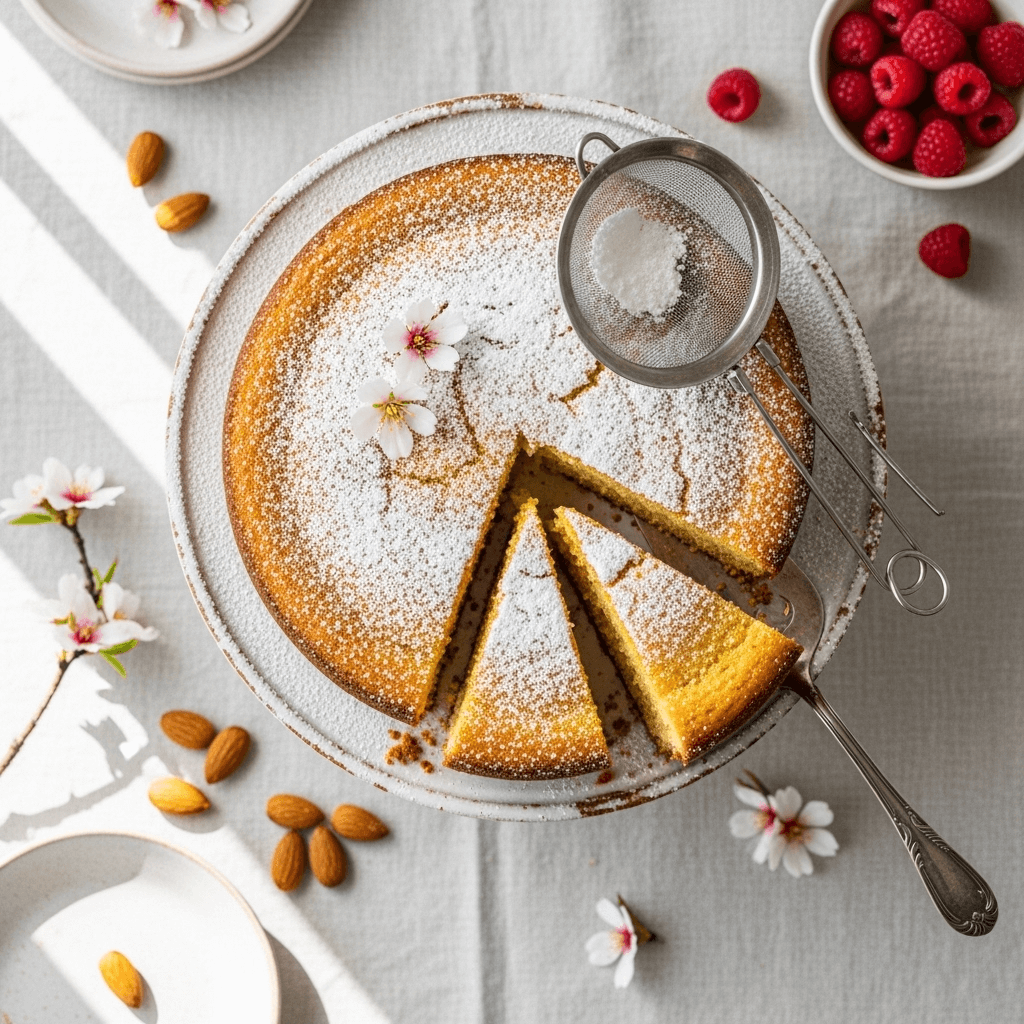

There’s something absolutely magical about a perfectly baked almond cake. This isn’t just any ordinary dessert—it’s a showstopper that combines the delicate, nutty flavor of almonds with a tender, melt-in-your-mouth crumb that’ll have everyone asking for seconds. Whether you’re planning an elegant afternoon tea, celebrating a special birthday, or simply craving something sweet on a lazy Sunday, this easy almond cake recipe delivers bakery-quality results right from your home kitchen.
What makes this almond cake truly special is its versatility. It’s fancy enough to serve at dinner parties yet simple enough for weeknight baking. The rich almond flavor pairs beautifully with fresh berries, a dusting of powdered sugar, or a dollop of whipped cream. Plus, it’s naturally gluten-friendly when made with almond flour, making it a crowd-pleaser for guests with dietary restrictions. This moist almond cake stays fresh for days, making it perfect for meal prep or gifting to loved ones.
History / Background
Almond cakes have graced tables across Europe for centuries, with each region adding its own delightful twist to this beloved dessert. The tradition of baking with almonds dates back to medieval times when almonds were considered a luxury ingredient reserved for special occasions and royal celebrations. In Spain, the famous “Tarta de Santiago” has been baked since the Middle Ages, marked with the cross of Saint James and served to pilgrims completing the Camino de Santiago.
France contributed the elegant “Gâteau Basque,” while Italy perfected the dense, moist “Torta Caprese” on the beautiful island of Capri. According to culinary legend, the Torta Caprese was created by accident when a baker forgot to add flour to a chocolate cake, resulting in a flourless wonder that’s still celebrated today. In Scandinavia, almond cakes became central to holiday celebrations, often featuring marzipan and delicate almond paste decorations.
The almond cake gained particular prominence during the Renaissance when European nobility showcased their wealth through elaborate desserts featuring expensive ingredients like almonds, which had to be imported from warmer climates. Jewish communities also embraced almond-based cakes as they were perfect for Passover celebrations when traditional flour couldn’t be used.
Today’s modern almond cake draws inspiration from all these rich traditions while adapting to contemporary baking techniques and dietary preferences. The rise of almond flour as a popular gluten-free alternative has given this classic dessert renewed popularity among health-conscious bakers who don’t want to sacrifice flavor for nutrition.
Why You’ll Love This Recipe
This homemade almond cake recipe has become an absolute favorite in kitchens across America, and once you taste it, you’ll understand why. The combination of almond flour and almond extract creates an incredibly moist texture that stays fresh for days, while the simple preparation method means you don’t need to be a professional baker to achieve stunning results.
Here’s why this recipe is a game-changer:
- Incredibly Simple – With just one bowl and basic ingredients, this comes together in under 15 minutes of prep time
- Naturally Gluten-Friendly – Made primarily with almond flour, it’s perfect for gluten-sensitive guests without compromising on taste or texture
- Budget-Friendly Elegance – Looks and tastes like an expensive bakery cake but costs a fraction of the price to make at home
- Make-Ahead Marvel – Tastes even better the next day, making it perfect for stress-free entertaining and party planning
- Customizable Base – Serves as the perfect canvas for countless flavor variations, from lemon zest to chocolate chips
- Stays Moist for Days – The high fat content from almonds keeps this cake tender and delicious all week long
- Impressive Presentation – The golden-brown top and delicate crumb look absolutely stunning with minimal decoration
- Family-Approved – Even picky eaters love the mild, sweet flavor and soft texture
Ingredient Notes
Understanding your ingredients is the secret to baking success. Here’s what you need to know about each component in this delicious almond cake:
Almond Flour – This is your star ingredient! Use blanched, finely ground almond flour (not almond meal, which is coarser) for the smoothest texture. Bob’s Red Mill or Kirkland brands work beautifully. The almond flour provides moisture, structure, and that signature nutty flavor. If you can’t find almond flour, you can make your own by grinding blanched almonds in a food processor, but store-bought ensures consistency.
All-Purpose Flour – A small amount helps give the cake structure and prevents it from being too dense. For a fully gluten-free version, substitute with a 1:1 gluten-free baking flour blend. Avoid using only almond flour without any binding flour, or your cake may fall apart.
Granulated Sugar – Sweetens the cake and helps create that beautiful golden crust. You can substitute with cane sugar for a slightly richer flavor, but avoid coconut sugar as it will make the cake too dense and dark.
Butter – Use unsalted butter at room temperature for even mixing. The butter adds richness and helps create a tender crumb. European-style butter with higher fat content will make an even more luxurious cake. For dairy-free baking, use high-quality plant-based butter sticks (not spreads).
Eggs – Room temperature eggs incorporate better and create more volume. They provide structure and moisture. Large eggs are standard—using extra-large will make the batter too wet.
Almond Extract – This amplifies the almond flavor dramatically. Use pure almond extract, not imitation, for the best taste. Start with the recommended amount as almond extract is potent; you can always add more but can’t take it away!
Vanilla Extract – Balances the almond flavor and adds depth. Pure vanilla extract is worth the investment for the best flavor profile.
Baking Powder – Ensures your cake rises beautifully and stays light and fluffy. Make sure it’s fresh (check the expiration date) or your cake won’t rise properly.
Salt – Don’t skip this! A pinch of salt enhances all the other flavors and prevents the cake from tasting flat or one-dimensional.
Milk or Buttermilk – Adds moisture and creates a tender crumb. Buttermilk will give you a slightly tangier flavor and more tender texture, while regular milk keeps it simpler. Whole milk works best, but 2% is fine. For dairy-free, use unsweetened almond milk.
Equipment Needed
Having the right tools makes baking so much easier! Here’s everything you’ll need for this almond cake recipe:
- 9-inch round cake pan or 9-inch springform pan – Springform makes removal easier, but regular pans work perfectly too
- Parchment paper – For lining the bottom of your pan to prevent sticking
- Large mixing bowl – For combining dry ingredients
- Medium mixing bowl – For wet ingredients
- Electric hand mixer or stand mixer – Makes creaming butter and sugar effortless (you can use a whisk, but it takes serious arm strength!)
- Measuring cups and spoons – For accurate ingredient measurements
- Fine-mesh sieve or flour sifter – Prevents lumps in your almond flour
- Rubber spatula – For scraping down bowl sides and folding ingredients gently
- Wire cooling rack – Essential for proper cooling
- Toothpick or cake tester – To check for doneness
- Oven thermometer (optional but recommended) – Ensures accurate baking temperature
- Offset spatula (optional) – Makes frosting or dusting with powdered sugar easier

Almond Cake Recipe
- Total Time: 50-55 minutes
- Yield: 8-10 servings 1x
- Diet: Gluten Free
Description
This moist and fluffy almond cake features a delicate crumb and rich almond flavor that’s perfect for any occasion. Easy to make with simple ingredients, it’s elegant enough for special celebrations yet simple enough for everyday baking.
Ingredients
- 1½ cups almond flour (finely ground, blanched)
- ½ cup all-purpose flour (or gluten-free 1:1 baking flour)
- 1 cup granulated sugar
- ½ cup (1 stick) unsalted butter, softened to room temperature
- 3 large eggs, room temperature
- 1½ teaspoons almond extract
- 1 teaspoon vanilla extract
- 1½ teaspoons baking powder
- ¼ teaspoon salt
- ⅓ cup whole milk or buttermilk
- Sliced almonds for topping (optional)
- Powdered sugar for dusting (optional)
Instructions
- Preheat and Prepare: Preheat your oven to 350°F (175°C). Grease a 9-inch round cake pan thoroughly with butter or cooking spray, then line the bottom with parchment paper. This double protection ensures your cake releases perfectly every time.
- Mix Dry Ingredients: In a large mixing bowl, whisk together the almond flour, all-purpose flour, baking powder, and salt. Make sure to break up any lumps in the almond flour—sifting works great here. Set this bowl aside while you work on the wet ingredients.
- Cream Butter and Sugar: In a separate medium bowl (or your stand mixer bowl), beat the softened butter and granulated sugar together using an electric mixer on medium-high speed for 3-4 minutes. You want the mixture to become light, fluffy, and pale in color. This step incorporates air, which helps create a tender cake.
- Add Eggs: Add the eggs one at a time, beating well after each addition. Make sure each egg is fully incorporated before adding the next. The mixture should look smooth and creamy, not curdled. If it looks slightly separated, don’t worry—it’ll come together when you add the flour.
- Add Extracts: Beat in the almond extract and vanilla extract until evenly distributed. The aroma at this stage is absolutely heavenly!
- Combine Wet and Dry: Add about half of your dry flour mixture to the butter mixture, mixing on low speed just until barely combined. Pour in the milk, mix briefly, then add the remaining flour mixture. Mix on low speed just until no flour streaks remain. Don’t overmix! Overmixing develops gluten and creates a tough, dense cake.
- Pour and Top: Pour the batter into your prepared pan, using a spatula to spread it evenly into the corners. If desired, sprinkle sliced almonds over the top for beautiful texture and extra crunch. Gently tap the pan on the counter a few times to release any air bubbles.
- Bake: Place the pan on the center rack of your preheated oven. Bake for 35-40 minutes, or until the top is golden brown and a toothpick inserted into the center comes out with just a few moist crumbs (not wet batter). The cake should spring back when gently pressed.
- Cool Properly: Remove from the oven and let the cake cool in the pan for 15 minutes. This prevents it from breaking apart. Then, run a knife around the edges and carefully invert onto a wire cooling rack. Peel off the parchment paper and flip the cake right-side up to cool completely.
- Dust and Serve: Once completely cool, dust the top with powdered sugar using a fine-mesh sieve for an elegant finish. Slice and serve with your favorite accompaniments!
Notes
- Almond flour vs. almond meal: Make sure you’re using finely ground blanched almond flour, not coarse almond meal. Almond meal will make the cake grainy.
- Room temperature ingredients: This is crucial! Cold eggs and butter don’t mix properly and can result in a dense cake.
- Don’t overbake: Almond flour cakes can dry out quickly. Remove from the oven when there are still a few moist crumbs on your toothpick.
- Storing: Keep covered at room temperature for 2 days or refrigerate for up to 5 days. Bring to room temperature before serving for best flavor.
- Testing for doneness: The cake should smell nutty and sweet, the top should be golden, and the edges should just be pulling away from the pan sides.
- Prep Time: 15 minutes
- Cook Time: 35-40 minutes
- Category: Dessert
- Method: Baking
- Cuisine: European-American
Nutrition
- Serving Size: 1 slice (1/10 of cake)
- Calories: 285
- Sugar: 22g
- Sodium: 120mg
- Fat: 17g
- Saturated Fat: 6g
- Unsaturated Fat: 10g
- Trans Fat: 0g
- Carbohydrates: 28g
- Fiber: 2g
- Protein: 6g
- Cholesterol: 75mg
Tips & Variations
The beauty of this almond cake recipe is how easily you can customize it to suit your taste preferences and dietary needs!
Lemon Almond Cake: Add 2 tablespoons of fresh lemon zest to the batter and replace the vanilla extract with lemon extract. Drizzle with a simple lemon glaze made from powdered sugar and lemon juice for a bright, citrusy twist that’s perfect for spring and summer gatherings.
Chocolate Chip Almond Cake: Fold in ¾ cup of mini chocolate chips into the batter just before pouring into the pan. The combination of almond and chocolate is absolutely divine and kid-approved!
Orange Almond Cake: Replace the milk with fresh orange juice and add 1 tablespoon of orange zest. This Mediterranean-inspired variation pairs beautifully with afternoon tea.
Berry Swirl Version: Drop spoonfuls of raspberry or strawberry jam onto the batter and swirl gently with a knife before baking. Fresh berries can be pressed into the top as well for a gorgeous presentation.
Coconut Almond Cake: Substitute half of the milk with coconut milk and add ½ cup of shredded coconut to the batter. Top with toasted coconut flakes for a tropical twist.
Lower Sugar Option: Reduce the sugar to ¾ cup if you prefer a less sweet cake. This works especially well if you’re serving it with sweet toppings like jam or honey.
Vegan Almond Cake: Replace eggs with flax eggs (3 tablespoons ground flaxseed mixed with 9 tablespoons water), use plant-based butter, and substitute with almond milk. The texture will be slightly different but still delicious!
Individual Cakes: Divide the batter among a muffin tin for portable, perfectly portioned almond cakes. Reduce baking time to 18-22 minutes.
Pro Chef Tips
Want to take your almond cake from good to absolutely incredible? Here are insider secrets from professional bakers:
Toast Your Almond Flour: Before mixing, spread your almond flour on a baking sheet and toast it in a 350°F oven for 5-7 minutes until fragrant. This deepens the nutty flavor exponentially and adds complexity that’ll have people wondering what your secret ingredient is.
Use the Reverse Creaming Method: For an even more tender crumb, try adding the butter to the dry ingredients first, then adding the wet ingredients. This coats the flour particles with fat and reduces gluten development, creating an incredibly tender texture.
Add a Touch of Cardamom: A tiny pinch (⅛ teaspoon) of ground cardamom adds mysterious depth and warmth that complements the almond flavor beautifully. This is a trick used in Scandinavian baking.
Brush with Simple Syrup: While the cake is still warm, brush the top with a simple syrup made from equal parts sugar and water (with a splash of almond extract). This keeps the cake incredibly moist and adds a subtle sweetness to every bite.
Weigh Your Ingredients: For the most consistent results, use a kitchen scale. Almond flour especially can vary in volume depending on how it’s packed. 1½ cups almond flour should weigh about 150 grams.
Don’t Skip the Resting Time: Let your batter rest for 10 minutes before baking. This allows the almond flour to fully hydrate, resulting in a better rise and more even texture.
Create Steam: Place a pan of hot water on the bottom rack of your oven while baking. The steam helps create a more even bake and prevents the top from cracking.
Use a Light-Colored Pan: Dark pans absorb more heat and can cause the edges to overbake while the center is still raw. Light-colored aluminum pans give the most even results.
Common Mistakes to Avoid
Even experienced bakers can run into trouble! Here’s how to sidestep the most common almond cake pitfalls:
Using Cold Ingredients: This is the number one mistake! Cold eggs and butter won’t emulsify properly, leading to a dense, heavy cake with poor texture. Always bring your eggs and butter to room temperature—about 65-70°F. Quick tip: place eggs in warm water for 10 minutes and cut butter into small cubes to speed up the warming process.
Overmixing the Batter: Once you add the flour, mix just until combined. Overmixing develops gluten strands in the all-purpose flour, which creates a tough, rubbery texture instead of tender crumb. Use a gentle folding motion and stop as soon as you don’t see flour streaks.
Incorrect Oven Temperature: Ovens lie! If your oven runs hot, your cake will brown too quickly on the outside while staying raw inside. Invest in an oven thermometer—they’re inexpensive and will transform your baking. Also, avoid opening the oven door during the first 25 minutes of baking, as temperature fluctuations can cause the cake to collapse.
Not Measuring Almond Flour Correctly: Almond flour compacts easily. Always spoon it into your measuring cup and level it off with a knife rather than scooping directly from the bag, which packs it down and gives you too much flour. Better yet, weigh it for precision.
Skipping the Parchment Paper: Even with a greased pan, almond cakes can stick due to their high fat content. The parchment paper insurance policy takes 30 seconds and saves you from a crumbled mess. Always line the bottom of your pan!
Cutting the Cake While Warm: I know it’s tempting, but warm cake crumbles and falls apart. The texture hasn’t set yet, and cutting too early will give you messy, uneven slices. Patience pays off—wait until it’s completely cool for clean, beautiful slices that hold their shape.
Using Expired Baking Powder: Baking powder loses its potency over time. Test yours by adding a teaspoon to hot water—if it doesn’t fizz vigorously, it’s dead and your cake won’t rise. Replace it every 6 months for best results.
Storage & Meal Prep
Properly storing your almond cake ensures it stays moist and delicious for days!
Room Temperature Storage: If you plan to eat the cake within 2 days, store it covered at room temperature. Place it in an airtight cake carrier or cover it tightly with plastic wrap. The high fat content from the almonds means it won’t dry out quickly. Keep it away from direct sunlight and heat sources.
Refrigerator Storage: For longer storage, refrigerate the cake in an airtight container for up to 5 days. The cold temperature will firm up the texture slightly, so let it sit at room temperature for 30-45 minutes before serving to restore its tender, moist crumb. The flavor actually develops and deepens after a day or two in the fridge!
Preventing Sogginess: If your cake has been glazed or frosted, place a piece of parchment paper between the cake and the lid to prevent moisture buildup that can make the topping sticky.
Reheating Instructions: While this cake is delicious cold or at room temperature, you can warm individual slices in the microwave for 10-15 seconds or in a 300°F oven for 5-7 minutes. Warming brings out the almond aroma beautifully and makes it taste freshly baked.
Slicing and Storing: For meal prep, slice the entire cake and wrap individual slices in plastic wrap, then place them in a freezer bag or container. This makes it easy to grab a single serving whenever you want a treat!
Make-Ahead & Freezer Notes
This almond cake is perfect for advance preparation, making your life easier when you’re entertaining or meal prepping!
Make-Ahead Option: You can bake this cake up to 2 days in advance. Once completely cool, wrap it tightly in plastic wrap, then again in aluminum foil. Store at room temperature until ready to serve. Many bakers actually prefer the flavor after a day of resting, as it allows the almond flavor to fully bloom and develop.
Freezing the Baked Cake: This cake freezes beautifully for up to 3 months! Wrap the completely cooled cake (unfrosted) tightly in plastic wrap, then in aluminum foil, and place in a freezer-safe bag or container. Label with the date so you remember when you froze it.
Thawing Instructions: Transfer the frozen cake to the refrigerator and let it thaw overnight, still wrapped. This gradual thawing prevents condensation from making the cake soggy. Once thawed, bring to room temperature before serving. You can also thaw individual slices at room temperature for about 30 minutes.
Freezing the Batter: Here’s a pro tip—you can freeze the unbaked batter! Pour it into your prepared pan, cover tightly with plastic wrap and foil, and freeze for up to 2 months. Bake directly from frozen, adding about 10-15 minutes to the baking time. This is perfect for those “I need dessert NOW” emergencies!
Best Reheating Method: To recapture that fresh-from-the-oven magic, wrap individual slices in foil and warm in a 300°F oven for about 10 minutes. The edges will get slightly crispy while the inside stays tender and moist. Absolutely heavenly with a scoop of vanilla ice cream!
Freezing Decorated Cake: If you’ve already dusted with powdered sugar or added toppings, freeze the cake uncovered for 1 hour first until firm, then wrap. This prevents the decorations from smudging. Unwrap before thawing to keep decorations intact.
Serving Suggestions
This versatile almond cake pairs beautifully with so many accompaniments! Here are my favorite ways to serve it:
Classic Presentation: Simply dust with powdered sugar and serve with a dollop of freshly whipped cream and fresh berries. Strawberries, raspberries, and blueberries all complement the almond flavor perfectly. Add a sprig of fresh mint for a pop of color.
Afternoon Tea Service: Serve thin slices alongside Earl Grey or chamomile tea. Add small dishes of lemon curd, raspberry jam, and clotted cream for an elegant English tea party experience your guests will rave about.
Dessert Plate: Plate a slice with a scoop of vanilla bean ice cream, a drizzle of warm caramel sauce, and a few toasted sliced almonds. Add a fresh raspberry coulis for restaurant-quality presentation.
Coffee Shop Style: Serve at room temperature with a cappuccino or latte. The nutty cake flavor is the perfect complement to espresso-based drinks. This is wonderful for a casual weekend brunch.
Mediterranean-Inspired: Serve with Greek yogurt sweetened with honey, fresh figs, and a drizzle of extra honey. Top with chopped pistachios for a beautiful color contrast and complementary flavor.
Holiday Presentation: During winter holidays, serve warm with spiced poached pears or glazed apples and a dollop of bourbon whipped cream. The warm spices complement the almond flavor beautifully.
Summer Variation: Top with macerated strawberries (strawberries tossed with a bit of sugar and balsamic vinegar) and fresh basil. The herbaceous note elevates this simple cake to something truly special.
Kids’ Party Style: Spread with chocolate hazelnut spread or cream cheese frosting, then decorate with sprinkles. Kids love the mild, sweet flavor of this cake!
Wine Pairing: For an adult gathering, serve with a glass of sweet dessert wine like Moscato d’Asti, late-harvest Riesling, or even a nutty Amaretto liqueur. The almond notes in the wine echo the cake beautifully.
Side Dishes: While the cake shines on its own, it’s lovely after a light meal of grilled salmon, roasted vegetables, or a fresh garden salad. The rich dessert provides a satisfying conclusion without being overly heavy.
FAQs Section
Can I make this almond cake without almond extract?
Yes, though the almond flavor won’t be as pronounced. You can use all vanilla extract instead, or try adding ½ teaspoon of amaretto liqueur for adult gatherings. The almond flour still provides nutty flavor, but the extract really makes it shine. If you omit it, consider adding a bit more vanilla or trying rose water for a different flavor profile.
Why is my almond cake dense instead of fluffy?
The most common causes are overmixing the batter (which develops too much gluten), using cold ingredients (which don’t incorporate air properly), or using almond meal instead of finely ground almond flour. Make sure your baking powder is fresh too—expired leavening agents won’t create the rise you need. Finally, don’t pack your almond flour when measuring; spoon it lightly into the measuring cup.
Can I make this cake dairy-free?
Absolutely! Replace the butter with a high-quality plant-based butter stick (not margarine or spreads, which have too much water). Use your favorite non-dairy milk—almond milk is perfect here and reinforces the almond flavor. The results are nearly identical to the traditional version.
How do I know when the almond cake is done baking?
Look for these signs: the top should be golden brown, the edges should be pulling slightly away from the pan, and a toothpick inserted in the center should come out with a few moist crumbs (not wet batter). The cake should spring back when gently pressed. Remember that almond flour cakes stay moister than traditional cakes, so don’t overbake waiting for a completely clean toothpick!
Can I double this recipe to make a layer cake?
Yes! Double the ingredients and divide between two 9-inch pans. The baking time will be similar (35-40 minutes), but start checking at 30 minutes since thinner layers can bake faster. Let the layers cool completely before filling with buttercream, ganache, or jam and assembling into a stunning layer cake.
Why did my almond cake crack on top?
Top cracking usually happens when the oven temperature is too high, causing the outside to set before the inside finishes rising. Make sure your oven is properly calibrated. Also, don’t overmix the batter, as too much air can cause dramatic rising and cracking. Finally, some gentle cracking is normal and adds rustic charm—embrace it!
Is this cake suitable for people with celiac disease?
If you use certified gluten-free all-purpose flour instead of regular flour, and ensure all your other ingredients are certified gluten-free, then yes! The almond flour base makes this naturally low in gluten to begin with. Always check labels, as some almond flours are processed in facilities that handle wheat.
Can I reduce the sugar in this recipe?
You can reduce it to ¾ cup without major texture changes, though the cake will be less sweet and may not brown as beautifully. Don’t reduce it more than that, as sugar provides structure and moisture, not just sweetness. If you’re watching sugar, consider serving smaller portions with unsweetened toppings.
Conclusion
There you have it—everything you need to know to bake the most incredible, moist, and flavorful almond cake right in your own kitchen! This recipe has become a cherished favorite for countless home bakers, and it’s easy to see why. The delicate almond flavor, tender crumb, and foolproof method make it perfect whether you’re a beginner baker or a seasoned pro looking for a reliable go-to dessert.
The beauty of this almond cake lies in its simplicity and versatility. It’s elegant enough for special celebrations yet easy enough for casual weeknight baking. Whether you serve it plain with a dusting of powdered sugar, dress it up with fresh berries and cream, or customize it with your favorite flavor variations, this cake delivers every single time.
I’d love to hear how your almond cake turns out! Did you try any of the variations? What did you serve it with? Drop a comment below and let me know—I read every single one and love hearing about your baking adventures. If you’re looking for more delicious dessert recipes, be sure to browse through my other cake recipes on the blog.
Don’t forget to save this recipe to your Pinterest boards so you can find it easily next time you need an impressive yet simple dessert! Pin the image and share it with your baking friends—they’ll thank you when they taste this incredible cake.
Happy baking, friends! I can’t wait for you to experience the joy of slicing into this beautiful, golden almond cake. Your kitchen is about to smell absolutely amazing!