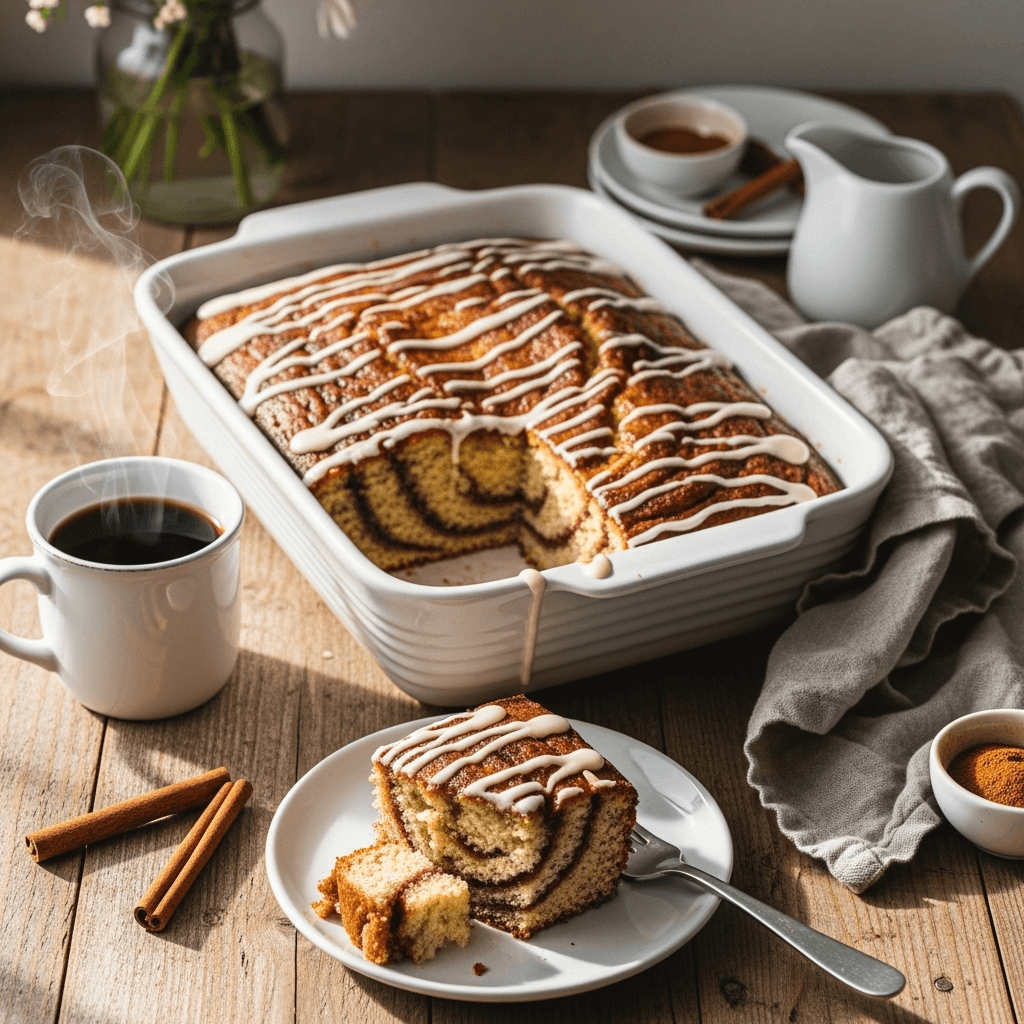

Get ready to fall in love with this easy cinnamon cake recipe – a tender, moist cake that’s generously swirled with cinnamon sugar and topped with a sweet vanilla glaze. This isn’t just any ordinary cake; it’s the kind of dessert that fills your home with the most incredible aroma while baking and disappears from the plate within minutes of being served!
What makes this homemade cinnamon cake so irresistible? It has the perfect balance of soft, buttery cake with ribbons of sweet cinnamon running throughout, creating those beautiful marbled layers everyone loves. The texture is incredibly moist thanks to sour cream in the batter, and each slice reveals gorgeous cinnamon swirls that look as impressive as they taste.
This moist cinnamon cake is perfect for so many occasions: weekend breakfast or brunch, afternoon coffee breaks, potluck contributions, holiday gatherings, birthday celebrations, or simply when you’re craving something warm and comforting. It’s the cake version of a cinnamon roll but easier to make and serves a crowd! Serve it slightly warm with a cup of coffee, add a scoop of vanilla ice cream for dessert, or enjoy it plain – it’s absolutely delicious any way you slice it.
History / Background
Cinnamon cake has deep roots in American baking tradition, particularly connected to the Pennsylvania Dutch and German immigrant communities who settled in the United States during the 18th and 19th centuries. These communities were famous for their exceptional baking skills and their love of cinnamon-spiced treats, which they brought from their European homeland.
The concept of swirled cinnamon cake evolved from several traditional recipes. German streuselkuchen (crumb cake) and zimtkuchen (cinnamon cake) influenced American bakers, who adapted these recipes using locally available ingredients and American baking techniques. The Pennsylvania Dutch, in particular, were known for their “friendship cakes” and coffee cakes that often featured cinnamon as a starring ingredient.
During the mid-20th century, as bundt pans became popular in American households (thanks to Nordic Ware introducing them in the 1950s), cinnamon cake recipes evolved to fit this new baking vessel. The distinctive swirl pattern became a signature feature, created by layering cinnamon-sugar mixture within the batter before baking. This technique created those gorgeous ribbons of cinnamon that made slicing the cake so visually appealing.
Cinnamon cake also holds a special place in Jewish-American baking traditions, where it’s often served during holidays and celebrations. The cake’s versatility – appropriate for breakfast, dessert, or a snack – made it a staple at gatherings and family events throughout the 20th century.
Today, cinnamon cake remains beloved across the United States, with countless regional variations. Some versions include nuts, others add cream cheese or chocolate chips, and many families have their own “secret” recipe passed down through generations. This recipe honors that tradition while keeping things simple and accessible for modern home bakers who want that same nostalgic, comforting flavor their grandmothers used to make.
Why You’ll Love This Recipe
This best cinnamon cake recipe is everything you want in a homemade dessert – impressive enough for company but easy enough for a Tuesday afternoon. One bite and you’ll understand why this cake has stood the test of time!
Here’s why this recipe is absolutely amazing:
- Incredibly moist and tender – The sour cream creates a cake that stays soft for days
- Beautiful cinnamon swirls – Gorgeous marbled pattern that looks professionally made
- Simple ingredients – Everything you need is probably already in your pantry
- Easy to make – No complicated techniques or special skills required
- Beginner-friendly – Perfect recipe for new bakers to build confidence
- Versatile serving options – Works for breakfast, dessert, or snack time
- Crowd-pleaser – Loved by kids and adults alike
- Budget-friendly – Costs just a few dollars to make an entire cake
- Makes your house smell amazing – The cinnamon aroma while baking is heavenly
- Keeps well – Stays fresh and delicious for several days
- No mixer required – Can be made entirely by hand with a whisk
- Customizable – Easy to add nuts, chocolate chips, or other mix-ins
- Perfect with coffee – The ideal companion to your morning cup
- Great for gifting – Makes a thoughtful homemade gift for neighbors or friends
Ingredient Notes
Understanding your ingredients helps you achieve bakery-quality results and make smart substitutions when needed. Here’s what goes into this easy cinnamon cake:
All-Purpose Flour – The foundation of the cake structure. Measure it correctly by spooning into your measuring cup and leveling off (don’t pack it down). You can substitute with a 1:1 gluten-free baking flour blend if needed.
Granulated Sugar – Provides sweetness and helps create a tender crumb. White sugar is standard, but you can substitute up to half with light brown sugar for a deeper, molasses-like flavor.
Sour Cream – This is the secret ingredient that makes the cake incredibly moist and tender! The acidity also activates the baking soda and creates a lighter texture. Full-fat sour cream works best, but low-fat will work in a pinch. You can substitute with Greek yogurt (not non-fat) for similar results.
Butter – Adds rich flavor and moisture. Always use unsalted butter so you can control the salt level. Make sure it’s at room temperature for proper creaming. Don’t substitute with margarine or oil – butter is essential for the best flavor.
Eggs – Provide structure and richness. Use large eggs at room temperature (they incorporate better into the batter). Take them out of the fridge 30 minutes before baking, or place them in warm water for 5 minutes.
Vanilla Extract – Enhances all the other flavors. Use pure vanilla extract, not imitation, for the best taste. Mexican or Tahitian vanilla both work beautifully.
Baking Powder & Baking Soda – The leavening agents that make the cake rise. Make sure they’re fresh (not expired) or your cake won’t rise properly. Baking soda works with the acidic sour cream, while baking powder provides additional lift.
Salt – Essential for balancing sweetness and enhancing flavor. Don’t skip it!
Ground Cinnamon – The star of the show! Use fresh cinnamon for the best flavor. Vietnamese or Ceylon cinnamon both work, but Ceylon is milder and sweeter while Vietnamese is more intense. Adjust the amount based on how much you love cinnamon.
Milk – Adds moisture and helps create the perfect batter consistency. Whole milk is ideal, but 2% works fine. For dairy-free, use unsweetened almond or oat milk.
Powdered Sugar (for glaze) – Creates the sweet, smooth glaze on top. Sift it first to avoid lumps in your glaze.
Equipment Needed
Having the right tools makes baking this moist cinnamon cake easier and more enjoyable. Here’s what you’ll need:
- 9×13-inch baking pan (or 10-inch bundt pan)
- Large mixing bowls (at least two)
- Medium mixing bowl (for cinnamon swirl mixture)
- Electric mixer (stand mixer or hand mixer) or whisk for hand mixing
- Measuring cups and spoons
- Rubber spatula or wooden spoon
- Whisk
- Small bowl (for making the glaze)
- Knife or offset spatula (for swirling the cinnamon)
- Toothpick or cake tester
- Cooling rack
- Parchment paper or cooking spray (for pan preparation)
- Sifter or fine-mesh strainer (optional, for flour and powdered sugar)
Cinnamon Cake Recipe
- Total Time: 55 minutes
- Yield: 12-16 servings 1x
- Diet: Vegetarian
Description
This easy cinnamon cake is incredibly moist and tender with gorgeous cinnamon sugar swirls throughout. Topped with a sweet vanilla glaze, it’s perfect for breakfast, dessert, or anytime you need a comforting homemade treat. Simple ingredients and straightforward method make this a foolproof recipe!
Ingredients
For the Cake:
- 3 cups (375g) all-purpose flour
- 1½ teaspoons baking powder
- 1½ teaspoons baking soda
- ½ teaspoon salt
- 1 cup (2 sticks/226g) unsalted butter, softened to room temperature
- 1¾ cups (350g) granulated sugar
- 3 large eggs, room temperature
- 1½ cups (360g) sour cream, room temperature
- 2 teaspoons pure vanilla extract
- ½ cup (120ml) whole milk, room temperature
For the Cinnamon Swirl:
- ⅔ cup (135g) granulated sugar
- 2 tablespoons ground cinnamon
- 2 tablespoons melted butter
For the Vanilla Glaze:
- 1½ cups (180g) powdered sugar, sifted
- 3–4 tablespoons milk or cream
- ½ teaspoon vanilla extract
- Pinch of salt
Instructions
Step 1: Prepare Your Oven and Pan
Preheat your oven to 350°F (175°C). Generously grease a 9×13-inch baking pan with butter or non-stick spray, then dust lightly with flour, tapping out any excess. Alternatively, line the bottom with parchment paper for easier removal. This step is crucial for preventing sticking and ensuring your beautiful cake comes out in one piece!
Step 2: Mix the Dry Ingredients
In a large mixing bowl, whisk together the flour, baking powder, baking soda, and salt until well combined. This distributes the leavening agents evenly throughout the flour, ensuring your cake rises uniformly. Set this bowl aside while you prepare the wet ingredients.
Step 3: Cream the Butter and Sugar
In another large mixing bowl (or the bowl of your stand mixer), beat the softened butter and granulated sugar together on medium-high speed for 3-4 minutes until light, fluffy, and pale in color. This creaming process incorporates air into the batter, which helps create a lighter, more tender cake. Scrape down the sides of the bowl as needed to ensure even mixing. The mixture should look almost white and have increased in volume.
Step 4: Add Eggs and Vanilla
Add the eggs one at a time, beating well after each addition (about 30 seconds per egg). Make sure each egg is fully incorporated before adding the next. Add the vanilla extract and beat until combined. The mixture might look slightly curdled at this point – that’s completely normal and will come together once you add the dry ingredients.
Step 5: Alternate Dry and Wet Ingredients
With your mixer on low speed (or mixing gently by hand), add the flour mixture in three additions, alternating with the sour cream and milk in two additions. Start and end with the flour mixture. The pattern should be: flour, sour cream/milk, flour, sour cream/milk, flour. Mix just until each addition is incorporated – don’t overmix or you’ll develop too much gluten and end up with a tough cake. A few small lumps are fine. The batter should be thick, smooth, and creamy.
Step 6: Make the Cinnamon Swirl Mixture
In a small bowl, combine the sugar, cinnamon, and melted butter. Mix with a fork until it resembles wet sand. This mixture creates those beautiful ribbons of cinnamon throughout your cake.
Step 7: Layer and Swirl
Spread half of the cake batter into your prepared pan, smoothing it into an even layer with your spatula. Sprinkle half of the cinnamon-sugar mixture evenly over the batter. Don’t worry about covering every inch – gaps are fine! Use a butter knife or offset spatula to gently swirl the cinnamon mixture into the batter, creating a marble pattern. Don’t over-swirl or you’ll lose the distinct layers. Spread the remaining batter on top and smooth it out. Sprinkle the remaining cinnamon mixture over the top and swirl again, creating those gorgeous patterns.
Step 8: Bake the Cake
Place the pan in the preheated oven and bake for 38-45 minutes, until the top is golden brown and springs back when lightly touched. A toothpick inserted into the center should come out clean or with just a few moist crumbs (but no wet batter). The exact baking time depends on your oven and pan – start checking at 38 minutes. The edges will pull slightly away from the pan when done.
Step 9: Cool the Cake
Remove the cake from the oven and place the pan on a cooling rack. Let it cool in the pan for about 15-20 minutes. This cooling period allows the cake to set properly – if you try to remove it too soon, it might break apart. After 15-20 minutes, you can either leave it in the pan to cool completely (my preference for easier serving) or carefully turn it out onto a cooling rack.
Step 10: Make the Glaze
While the cake cools, make the vanilla glaze. In a medium bowl, whisk together the sifted powdered sugar, 3 tablespoons of milk, vanilla extract, and a pinch of salt until smooth. The glaze should be pourable but not too thin – it should coat the back of a spoon. If it’s too thick, add more milk one teaspoon at a time. If too thin, add more powdered sugar.
Step 11: Glaze and Serve
Once the cake has cooled for at least 20-30 minutes (it should be warm but not hot), drizzle the glaze over the top using a spoon or pour it from the bowl. Use a spatula to spread it if desired, or let it drip naturally for a rustic look. The glaze will set as it cools. Let the glaze set for about 10 minutes before slicing and serving. Cut into squares and enjoy!
Notes
- Room temperature ingredients are key: Cold eggs and sour cream won’t incorporate smoothly into the batter. Plan ahead and take them out 30-45 minutes before baking.
- Don’t overmix the batter: Once you add the flour, mix just until combined. Overmixing develops gluten and creates a dense, tough cake.
- Swirl gently: Over-swirling will muddy the cinnamon pattern. Just a few gentle swirls create the best marble effect.
- Oven temperature matters: Use an oven thermometer to ensure accuracy. Too hot and the cake will brown too quickly on top while remaining raw inside.
- Pan size alternatives: This recipe works in a bundt pan (bake 50-60 minutes) or two 9-inch round pans (bake 28-32 minutes).
- Storage tip: Cover tightly once completely cooled to maintain moisture.
- Prep Time: 15 minutes
- Cook Time: 40 minutes
- Category: Dessert
- Method: Baking
- Cuisine: American
Nutrition
- Serving Size: 1 slice (1/12 of cake)
- Calories: 385
- Sugar: 35g
- Sodium: 245mg
- Fat: 16g
- Saturated Fat: 10g
- Unsaturated Fat: 5g
- Trans Fat: 0g
- Carbohydrates: 57g
- Fiber: 1g
- Protein: 5g
- Cholesterol: 85mg
Tips & Variations
Cinnamon Roll Cake: Add cream cheese frosting instead of the vanilla glaze for a cake that tastes exactly like cinnamon rolls. Beat 4 oz softened cream cheese with 2 cups powdered sugar, 2 tablespoons milk, and vanilla.
Nutty Cinnamon Cake: Add ½ cup chopped pecans or walnuts to the cinnamon swirl mixture for extra crunch and flavor.
Apple Cinnamon Cake: Fold 1½ cups finely diced apples (peeled) into the batter before swirling in the cinnamon. Reduces baking time by 5 minutes.
Chocolate Chip Variation: Add ½ cup mini chocolate chips to the batter or sprinkle them in with the cinnamon layers.
Maple Glaze: Replace the vanilla glaze with maple glaze by using maple syrup instead of milk and adding maple extract instead of vanilla.
Brown Butter Version: Brown the butter before creaming it with the sugar for an incredible nutty, caramel-like flavor. Let it cool slightly first.
Spiced Up: Add ¼ teaspoon each of ground nutmeg and cardamom to the cinnamon swirl for a chai-spiced version.
Bundt Pan Presentation: Bake in a greased and floured bundt pan for an elegant presentation perfect for special occasions. Increase baking time to 50-60 minutes.
Reduced Sugar: You can reduce the sugar in the cake by ¼ cup without significantly affecting texture, though it will be less sweet.
Streusel Topping: Skip the second cinnamon layer and instead make a streusel topping (mix ½ cup flour, ⅓ cup sugar, 4 tablespoons cold butter, and 1 teaspoon cinnamon until crumbly) to sprinkle on top before baking.
Pro Chef Tips
Measure flour correctly: The most common mistake in baking is using too much flour, which creates dry, dense cake. Always spoon flour into your measuring cup and level it off with a knife – never scoop directly from the bag or pack it down.
Room temperature ingredients mix better: Cold ingredients don’t emulsify properly, leading to a dense cake with uneven texture. Everything should be at room temperature (about 68-72°F) for optimal mixing.
Don’t skip the creaming step: Creaming butter and sugar for the full 3-4 minutes incorporates air that helps the cake rise and creates a lighter texture. The mixture should look almost white and fluffy.
Use a toothpick test correctly: Insert a toothpick into multiple spots, not just the center. It should come out with a few moist crumbs but no wet batter. If it comes out completely clean, your cake might be slightly overbaked.
Invest in an oven thermometer: Most home ovens are off by 25°F or more. An accurate temperature ensures even baking and prevents over-browning or undercooking.
The knife swirl technique: Use a butter knife in a figure-eight motion to create swirls, going through the batter about 1 inch deep. Too shallow and you won’t see swirls; too deep and they’ll disappear.
Rotate halfway through: If your oven has hot spots, rotate the pan 180 degrees halfway through baking for even browning.
Cool before glazing: Wait until the cake is warm but not hot before glazing. If it’s too hot, the glaze will become too thin and soak into the cake instead of sitting on top.
Use quality cinnamon: Fresh, high-quality cinnamon makes a noticeable difference. Replace your cinnamon if it’s been sitting in your spice cabinet for over a year.
Common Mistakes to Avoid
Using cold ingredients: This is the number one mistake! Cold butter won’t cream properly, cold eggs can cause the batter to curdle, and cold sour cream won’t incorporate smoothly. Everything should be at room temperature for the best texture. Take ingredients out 30-45 minutes before starting, or place eggs in warm water for 5 minutes to bring them to temperature quickly.
Overmixing the batter: Once you add the flour, mix only until you can no longer see dry flour streaks. Overmixing develops gluten, which makes the cake tough and dense instead of tender. It’s okay if there are a few small lumps – they’ll bake out. Mix on low speed and stop as soon as everything is just combined.
Opening the oven door too early: Every time you open the oven door, you release heat and can cause the cake to collapse. Don’t open the door until the minimum baking time has elapsed. Use the oven light to peek instead!
Not greasing the pan properly: Even non-stick pans need greasing! Butter or spray the pan thoroughly, getting into all corners, then dust with flour. This double protection ensures your cake releases cleanly. For extra insurance, line the bottom with parchment paper.
Over-swirling the cinnamon: It’s tempting to create elaborate swirls, but too much swirling actually muddies the pattern and you lose those beautiful distinct ribbons. Just 5-6 gentle swirls with a knife through each layer is plenty. Think “marble” not “fully mixed.”
Cutting the cake too soon: I know it’s hard to wait, but cutting into a hot cake will result in crumbling and messy slices. Let it cool for at least 20-30 minutes before slicing. The cake continues to set as it cools, and the texture improves significantly.
Storage & Meal Prep
Room Temperature Storage: Once completely cooled and glazed, cover the cake tightly with plastic wrap or aluminum foil, or store in an airtight container. The cake will stay fresh and moist at room temperature for up to 4 days. Actually, many people think this cake tastes even better on day two as the flavors meld together!
Refrigerator Storage: While not necessary, you can refrigerate the cake if your kitchen is very warm or if you’ve made a cream cheese frosting version. Wrap tightly and refrigerate for up to 1 week. Let it come to room temperature for 30 minutes before serving for the best flavor and texture.
Preventing Dryness: The key to keeping this cake moist is proper coverage. Make sure it’s completely sealed to prevent air exposure. The sour cream in the recipe helps keep it moist naturally, but exposed cake will dry out within a day or two.
Slicing for Storage: You can slice the entire cake and store individual pieces wrapped in plastic wrap for grab-and-go portions throughout the week. This is perfect for breakfast meal prep!
Reheating Individual Slices: For that fresh-from-the-oven experience, microwave individual slices for 15-20 seconds, or wrap in foil and warm in a 300°F oven for 5-7 minutes. The cake becomes wonderfully soft and the cinnamon becomes more fragrant.
Unglazed Storage: If making ahead, you can bake and store the cake unglazed, then make and add the glaze just before serving. This keeps the glaze looking fresh and prevents it from being absorbed into the cake.
Make-Ahead & Freezer Notes
Make-Ahead Baking: You can bake this homemade cinnamon cake up to 2 days in advance. Let it cool completely, wrap tightly in plastic wrap (do not glaze yet), and store at room temperature. Make the glaze and drizzle it on a few hours before serving for the freshest appearance.
Freezing Whole Cake: This cake freezes beautifully! Bake and cool completely, but do not glaze. Wrap the cooled cake tightly in two layers of plastic wrap, then wrap in aluminum foil or place in a freezer-safe bag. Freeze for up to 3 months. Thaw overnight in the refrigerator or at room temperature for 3-4 hours, still wrapped. Once thawed, make the glaze and drizzle over the top.
Freezing Individual Slices: Cut the cooled, unglazed cake into slices. Wrap each slice individually in plastic wrap, then place all wrapped slices in a freezer bag. This allows you to remove just what you need. Frozen slices can be thawed in minutes at room temperature or microwaved for 30-40 seconds.
Freezing Glazed Cake: While I prefer to glaze after thawing, you can freeze glazed cake if needed. Let the glaze set completely first (about 1 hour), then wrap carefully. The glaze may look slightly less pristine after thawing, but the taste won’t be affected.
Thawing Best Practices: Always thaw wrapped cake to prevent condensation from making the surface soggy. For the whole cake, thaw in the refrigerator overnight or at room temperature for 3-4 hours. Individual slices thaw in about 20-30 minutes at room temperature.
Quick Thaw Method: If you’re in a hurry, microwave frozen individual slices on 50% power for 45-60 seconds, checking every 15 seconds. The cake will be warm and taste freshly baked!
Make-Ahead Batter: Unfortunately, cake batter doesn’t store well as the leavening agents begin working as soon as they’re mixed with liquid. Always bake the batter immediately after mixing for best results.
Serving Suggestions
This easy cinnamon cake is wonderfully versatile and delicious in so many ways. Here are some serving ideas to inspire you:
For Breakfast or Brunch:
- Serve slightly warm with hot coffee or tea
- Top with a dollop of whipped cream or Greek yogurt
- Add fresh berries on the side for a pop of color and freshness
- Drizzle with maple syrup for extra sweetness
- Pair with scrambled eggs and bacon for a sweet-savory breakfast
For Dessert:
- Serve warm with vanilla ice cream melting on top
- Add a scoop of cinnamon ice cream for double cinnamon flavor
- Top with caramel sauce and toasted pecans
- Serve with vanilla custard or crème anglaise
- Add a dollop of fresh whipped cream and a dusting of cinnamon
Beverage Pairings:
- Hot coffee (the classic combination)
- Chai latte or spiced tea
- Hot chocolate or cocoa
- Apple cider (warm or cold)
- Glass of cold milk
- Dessert wine like Moscato or late-harvest Riesling
Fancy It Up:
- Dust with powdered sugar and add fresh berries for an elegant presentation
- Serve on pretty dessert plates with a mint leaf garnish
- Create a parfait by layering cake cubes with yogurt and fruit
- Make cake trifle by layering with pudding and whipped cream
- Toast slices and butter them like you would banana bread
Party Presentation:
- Cut into small squares for a dessert buffet
- Serve on a tiered cake stand for brunch gatherings
- Offer with a coffee bar setup
- Present on a rustic wooden board with fruit and nuts
- Individual plating with sauce drizzle for dinner parties
FAQs Section
Can I make this cake without sour cream?
Yes, though sour cream is really what makes this cake so incredibly moist! The best substitute is full-fat Greek yogurt (not non-fat), which provides similar tanginess and moisture. You can also use buttermilk (reduce the added milk to ¼ cup), but the texture won’t be quite as rich. In a pinch, you can make a substitute by mixing 1 cup of milk with 1 tablespoon of white vinegar or lemon juice, letting it sit for 5 minutes to curdle, then using this in place of the sour cream.
Why did my cake sink in the middle?
There are several reasons for a sunken center: The oven temperature was too high (causing the cake to rise too quickly then collapse), the cake was underbaked (the center wasn’t set), you opened the oven door too early (causing a sudden temperature drop), or there was too much leavening agent (double-check you used the right amounts). Make sure to test with a toothpick and only remove from the oven when the center springs back when touched.
Can I use a different size pan?
Yes, but you’ll need to adjust the baking time. For a 9×9-inch square pan, bake for 45-50 minutes. For a 10-inch bundt pan, bake for 50-60 minutes (test with a toothpick). For two 9-inch round pans, bake for 28-32 minutes. Two 8-inch round pans will need 32-35 minutes. The batter should fill the pan about two-thirds full. Always check for doneness with a toothpick rather than relying solely on time.
How can I make this cake more or less sweet?
To reduce sweetness, you can decrease the sugar in the cake batter by up to ½ cup without significantly affecting texture (though it will be less tender). You can also skip the glaze entirely and just dust with powdered sugar, or use less cinnamon sugar in the swirl. To make it sweeter, add an extra ¼ cup sugar to the cake batter or make a thicker glaze with more powdered sugar.
My cinnamon swirl disappeared – what happened?
This usually happens when the cinnamon mixture sinks to the bottom or when it’s swirled too aggressively and becomes too mixed into the batter. Make sure your batter isn’t too thin (it should be thick and spreadable, not pourable). Don’t over-swirl – just 5-6 gentle knife swirls through each layer is enough. Also ensure you’re using enough of the cinnamon mixture and distributing it evenly. The melted butter in the cinnamon mixture helps it stay visible as it creates little pockets.
Can I make this cake dairy-free?
Absolutely! Use dairy-free butter (like Earth Balance), dairy-free sour cream (available at most grocery stores), and non-dairy milk (oat milk or almond milk work best). The texture will be very similar to the original. For the glaze, use non-dairy milk and ensure your powdered sugar is vegan (some brands use bone char in processing, though most are fine).
Do I need to use a stand mixer?
Not at all! While a stand mixer makes the job easier, this cake can absolutely be made by hand. Use a large whisk for creaming the butter and sugar (it takes a bit more elbow grease but totally works), then switch to a wooden spoon or rubber spatula for folding in the dry ingredients. Hand-mixing actually reduces the risk of overmixing, which can make the cake tough. Just make sure your butter is very soft and mashable before you start.
Conclusion
You now have everything you need to bake the most incredible moist cinnamon cake that’ll have everyone asking for the recipe! This easy cinnamon cake proves that simple ingredients and straightforward techniques can create something truly spectacular. With its tender crumb, gorgeous swirls, and sweet glaze, this cake delivers comfort and joy with every single bite.
The beauty of this homemade cinnamon cake is its versatility – it works for any occasion, from casual weekend breakfasts to elegant dinner party desserts. Make it once and it’ll quickly become one of those recipes you return to again and again, the kind you make without even looking at the recipe card anymore because you know it by heart.
Don’t be intimidated by the baking process. Just follow the steps, trust your instincts, and remember that even if your swirls aren’t perfect, the cake will still taste absolutely amazing. Baking is as much about the love you put into it as the precision of the measurements!
I’d love to hear all about your baking adventure! Did you try any of the variations? What did you serve it with? How quickly did it disappear from your kitchen? Drop a comment below sharing your experience and please rate this recipe if you loved it. And don’t forget to save this best cinnamon cake recipe to your Pinterest boards – your future self will thank you when you’re craving something warm, cinnamon-y, and wonderful!
Now grab your mixing bowls and get baking – your kitchen is about to smell absolutely incredible! ☕🍰