

There’s something wonderfully nostalgic and undeniably impressive about a pineapple upside down cake with its caramelized pineapple rings and glossy maraschino cherries sitting atop a tender, buttery cake. This classic pineapple upside down cake recipe delivers that perfect combination of sweet caramelized fruit, moist vanilla cake, and buttery brown sugar topping that makes this retro dessert an enduring favorite. The “upside down” magic happens when you flip the cake after baking, revealing a stunning pattern of golden pineapple rings that look like they came from a bakery but are surprisingly simple to create at home.
This easy pineapple upside down cake is perfect for potluck dinners, family gatherings, summer cookouts, birthday celebrations, or anytime you want a dessert that’s both beautiful and delicious without requiring advanced baking skills. Ready in about an hour from start to finish, it’s straightforward enough for beginners yet impressive enough to serve at special occasions. The combination of tangy pineapple with sweet cake creates a flavor balance that appeals to all ages—kids love the bright cherries and sweet fruit, while adults appreciate the sophisticated caramelized flavors and nostalgic charm. Whether you’re serving it warm with vanilla ice cream or at room temperature with whipped cream, this show-stopping dessert never fails to receive compliments and requests for the recipe.
History / Background
Pineapple upside down cake has a fascinating history deeply rooted in American culinary culture. While the technique of baking fruit at the bottom of a pan and inverting it dates back to Medieval times, the specific pineapple version we know today emerged in the early 20th century and became an American icon.
The turning point came in 1925 when the Hawaiian Pineapple Company (now Dole) sponsored a recipe contest seeking creative ways to use canned pineapple. The contest received over 2,500 recipes for pineapple upside down cake, though none could be declared the official winner because the concept was already so widespread. This contest, however, catapulted the dessert into mainstream American consciousness.
The invention of cast iron skillets and later, affordable cake pans, made the upside-down technique accessible to home bakers. Before modern bakeware, creating an inverted cake required considerable skill. The development of reliable canned pineapple in the early 1900s was equally crucial—it made tropical fruit available year-round across the United States, not just in Hawaii or Florida.
Pineapple upside down cake gained particular popularity during the 1920s-1950s, becoming a staple at dinner parties, church potlucks, and family celebrations. Its visual appeal made it perfect for showcasing homemaking skills, and the use of canned ingredients fit perfectly with mid-century modern convenience cooking trends. The signature maraschino cherry in each pineapple ring center became an iconic design element that made the cake instantly recognizable.
Interestingly, the pineapple itself was once a symbol of wealth and hospitality in colonial America, so rare that it could be rented for display at parties. By making pineapple accessible through canning, and creating a beautiful dessert around it, pineapple upside down cake democratized luxury in a uniquely American way.
While the cake fell somewhat out of fashion during the diet-conscious 1980s and 1990s, it has experienced a delightful renaissance in recent years as vintage and retro recipes have come back into style. Today, it represents nostalgic comfort food at its finest—a connection to simpler times and family kitchens filled with the aroma of caramelizing sugar and tropical fruit.
Why You’ll Love This Recipe
This classic pineapple upside down cake isn’t just beautiful—it’s genuinely delicious with a perfect balance of flavors and textures that make every bite memorable. The caramelized brown sugar topping creates a glossy, candy-like coating on the pineapple that contrasts beautifully with the tender, moist cake underneath. Unlike dense, heavy cakes, this one stays light and airy while maintaining enough structure to support the fruit topping. Here’s why this recipe will become your go-to impressive dessert:
- Stunning presentation – Looks like it came from a bakery with that gorgeous pineapple pattern
- Surprisingly easy – Simple technique that even beginners can master successfully
- One-bowl cake batter – Minimal dishes and straightforward mixing
- Perfect moisture – Never dry, always tender and flavorful
- Make-ahead friendly – Can be baked hours ahead and served at room temperature
- Nostalgic charm – Classic retro dessert that brings back happy memories
- Crowd-pleaser – Universally loved by all ages and always gets compliments
- Uses pantry staples – Common ingredients you likely already have
- Versatile serving – Delicious warm, room temperature, or chilled
- Budget-friendly – Costs a fraction of bakery cakes using affordable canned fruit
Ingredient Notes
Understanding your ingredients creates baking success. Here’s what you need and why each component matters:
Canned Pineapple Rings: Use canned pineapple rings packed in juice (not heavy syrup, which is too sweet). You’ll need 7-8 rings for standard 9 or 10-inch round pan. Drain them well on paper towels before arranging—excess moisture can make the topping soggy. Save the juice for drinking or smoothies. Fresh pineapple can work but requires more preparation and doesn’t caramelize quite as well.
Maraschino Cherries: The bright red cherries provide classic visual appeal, one nestled in the center of each pineapple ring. Drain them thoroughly and pat dry. While optional, they’re traditional and beloved, especially by kids. For a more sophisticated look, use fresh or preserved Amarena cherries.
Unsalted Butter: Used both in the topping and cake. Unsalted lets you control salt levels precisely. The butter in the topping melts and combines with brown sugar to create that gorgeous caramel. The butter in the cake provides richness and tender crumb.
Brown Sugar: Packed brown sugar creates the caramelized topping that makes this cake special. As it bakes with butter, it transforms into a glossy, candy-like coating. Light or dark brown sugar both work—dark provides deeper molasses flavor.
All-Purpose Flour: The foundation of your cake structure. Measure by spooning into cups and leveling off—don’t pack down. Cake flour can substitute for even more tender crumb (use 1¼ cups).
Granulated Sugar: Sweetens the cake layer without competing with the brown sugar topping. The amount is moderate for balanced sweetness.
Baking Powder: Provides the lift for light, fluffy cake. Make sure yours is fresh (under 6 months old) for proper rise.
Eggs: Bind ingredients and add structure and richness. Use large eggs at room temperature for best incorporation.
Milk: Whole milk is preferred for richness, but 2% works too. The liquid creates tender crumb and helps ingredients come together smoothly.
Vanilla Extract: Enhances all other flavors. Use pure vanilla extract, not imitation, for best taste.
Salt: A small amount enhances sweetness and balances flavors. Don’t skip it.
Optional Add-Ins: A pinch of cinnamon or nutmeg in the cake batter adds warmth, or use almond extract for tropical flair.
Equipment Needed
This classic cake requires basic baking equipment you probably already own:
- 9 or 10-inch round cake pan – Standard size; cast iron skillet works beautifully too for rustic presentation
- Large mixing bowl – For cake batter
- Medium saucepan – For melting butter and brown sugar for topping
- Electric mixer or whisk – For mixing cake batter smoothly
- Measuring cups and spoons – Accurate measurements ensure success
- Rubber spatula – For scraping bowls and spreading batter
- Paper towels – For draining pineapple and cherries
- Cooling rack – Essential for proper cooling and flipping
- Parchment paper – Optional but helps with release
- Serving plate – For the dramatic flip reveal
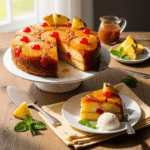
Pineapple Upside Down Cake Recipe
- Total Time: 1 hour
- Yield: 8-10 servings 1x
- Diet: Vegetarian
Description
Classic pineapple upside down cake with caramelized brown sugar topping, juicy pineapple rings, and maraschino cherries over tender vanilla cake. This easy retro dessert is stunning and delicious.
Ingredients
For the Topping:
- ¼ cup (½ stick) unsalted butter
- ⅔ cup packed light brown sugar
- 7–8 canned pineapple rings, drained and patted dry
- 7–8 maraschino cherries, drained and patted dry
For the Cake:
- 1½ cups all-purpose flour
- 1½ teaspoons baking powder
- ¼ teaspoon salt
- ½ cup (1 stick) unsalted butter, softened
- ¾ cup granulated sugar
- 2 large eggs, room temperature
- 1 teaspoon pure vanilla extract
- ½ cup whole milk, room temperature
Instructions
- Preheat Oven: Preheat your oven to 350°F (175°C). Position rack in center of oven.
- Prepare Topping: In a medium saucepan over medium heat, melt ¼ cup butter. Add brown sugar and stir constantly until sugar dissolves and mixture is smooth and bubbly, about 2-3 minutes. Pour this caramel mixture into the bottom of a 9 or 10-inch round cake pan, tilting to coat the bottom evenly.
- Arrange Fruit: Place pineapple rings in a single layer over the caramel mixture. You should fit 7 rings in a 9-inch pan (one in center, six around it) or 8 in a 10-inch pan. Place a maraschino cherry in the center of each pineapple ring, pressing gently into the caramel. Set aside.
- Mix Dry Ingredients: In a medium bowl, whisk together flour, baking powder, and salt. Set aside.
- Cream Butter and Sugar: In a large bowl using an electric mixer, beat softened butter and granulated sugar on medium-high speed for 3-4 minutes until light, fluffy, and pale yellow. Scrape down bowl sides as needed.
- Add Eggs and Vanilla: Add eggs one at a time, beating well after each addition until fully incorporated. Beat in vanilla extract. The mixture should be smooth and creamy.
- Alternate Dry and Wet: With mixer on low speed, add flour mixture in three additions, alternating with milk in two additions. Begin and end with flour (flour-milk-flour-milk-flour pattern). Mix just until combined after each addition—don’t overmix or cake will be tough.
- Pour Over Pineapple: Carefully spoon cake batter over the arranged pineapple and cherries, spreading gently and evenly to cover. The batter is thick—use your spatula to spread it carefully without disturbing the fruit pattern.
- Bake: Bake for 40-45 minutes, until a toothpick inserted in the center comes out clean or with just a few moist crumbs. The cake should be golden brown and spring back when gently pressed. The edges may pull away slightly from the pan.
- Cool Briefly: Remove from oven and let cool in the pan on a wire rack for exactly 10 minutes. This cooling time is crucial—too short and the cake falls apart, too long and it sticks to the pan.
- The Big Flip: After 10 minutes, run a thin knife around the edges to loosen. Place your serving plate upside down on top of the cake pan. Using oven mitts, hold both plate and pan firmly together and quickly but confidently flip them over. Carefully lift the pan off, revealing your beautiful pineapple topping. If any fruit sticks, simply lift it off and replace it on the cake.
- Cool and Serve: Let cake cool for at least 15-20 minutes before slicing. Serve warm, room temperature, or chilled. Delicious with vanilla ice cream or whipped cream!
Notes
- Pan size matters: Use exactly 9 or 10-inch round pan for proper fruit arrangement and baking time
- Don’t skip the 10-minute cooling: This timing is crucial for successful flipping
- Drain fruit well: Excess moisture prevents proper caramelization
- Room temperature ingredients: Ensure eggs, butter, and milk are room temp for smooth mixing
- Cast iron option: A 10-inch cast iron skillet works beautifully and can go straight to the table
- Check doneness: Toothpick should come out clean; don’t overbake or cake becomes dry
- Prep Time: 15 minutes
- Cook Time: 45 minutes
- Category: Dessert
- Method: Baking
- Cuisine: American
Nutrition
- Serving Size: 1 slice (based on 10 servings)
- Calories: 340
- Sugar: 35g
- Sodium: 150mg
- Fat: 14g
- Saturated Fat: 8g
- Unsaturated Fat: 5g
- Trans Fat: 0g
- Carbohydrates: 52g
- Fiber: 1g
- Protein: 4g
- Cholesterol: 75mg
Classic Pineapple Upside Down Cake Recipe: Retro, Beautiful, and Delicious
Introduction of Recipe
There’s something wonderfully nostalgic and undeniably impressive about a pineapple upside down cake with its caramelized pineapple rings and glossy maraschino cherries sitting atop a tender, buttery cake. This classic pineapple upside down cake recipe delivers that perfect combination of sweet caramelized fruit, moist vanilla cake, and buttery brown sugar topping that makes this retro dessert an enduring favorite. The “upside down” magic happens when you flip the cake after baking, revealing a stunning pattern of golden pineapple rings that look like they came from a bakery but are surprisingly simple to create at home.
This easy pineapple upside down cake is perfect for potluck dinners, family gatherings, summer cookouts, birthday celebrations, or anytime you want a dessert that’s both beautiful and delicious without requiring advanced baking skills. Ready in about an hour from start to finish, it’s straightforward enough for beginners yet impressive enough to serve at special occasions. The combination of tangy pineapple with sweet cake creates a flavor balance that appeals to all ages—kids love the bright cherries and sweet fruit, while adults appreciate the sophisticated caramelized flavors and nostalgic charm. Whether you’re serving it warm with vanilla ice cream or at room temperature with whipped cream, this show-stopping dessert never fails to receive compliments and requests for the recipe.
History / Background
Pineapple upside down cake has a fascinating history deeply rooted in American culinary culture. While the technique of baking fruit at the bottom of a pan and inverting it dates back to Medieval times, the specific pineapple version we know today emerged in the early 20th century and became an American icon.
The turning point came in 1925 when the Hawaiian Pineapple Company (now Dole) sponsored a recipe contest seeking creative ways to use canned pineapple. The contest received over 2,500 recipes for pineapple upside down cake, though none could be declared the official winner because the concept was already so widespread. This contest, however, catapulted the dessert into mainstream American consciousness.
The invention of cast iron skillets and later, affordable cake pans, made the upside-down technique accessible to home bakers. Before modern bakeware, creating an inverted cake required considerable skill. The development of reliable canned pineapple in the early 1900s was equally crucial—it made tropical fruit available year-round across the United States, not just in Hawaii or Florida.
Pineapple upside down cake gained particular popularity during the 1920s-1950s, becoming a staple at dinner parties, church potlucks, and family celebrations. Its visual appeal made it perfect for showcasing homemaking skills, and the use of canned ingredients fit perfectly with mid-century modern convenience cooking trends. The signature maraschino cherry in each pineapple ring center became an iconic design element that made the cake instantly recognizable.
Interestingly, the pineapple itself was once a symbol of wealth and hospitality in colonial America, so rare that it could be rented for display at parties. By making pineapple accessible through canning, and creating a beautiful dessert around it, pineapple upside down cake democratized luxury in a uniquely American way.
While the cake fell somewhat out of fashion during the diet-conscious 1980s and 1990s, it has experienced a delightful renaissance in recent years as vintage and retro recipes have come back into style. Today, it represents nostalgic comfort food at its finest—a connection to simpler times and family kitchens filled with the aroma of caramelizing sugar and tropical fruit.
Why You’ll Love This Recipe
This classic pineapple upside down cake isn’t just beautiful—it’s genuinely delicious with a perfect balance of flavors and textures that make every bite memorable. The caramelized brown sugar topping creates a glossy, candy-like coating on the pineapple that contrasts beautifully with the tender, moist cake underneath. Unlike dense, heavy cakes, this one stays light and airy while maintaining enough structure to support the fruit topping. Here’s why this recipe will become your go-to impressive dessert:
- Stunning presentation – Looks like it came from a bakery with that gorgeous pineapple pattern
- Surprisingly easy – Simple technique that even beginners can master successfully
- One-bowl cake batter – Minimal dishes and straightforward mixing
- Perfect moisture – Never dry, always tender and flavorful
- Make-ahead friendly – Can be baked hours ahead and served at room temperature
- Nostalgic charm – Classic retro dessert that brings back happy memories
- Crowd-pleaser – Universally loved by all ages and always gets compliments
- Uses pantry staples – Common ingredients you likely already have
- Versatile serving – Delicious warm, room temperature, or chilled
- Budget-friendly – Costs a fraction of bakery cakes using affordable canned fruit
Ingredient Notes
Understanding your ingredients creates baking success. Here’s what you need and why each component matters:
Canned Pineapple Rings: Use canned pineapple rings packed in juice (not heavy syrup, which is too sweet). You’ll need 7-8 rings for standard 9 or 10-inch round pan. Drain them well on paper towels before arranging—excess moisture can make the topping soggy. Save the juice for drinking or smoothies. Fresh pineapple can work but requires more preparation and doesn’t caramelize quite as well.
Maraschino Cherries: The bright red cherries provide classic visual appeal, one nestled in the center of each pineapple ring. Drain them thoroughly and pat dry. While optional, they’re traditional and beloved, especially by kids. For a more sophisticated look, use fresh or preserved Amarena cherries.
Unsalted Butter: Used both in the topping and cake. Unsalted lets you control salt levels precisely. The butter in the topping melts and combines with brown sugar to create that gorgeous caramel. The butter in the cake provides richness and tender crumb.
Brown Sugar: Packed brown sugar creates the caramelized topping that makes this cake special. As it bakes with butter, it transforms into a glossy, candy-like coating. Light or dark brown sugar both work—dark provides deeper molasses flavor.
All-Purpose Flour: The foundation of your cake structure. Measure by spooning into cups and leveling off—don’t pack down. Cake flour can substitute for even more tender crumb (use 1¼ cups).
Granulated Sugar: Sweetens the cake layer without competing with the brown sugar topping. The amount is moderate for balanced sweetness.
Baking Powder: Provides the lift for light, fluffy cake. Make sure yours is fresh (under 6 months old) for proper rise.
Eggs: Bind ingredients and add structure and richness. Use large eggs at room temperature for best incorporation.
Milk: Whole milk is preferred for richness, but 2% works too. The liquid creates tender crumb and helps ingredients come together smoothly.
Vanilla Extract: Enhances all other flavors. Use pure vanilla extract, not imitation, for best taste.
Salt: A small amount enhances sweetness and balances flavors. Don’t skip it.
Optional Add-Ins: A pinch of cinnamon or nutmeg in the cake batter adds warmth, or use almond extract for tropical flair.
Equipment Needed
This classic cake requires basic baking equipment you probably already own:
- 9 or 10-inch round cake pan – Standard size; cast iron skillet works beautifully too for rustic presentation
- Large mixing bowl – For cake batter
- Medium saucepan – For melting butter and brown sugar for topping
- Electric mixer or whisk – For mixing cake batter smoothly
- Measuring cups and spoons – Accurate measurements ensure success
- Rubber spatula – For scraping bowls and spreading batter
- Paper towels – For draining pineapple and cherries
- Cooling rack – Essential for proper cooling and flipping
- Parchment paper – Optional but helps with release
- Serving plate – For the dramatic flip reveal
📋 Recipe Card
Prep Time: 15 minutes
Cook Time: 45 minutes
Total Time: 1 hour
Yield: 8-10 servings
Category: Dessert
Method: Baking
Cuisine: American
Diet: Vegetarian
Description
Classic pineapple upside down cake with caramelized brown sugar topping, juicy pineapple rings, and maraschino cherries over tender vanilla cake. This easy retro dessert is stunning and delicious.
Ingredients
For the Topping:
- ¼ cup (½ stick) unsalted butter
- ⅔ cup packed light brown sugar
- 7-8 canned pineapple rings, drained and patted dry
- 7-8 maraschino cherries, drained and patted dry
For the Cake:
- 1½ cups all-purpose flour
- 1½ teaspoons baking powder
- ¼ teaspoon salt
- ½ cup (1 stick) unsalted butter, softened
- ¾ cup granulated sugar
- 2 large eggs, room temperature
- 1 teaspoon pure vanilla extract
- ½ cup whole milk, room temperature
Instructions
- Preheat Oven: Preheat your oven to 350°F (175°C). Position rack in center of oven.
- Prepare Topping: In a medium saucepan over medium heat, melt ¼ cup butter. Add brown sugar and stir constantly until sugar dissolves and mixture is smooth and bubbly, about 2-3 minutes. Pour this caramel mixture into the bottom of a 9 or 10-inch round cake pan, tilting to coat the bottom evenly.
- Arrange Fruit: Place pineapple rings in a single layer over the caramel mixture. You should fit 7 rings in a 9-inch pan (one in center, six around it) or 8 in a 10-inch pan. Place a maraschino cherry in the center of each pineapple ring, pressing gently into the caramel. Set aside.
- Mix Dry Ingredients: In a medium bowl, whisk together flour, baking powder, and salt. Set aside.
- Cream Butter and Sugar: In a large bowl using an electric mixer, beat softened butter and granulated sugar on medium-high speed for 3-4 minutes until light, fluffy, and pale yellow. Scrape down bowl sides as needed.
- Add Eggs and Vanilla: Add eggs one at a time, beating well after each addition until fully incorporated. Beat in vanilla extract. The mixture should be smooth and creamy.
- Alternate Dry and Wet: With mixer on low speed, add flour mixture in three additions, alternating with milk in two additions. Begin and end with flour (flour-milk-flour-milk-flour pattern). Mix just until combined after each addition—don’t overmix or cake will be tough.
- Pour Over Pineapple: Carefully spoon cake batter over the arranged pineapple and cherries, spreading gently and evenly to cover. The batter is thick—use your spatula to spread it carefully without disturbing the fruit pattern.
- Bake: Bake for 40-45 minutes, until a toothpick inserted in the center comes out clean or with just a few moist crumbs. The cake should be golden brown and spring back when gently pressed. The edges may pull away slightly from the pan.
- Cool Briefly: Remove from oven and let cool in the pan on a wire rack for exactly 10 minutes. This cooling time is crucial—too short and the cake falls apart, too long and it sticks to the pan.
- The Big Flip: After 10 minutes, run a thin knife around the edges to loosen. Place your serving plate upside down on top of the cake pan. Using oven mitts, hold both plate and pan firmly together and quickly but confidently flip them over. Carefully lift the pan off, revealing your beautiful pineapple topping. If any fruit sticks, simply lift it off and replace it on the cake.
- Cool and Serve: Let cake cool for at least 15-20 minutes before slicing. Serve warm, room temperature, or chilled. Delicious with vanilla ice cream or whipped cream!
Notes
- Pan size matters: Use exactly 9 or 10-inch round pan for proper fruit arrangement and baking time
- Don’t skip the 10-minute cooling: This timing is crucial for successful flipping
- Drain fruit well: Excess moisture prevents proper caramelization
- Room temperature ingredients: Ensure eggs, butter, and milk are room temp for smooth mixing
- Cast iron option: A 10-inch cast iron skillet works beautifully and can go straight to the table
- Check doneness: Toothpick should come out clean; don’t overbake or cake becomes dry
Nutrition Facts
Serving Size: 1 slice (based on 10 servings)
Calories: 340
Sugar: 35g
Sodium: 150mg
Fat: 14g
Saturated Fat: 8g
Unsaturated Fat: 5g
Trans Fat: 0g
Carbohydrates: 52g
Fiber: 1g
Protein: 4g
Cholesterol: 75mg
Note: Nutrition information is approximate and based on recipe as written. Values may vary based on specific ingredients used.
Tips & Variations
Fruit Variations:
- Mixed Fruit: Use peach slices, apricot halves, or mango chunks instead of pineapple
- Apple: Create apple upside down cake with thinly sliced apples arranged in overlapping pattern
- Cherry: Use all cherries (no pineapple) for cherry upside down cake
- Tropical: Mix pineapple with mango and coconut flakes
- Plum: Halved fresh plums make a beautiful, elegant presentation
Flavor Twists:
- Coconut Pineapple: Add ½ cup shredded coconut to cake batter and topping
- Spiced: Add 1 teaspoon cinnamon and ¼ teaspoon nutmeg to cake
- Rum: Add 2 tablespoons dark rum to caramel topping for Caribbean flair
- Almond: Replace vanilla with almond extract for tropical twist
- Ginger: Add 1 teaspoon fresh grated ginger to topping for warmth
Pan Options:
- Cast Iron Skillet: Creates rustic presentation and even browning
- Individual Cakes: Make in muffin tins with mini pineapple pieces
- Bundt Pan: Use bundt pan for elegant ring presentation
- Square Pan: 8×8 or 9×9 square pan works if you don’t have round
Healthier Modifications:
- Reduced Sugar: Cut granulated sugar in cake to ½ cup
- Whole Wheat: Replace half flour with whole wheat for fiber
- Greek Yogurt: Replace half butter with Greek yogurt
- Honey: Use honey instead of brown sugar in topping
Pro Chef Tips
Room Temperature Ingredients Are Essential: Cold eggs and milk don’t incorporate smoothly and can cause butter to seize up, creating lumpy batter. Take eggs and milk out 30 minutes before baking, or warm eggs in warm water for 5 minutes and microwave milk for 15 seconds.
The 10-Minute Rule is Crucial: This is the most important step for successful flipping. Cool for exactly 10 minutes—not 5, not 15. At 10 minutes, the caramel is still soft enough to release but the cake has set enough to hold together. Set a timer so you don’t forget.
Pat Fruit Completely Dry: Excess moisture from canned pineapple and cherries prevents proper caramelization and can make the topping soggy. After draining, lay fruit on paper towels and pat thoroughly dry before arranging.
Confident Flipping Motion: When inverting the cake, hesitation can cause disaster. Hold the pan and plate firmly together, then flip with one quick, confident motion. The cake will release beautifully if you’ve followed the 10-minute rule.
Don’t Overmix the Batter: Once you add flour, mix just until combined. Overmixing develops gluten, creating tough, dense cake. The batter should look just barely combined with no flour streaks—a few small lumps are fine.
Test for Doneness Properly: Insert toothpick into the cake part, not near the fruit (fruit stays moist and can give false readings). The toothpick should come out clean or with just a few moist crumbs, not wet batter.
Serve at the Right Temperature: While delicious warm, this cake actually slices more neatly and looks more beautiful when cooled to room temperature. The caramel sets up slightly, making serving easier and more elegant.
Common Mistakes to Avoid
Mistake #1: Not Draining Pineapple Thoroughly – Canned pineapple holds lots of juice that will make your topping watery and prevent proper caramelization. Drain pineapple in a colander for 5 minutes, then pat each ring completely dry with paper towels. This simple step makes a huge difference in final results.
Mistake #2: Waiting Too Long to Flip the Cake – If you let the cake cool more than 10-15 minutes in the pan, the caramel hardens and glues the fruit to the pan, making flipping impossible. Set a timer for exactly 10 minutes after removing from oven, then flip immediately.
Mistake #3: Using Cold Ingredients – Cold eggs don’t emulsify properly with butter, creating lumpy, uneven batter. Cold milk can cause butter to seize up into little clumps. Always use room temperature eggs, butter, and milk for smooth, well-mixed batter that bakes evenly.
Mistake #4: Overfilling or Underfilling the Pan – This recipe is designed for a 9 or 10-inch round pan. Using a different size throws off fruit arrangement, baking time, and cake depth. Too small a pan causes overflow; too large creates a thin, dry cake.
Mistake #5: Skipping the Butter-Sugar Melting Step – Some recipes have you just layer butter and sugar in the pan, but melting them together first creates that signature smooth, glossy caramel topping. The brief stovetop step ensures even distribution and proper caramelization during baking.
Storage & Meal Prep
Room Temperature Storage: Pineapple upside down cake keeps well at room temperature for 2 days when covered with a cake dome or inverted bowl. The caramelized topping actually helps preserve moisture. Don’t wrap tightly in plastic—it can make the topping sticky.
Refrigerator Storage: For longer storage, cover and refrigerate for up to 5 days. The cake stays moist in the fridge, though the caramel topping may absorb some moisture and become less glossy. Bring to room temperature before serving or warm slightly for best texture.
Serving Chilled vs. Room Temperature: While traditionally served warm or room temperature, many people love this cake chilled. Cold cake has firmer texture and the caramel sets up nicely. It’s a matter of preference—try both ways and see which you prefer.
Reheating Individual Slices: Microwave individual slices for 15-20 seconds to warm through and slightly soften the caramel. Don’t overheat or the cake can become rubbery.
Preventing Dryness: Cake naturally dries out over time. Store covered to maintain moisture, and consider serving slightly older cake with ice cream or whipped cream to add moisture and richness.
Make-Ahead & Freezer Notes
Bake Ahead: Pineapple upside down cake is an excellent make-ahead dessert. Bake it in the morning or even the day before serving. Let it cool completely, then cover and keep at room temperature until serving time. The flavors actually improve as they meld.
Freezing Whole Cake: Wrap cooled cake tightly in plastic wrap, then aluminum foil. Freeze for up to 3 months. Thaw overnight in refrigerator, then bring to room temperature before serving. The texture changes slightly but it’s still delicious.
Freezing Individual Slices: Cut cake into slices, wrap each individually in plastic wrap, then place in freezer bags. Freeze for up to 3 months. Thaw individual slices at room temperature for 30 minutes or microwave for 20-30 seconds for quick dessert.
Best Reheating from Frozen: For whole frozen cake, thaw completely in refrigerator, then warm in 300°F oven for 15-20 minutes. For slices, microwave from frozen for 30-45 seconds until warmed through.
Not Recommended: Freezing before baking doesn’t work well with this cake. The batter doesn’t freeze well and the fruit arrangement gets disturbed. Always bake first, then freeze if needed.
Serving Suggestions
Pineapple upside down cake is stunning enough to stand alone, but these additions enhance the experience:
Classic Accompaniments: Serve with vanilla ice cream melting on the side, freshly whipped cream, or vanilla custard for added richness and temperature contrast.
Beverage Pairings: Coffee is traditional, but also try with hot tea, milk for kids, tropical fruit punch, or for adults, coconut rum, piña colada, or dessert wine like Moscato.
Complete Dessert Presentation: Place warm slice on a plate, add scoop of vanilla ice cream beside it, drizzle with extra caramel sauce, and garnish with fresh mint sprig for restaurant presentation.
Tropical Theme: Serve alongside coconut ice cream, top with toasted coconut flakes, add fresh pineapple chunks, and garnish with edible flowers for luau or summer party.
Brunch Service: This cake works beautifully for brunch alongside coffee, mimosas, fresh fruit salad, and yogurt parfaits.
Potluck Strategy: Transport in the pan covered with foil. Flip onto serving plate when you arrive for dramatic presentation. Bring vanilla ice cream in cooler to serve alongside.
Holiday Dessert: Serve at Thanksgiving or Christmas dinner as an alternative to traditional pies. The golden pineapple looks festive and offers something different.
FAQs Section
Q: Can I use fresh pineapple instead of canned?
A: Yes, but canned works better for several reasons. Fresh pineapple contains enzymes that can affect cake texture, requires more prep (peeling, coring, cutting), and doesn’t caramelize quite as well. If using fresh, slice into rings, pat very dry, and consider a quick sauté in butter first.
Q: Why did my cake stick to the pan?
A: This usually happens when you wait too long before flipping—the caramel hardens and glues fruit to the pan. Flip exactly 10 minutes after removing from oven. Also ensure you ran a knife around edges to loosen before flipping.
Q: Can I make this in a different size pan?
A: The recipe is designed for 9 or 10-inch round pan. A different size requires adjusting ingredient amounts and baking time. Too small causes overflow; too large creates thin, dry cake. Stick with the recommended size for best results.
Q: My cake is dry—what went wrong?
A: Overbaking is the most common cause. Start checking at 40 minutes—cake is done when toothpick comes out with just a few moist crumbs, not completely clean. Also ensure you measured flour correctly (spoon and level, don’t pack) and didn’t overmix batter.
Q: Can I make this dairy-free or vegan?
A: For dairy-free, use dairy-free butter and non-dairy milk (coconut or almond work well). For vegan, also replace eggs with flax eggs (2 tablespoons ground flax + 6 tablespoons water) or commercial egg replacer. The texture will differ but still taste good.
Q: What if some pineapple sticks when I flip?
A: Don’t panic! Simply lift the stuck pieces off the pan and place them back on the cake where they belong. The caramel acts like glue to hold them in place. No one will know they weren’t perfect from the start.
Q: Can I skip the cherries?
A: Absolutely! Cherries are traditional and loved by many, but optional. You can leave the pineapple centers empty, fill with pecans or walnuts, use fresh cherry halves, or add pineapple chunks in the spaces.
Conclusion
And there you have it—everything you need to create a stunning, delicious pineapple upside down cake that will transport you back to grandma’s kitchen while impressing everyone at your table! This classic retro dessert proves that sometimes the old recipes are the best recipes. With simple ingredients, straightforward technique, and that dramatic flip reveal, you’ll create a show-stopping dessert that tastes as amazing as it looks.
The beauty of pineapple upside down cake lies in its versatility and make-ahead friendliness. Bake it in the morning for evening dessert, make it the day before a potluck, or keep slices in the freezer for whenever a craving strikes. Whether you’re serving it to nostalgic adults who remember it from childhood or introducing it to a new generation, this timeless cake never goes out of style.
I’d love to hear about your pineapple upside down cake adventures! Did you try any of the variations? What did your family think? Do you have memories of this cake from your childhood? Drop a comment below and share your experience—I always enjoy connecting with fellow bakers and hearing your stories!
If this recipe brought back happy memories or helped you create new ones, please share it with friends who love classic desserts, and don’t forget to pin it to your favorite Pinterest boards using #PineappleUpsideDownCake. Let’s keep this retro treasure alive for future generations to enjoy!
Happy baking, and may your cake flip perfectly every single time!