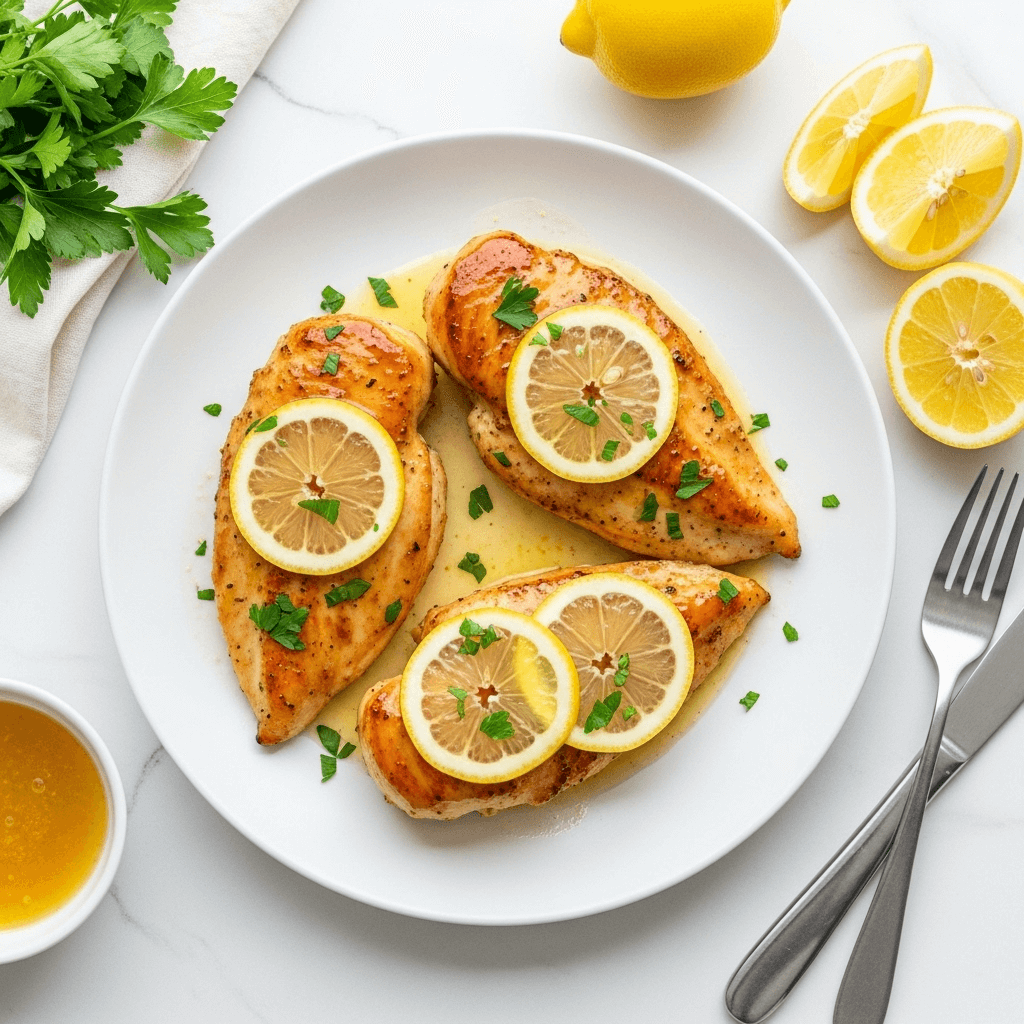

If you’re searching for a dinner recipe that’s both elegant enough for guests and simple enough for a Tuesday night, this lemon chicken recipe is about to become your new best friend. Picture this: golden-brown, tender chicken breasts swimming in a silky, tangy lemon butter sauce that’s so good you’ll want to drink it with a spoon (we won’t judge). This easy lemon chicken dinner comes together in just 30 minutes, uses ingredients you probably already have, and tastes like something you’d order at an upscale restaurant. Whether you’re a beginner cook or a seasoned home chef, this recipe delivers impressive results every single time.
Introduction of Recipe
Lemon chicken is a classic dish that features pan-seared or baked chicken finished with a bright, zesty lemon sauce. The magic happens when you combine fresh lemon juice, butter, garlic, and chicken broth to create a sauce that’s simultaneously tangy, rich, and utterly addictive. This isn’t your average weeknight chicken—it’s the kind of meal that makes people ask for seconds and beg for the recipe.
What makes this lemon chicken recipe so universally loved is its perfect balance of flavors. The citrus cuts through the richness of the butter, the garlic adds depth, and the sauce ties everything together beautifully. Serve this lemon butter chicken for weeknight family dinners when you need something quick but special, romantic date nights at home when you want to impress, Sunday suppers with extended family, or even meal prep for elegant lunches throughout the week. It pairs beautifully with practically any side dish and looks stunning on the plate with minimal effort.
The versatility of lemon chicken means you can dress it up or keep it casual. Serve it over creamy mashed potatoes for comfort food vibes, alongside roasted vegetables for a lighter meal, or over pasta to soak up every drop of that incredible sauce. No matter how you serve it, you’re guaranteed compliments.
History / Background
While lemon chicken has variations across multiple cultures, the version most Americans know and love is heavily influenced by Italian and French cooking traditions. In Italy, “pollo al limone” has been a beloved preparation for generations, particularly in southern regions like Sicily and Campania where lemon trees flourish. Italian grandmothers have been making versions of this dish for centuries, using the abundant Meyer lemons and fragrant Sorrento lemons that grow throughout the Mediterranean coast.
The French also have their own take called “poulet au citron,” which typically features a butter and wine-based sauce brightened with lemon. French technique emphasizes creating silky pan sauces through deglazing—using liquid to lift all those flavorful browned bits from the pan after searing meat. This method is exactly what gives our lemon chicken sauce its incredible depth of flavor.
When Italian and French immigrants came to America, they brought these beloved lemon chicken preparations with them. Over time, the recipe evolved into the American version we see today—a beautiful hybrid that takes the best elements from both traditions. It became popular in American restaurants during the mid-20th century, particularly in Italian-American trattorias and French bistros, where it was prized for being both delicious and relatively quick to prepare during busy dinner service.
Interestingly, Chinese-American cuisine also has its own version of lemon chicken, though it’s quite different—typically featuring a sweet, battered, deep-fried preparation with a thick lemon sauce. While both are delicious, this recipe focuses on the Mediterranean-inspired pan-seared version that’s lighter, brighter, and showcases the natural flavor of quality chicken.
Today, lemon chicken remains a restaurant favorite and home cooking staple because it delivers maximum flavor with minimal fuss. It’s proof that you don’t need complicated techniques or exotic ingredients to create something truly special—just quality basics prepared with care.
Why You’ll Love This Recipe
This easy lemon chicken recipe is about to earn a permanent spot in your dinner rotation, and here’s exactly why it deserves that honor:
Imagine getting home after a long day, knowing you need to put dinner on the table, but you’re too tired for anything complicated. This recipe swoops in like a culinary superhero—it’s ready in 30 minutes flat, uses one pan for easy cleanup, and tastes like you spent hours in the kitchen. The sauce is so delicious that it transforms simple chicken breasts into something extraordinary.
- Restaurant-quality results at home: This lemon butter chicken tastes like it came from an Italian bistro, but costs a fraction of the price and you don’t have to change out of your sweatpants to enjoy it
- Quick weeknight dinner: From start to finish, you’re looking at just 30 minutes, making it perfect for busy families who still want real, homemade food
- Simple ingredients: No hunting down specialty items—this recipe uses pantry staples and fresh basics you can grab at any grocery store
- One-pan wonder: Everything cooks in a single skillet, which means minimal dishes to wash later (the real victory of any weeknight)
- Naturally gluten-free and keto-friendly: Skip the flour dredging (or use almond flour) and you’ve got a dinner that works for various dietary needs
- Impressive but approachable: Looks and tastes fancy enough to serve to guests, but the technique is simple enough for beginner cooks to master
- Incredibly versatile: Pair it with literally any side dish you love, and it works—rice, pasta, potatoes, vegetables, you name it
- Meal prep champion: Makes excellent leftovers and the flavors actually improve overnight as the chicken soaks up more of that lemony goodness
- Budget-friendly: Chicken breasts are affordable protein, and the other ingredients are inexpensive staples that stretch your grocery budget
Ingredient Notes
Let’s break down what makes this lemon chicken so incredibly delicious and where you can make smart substitutions:
Boneless, Skinless Chicken Breasts: These are the star of the show. Choose breasts that are roughly the same size for even cooking. If your chicken breasts are extra thick (over 1 inch), consider pounding them to an even thickness or butterflying them. For budget-conscious cooks, chicken thighs work beautifully too and stay even juicier, though they’ll need a few extra minutes of cooking time.
Fresh Lemons: This is not the place for bottled lemon juice, friends. Fresh lemons provide bright, vibrant flavor that bottled versions just can’t match. You’ll need both the juice and the zest for maximum lemon impact. Plan on 2-3 medium lemons for this recipe. Meyer lemons, if you can find them, offer a slightly sweeter, more complex flavor that’s absolutely divine.
Butter: Good quality butter makes a real difference in the sauce’s richness and flavor. Use unsalted butter so you can control the salt level yourself. For a lighter version, you can reduce the butter by half, though the sauce won’t be quite as luxurious. Some people successfully substitute olive oil for part of the butter for a more Mediterranean profile.
Garlic: Fresh garlic cloves, minced or pressed, add aromatic depth to the sauce. Don’t skip this! Garlic powder can work in a pinch, but fresh garlic brings a brightness that complements the lemon perfectly. Plan on 3-4 cloves depending on how much you love garlic.
Chicken Broth: This forms the base of your pan sauce. Low-sodium chicken broth is best so you can control seasoning. Vegetable broth works if you have vegetarians at the table. For extra richness, some cooks use half broth and half white wine—it adds wonderful complexity.
All-Purpose Flour: Used for lightly dredging the chicken, which helps create a golden crust and thickens the sauce slightly. For gluten-free needs, almond flour or coconut flour works well. For keto-friendly, skip it entirely or use a very light dusting of almond flour.
Olive Oil: Used for searing the chicken. Choose regular olive oil (not extra virgin) since it has a higher smoke point and won’t burn as easily during searing.
Fresh Herbs: While optional, fresh parsley, thyme, or basil add a lovely finishing touch. Parsley is traditional, but feel free to use whatever herbs you have on hand or prefer.
Salt and Pepper: Season generously! Chicken needs proper seasoning to taste its best. Use fine sea salt or kosher salt, and freshly cracked black pepper whenever possible.
Heavy Cream (optional): Some variations of lemon chicken include a splash of cream for extra richness. This is entirely optional but creates a more velvety sauce that’s incredibly indulgent.
Equipment Needed
You won’t need any specialized equipment for this easy lemon chicken dinner. Here’s what you’ll use:
- Large skillet or sauté pan (preferably 12-inch with a lid)—stainless steel or cast iron works best for building flavorful fond
- Meat thermometer (instant-read is ideal for checking doneness accurately)
- Tongs (for flipping chicken without piercing it)
- Sharp knife and cutting board (for prep work)
- Measuring cups and spoons (for accuracy)
- Shallow dish or plate (for dredging chicken in flour)
- Microplane or zester (for getting perfect lemon zest)
- Citrus juicer or reamer (optional but helpful for extracting lemon juice)
- Whisk or wooden spoon (for making the sauce)
- Serving platter (optional, for presenting your beautiful creation)

Lemon Chicken Recipe
- Total Time: 30 minutes
- Yield: 4 servings 1x
- Diet: Gluten Free
Description
This restaurant-quality lemon chicken recipe features tender, golden chicken breasts in a silky lemon butter sauce that’s bright, tangy, and absolutely irresistible. Ready in just 30 minutes with simple ingredients, this easy weeknight dinner tastes like it came from an upscale Italian bistro. The perfect balance of rich butter and fresh citrus creates a sauce so good you’ll want to lick the plate!
Ingredients
For the Chicken:
- 4 boneless, skinless chicken breasts (about 6–8 oz each)
- ½ cup all-purpose flour (or almond flour for gluten-free)
- 1 teaspoon salt
- ½ teaspoon black pepper
- ½ teaspoon garlic powder
- 2 tablespoons olive oil
For the Lemon Butter Sauce:
- 4 tablespoons unsalted butter, divided
- 4 cloves garlic, minced
- 1 cup chicken broth (low-sodium preferred)
- ⅓ cup fresh lemon juice (about 2 large lemons)
- 2 teaspoons lemon zest
- 2 tablespoons capers, drained (optional)
- ¼ cup heavy cream (optional, for creamier sauce)
- 2 tablespoons fresh parsley, chopped
- Lemon slices for garnish
- Additional salt and pepper to taste
Instructions
Step 1: Prepare the Chicken
Pat the chicken breasts completely dry with paper towels—this is crucial for getting a good sear. If any breasts are significantly thicker than others, place them between plastic wrap and gently pound to an even ¾-inch thickness using a meat mallet or rolling pin. This ensures even cooking and prevents dry, overcooked edges while waiting for thick centers to cook through.
Step 2: Set Up Dredging Station
In a shallow dish, combine the flour, salt, pepper, and garlic powder. Whisk together to distribute the seasonings evenly. Dredge each chicken breast in the seasoned flour mixture, coating both sides and shaking off any excess. The coating should be light and even, not thick or clumpy. Set the coated chicken on a plate while you heat your pan.
Step 3: Sear the Chicken
Heat the olive oil in a large skillet over medium-high heat until it shimmers. Carefully place the chicken breasts in the pan, making sure not to overcrowd (work in batches if needed). Let them cook undisturbed for 5-6 minutes until the bottom is golden brown and releases easily from the pan. Flip and cook the second side for 5-6 minutes more until the internal temperature reaches 165°F when checked with a meat thermometer. Transfer the cooked chicken to a plate and tent loosely with foil to keep warm.
Step 4: Build the Lemon Butter Sauce
Reduce the heat to medium and add 2 tablespoons of butter to the same skillet (don’t wipe it out—those browned bits are pure flavor). Once the butter melts, add the minced garlic and sauté for about 30 seconds until fragrant but not browned. Pour in the chicken broth and use a wooden spoon or whisk to scrape up all those delicious browned bits stuck to the bottom of the pan—this is called deglazing and it’s where so much flavor comes from.
Step 5: Finish the Sauce
Add the fresh lemon juice, lemon zest, and capers (if using) to the skillet. Bring the mixture to a simmer and let it cook for 3-4 minutes until slightly reduced. Stir in the remaining 2 tablespoons of butter, whisking until it’s fully melted and the sauce looks glossy and cohesive. If you’re making the creamy version, add the heavy cream now and stir until combined. Taste and adjust seasoning with salt and pepper as needed.
Step 6: Combine and Serve
Return the chicken breasts and any accumulated juices to the skillet, nestling them into the sauce. Spoon some sauce over the top of each piece. Let everything simmer together for 2-3 minutes so the chicken can absorb some of that lemony goodness and warm through completely. Garnish with fresh parsley and lemon slices. Serve immediately, making sure each person gets plenty of that incredible pan sauce.
Notes
- Thickness Matters: Unevenly thick chicken breasts cook unevenly. Take the extra minute to pound them to uniform thickness for perfectly cooked meat every time.
- Temperature Check: Don’t guess on doneness—chicken breasts should reach an internal temperature of 165°F. Invest in an instant-read thermometer; it’s a game-changer.
- Flour Alternatives: For gluten-free lemon chicken, use almond flour or skip the flour entirely and just season the chicken well. For a crispier coating, you can dredge in flour, then egg, then breadcrumbs or panko before pan-frying.
- Broth Substitution: Replace ½ cup of the chicken broth with dry white wine (like Pinot Grigio or Sauvignon Blanc) for restaurant-style depth of flavor.
- Make it Spicy: Add a pinch of red pepper flakes when you sauté the garlic for a subtle kick that complements the lemon beautifully.
- Capers: These little briny flavor bombs are optional but highly recommended. They add a sophisticated, tangy element that takes the dish to the next level.
- Prep Time: 10 minutes
- Cook Time: 20 minutes
- Category: Dinner
- Method: Stovetop
- Cuisine: Italian-American
Nutrition
- Serving Size: 1 chicken breast with sauce (1/4 of recipe)
- Calories: 385
- Sugar: 1g
- Sodium: 720mg
- Fat: 22g
- Saturated Fat: 10g
- Unsaturated Fat: 11g
- Trans Fat: 0g
- Carbohydrates: 14g
- Fiber: 1g
- Protein: 35g
- Cholesterol: 135mg
Tips & Variations
Let’s explore all the delicious ways you can customize this lemon butter chicken to make it your own:
Creamy Lemon Chicken: Add ⅓ cup of heavy cream or half-and-half to the finished sauce for a richer, more velvety texture. The cream mellows the acidity of the lemon slightly and creates a luxurious coating for the chicken. Some people also stir in a tablespoon of cream cheese for extra richness.
Lemon Chicken Piccata: This is essentially what you get when you add capers and a splash of white wine to the traditional lemon chicken. It’s slightly more sophisticated and absolutely restaurant-worthy. Use 2-3 tablespoons of drained capers and replace ½ cup of broth with dry white wine.
Herb-Crusted Version: Add 2 tablespoons of fresh chopped herbs (parsley, thyme, basil, or a combination) to your flour mixture for extra flavor in the crust. Fresh herbs also make a gorgeous garnish.
Mediterranean Lemon Chicken: Add halved cherry tomatoes and sliced kalamata olives to the pan during the last few minutes of cooking. Top with crumbled feta cheese just before serving. This transforms the dish into something that feels straight from the Greek islands.
Garlic Lemon Chicken: For serious garlic lovers, double the garlic in the sauce and add some roasted garlic cloves as a garnish. The roasted garlic becomes sweet and mellow, while the fresh garlic in the sauce provides sharpness.
Lightened-Up Version: Reduce the butter to 2 tablespoons total and increase the broth slightly. The sauce will be thinner but still flavorful. You can also use chicken tenderloins instead of breasts for naturally smaller portions.
One-Pan Lemon Chicken and Vegetables: Add asparagus, green beans, or broccoli florets to the pan after removing the chicken. Let them cook in the sauce for 4-5 minutes, then return the chicken to the pan. Now you have a complete one-pan meal!
Spicy Lemon Chicken: Add ½ teaspoon of red pepper flakes to the sauce along with a teaspoon of honey to balance the heat. Some people also like adding a splash of hot sauce or sriracha for extra kick.
Lemon Herb Chicken: Infuse the butter sauce with fresh thyme sprigs or rosemary while it simmers, then remove them before serving. The herbs add an aromatic quality that’s absolutely beautiful with the lemon.
Pro Chef Tips
Want to take your lemon chicken from good to absolutely spectacular? Here are insider secrets from professional chefs:
Brine for Extra Juiciness: If you have time, brine your chicken breasts for 30 minutes before cooking. Dissolve ¼ cup of salt in 4 cups of cold water, submerge the chicken, refrigerate for 30 minutes, then rinse and pat completely dry. This simple step keeps chicken incredibly moist and seasons it from the inside out.
Room Temperature Chicken: Take your chicken out of the refrigerator 15-20 minutes before cooking. Room temperature chicken cooks more evenly and develops better color than cold chicken straight from the fridge.
Don’t Move the Chicken: When searing, resist the urge to move, flip, or check the chicken constantly. Let it sit undisturbed so a proper crust can develop. The chicken will release naturally from the pan when it’s ready to flip—if it’s sticking, it needs more time.
Use the Fond: Those brown bits stuck to the bottom of your pan after searing are called fond, and they’re liquid gold for building flavor. Make sure to scrape them up when you deglaze with broth or wine. This is where restaurant-quality depth of flavor comes from.
Finish with Cold Butter: The last addition of butter should be added off the heat and whisked in vigorously. This technique (called “mounting” the sauce in professional kitchens) creates a glossy, emulsified sauce that coats the chicken beautifully rather than separating into greasy pools.
Fresh Citrus Zest: Zest your lemon before juicing it (much easier that way), and add the zest at the end of cooking rather than at the beginning. Heat can make zest bitter, so adding it toward the end preserves its bright, aromatic oils.
Temperature, Not Time: Every stove and pan combination cooks differently. Always use a meat thermometer to check for doneness at 165°F rather than relying solely on cooking times. This eliminates guesswork and prevents overcooking.
Let it Rest: After removing chicken from the pan, let it rest for 5 minutes before slicing. This allows the juices to redistribute throughout the meat rather than spilling out onto your cutting board. If you’re serving whole breasts, this is less critical, but still helps.
Balance Your Acid: Taste your sauce before serving. If it’s too acidic, add a small pinch of sugar or a pat of butter to round it out. If it’s too rich, add a squeeze more lemon juice. Proper seasoning makes all the difference between good and great.
Common Mistakes to Avoid
Even with a straightforward recipe like this, there are a few pitfalls that can derail your dinner. Here’s what to watch out for:
Overcooking the Chicken: This is the number one tragedy in chicken cooking. Once chicken reaches 165°F, it’s done—continuing to cook it will only make it dry and tough. Use a meat thermometer and remove the chicken from heat right when it hits temperature. It will continue cooking slightly from residual heat (called carryover cooking). Many experienced cooks actually remove chicken at 160°F knowing it will coast up to 165°F as it rests.
Not Drying the Chicken: Moisture is the enemy of a good sear. If your chicken is wet when it hits the pan, it will steam instead of brown, and you’ll miss out on that delicious golden crust and all the flavor it provides. Pat your chicken completely dry with paper towels before seasoning and dredging. It seems fussy, but it makes a dramatic difference.
Overcrowding the Pan: If your pan is too small or you try to cook too much chicken at once, the temperature will drop and the chicken will steam rather than sear. Leave at least an inch of space between pieces. If necessary, work in batches, keeping the first batch warm in a low oven while you cook the rest.
Using Bottled Lemon Juice: Fresh lemon juice is non-negotiable in this recipe. Bottled lemon juice has a flat, slightly bitter flavor that can’t compete with the bright, vibrant taste of fresh lemons. Since lemon is the star of this dish, using fresh makes an enormous difference in the final result.
Burning the Garlic: Garlic goes from fragrant to burnt in a matter of seconds, and burnt garlic is bitter and unpleasant. Add garlic to moderately heated butter (not screaming hot oil) and stir constantly for just 30 seconds until you smell it. If you see any browning, it’s already too far.
Not Deglazing Properly: After removing your chicken, there should be browned bits (fond) stuck to the pan. These are flavor bombs! When you add your liquid, make sure to scrape them up thoroughly with a wooden spoon. If your pan is too clean before making the sauce, you’ve missed an opportunity for deeper flavor.
Sauce Too Thin or Too Thick: If your sauce is too thin and watery, let it simmer longer to reduce and concentrate the flavors. If it’s too thick, add a splash more broth. The final consistency should coat a spoon but still be pourable—think of how a proper pan sauce should look at a nice restaurant.
Storage & Meal Prep
This lemon chicken recipe is fantastic for meal prep and makes excellent leftovers that taste even better the next day:
Storing Leftovers: Let the chicken cool to room temperature (within 2 hours of cooking), then transfer it and the sauce to an airtight container. Refrigerate for up to 4 days. The chicken will continue to absorb the lemon sauce flavors as it sits, making leftovers incredibly tasty. Store the chicken in the sauce rather than separately to keep it moist.
Reheating Instructions: The best way to reheat lemon chicken is gently in a covered skillet over medium-low heat with a splash of chicken broth to prevent drying out. This takes about 5-7 minutes and keeps the chicken tender. You can also microwave individual portions at 50% power in 30-second intervals until heated through, though this method won’t keep the chicken quite as juicy. Avoid reheating at high temperatures, which will toughen the meat.
Meal Prep Strategy: Cook the full recipe at the beginning of the week and portion it into meal prep containers with your choice of sides. Rice, quinoa, roasted vegetables, or salad all work beautifully. The chicken stays delicious for 4 days, giving you ready-made lunches or quick dinners. Consider packing the sauce separately if you prefer your chicken less saucy.
Extending Freshness: Store the chicken and sauce in a shallow, airtight container so it cools quickly and evenly. This prevents bacterial growth and maintains quality. Glass containers work especially well for acidic dishes like this since plastic can sometimes absorb flavors.
Make-Ahead & Freezer Notes
Planning ahead makes weeknight dinners even easier with this adaptable recipe:
Preparing Components in Advance: You can pound and season your chicken breasts up to 24 hours ahead, storing them covered in the refrigerator. You can also prep your garlic, zest your lemons, and measure out all your ingredients, storing everything in small containers. When dinner time arrives, all you need to do is cook—the prep is already done!
Freezing Cooked Lemon Chicken: This recipe freezes beautifully for up to 3 months. Let the chicken and sauce cool completely, then transfer to freezer-safe containers or heavy-duty freezer bags. Remove as much air as possible to prevent freezer burn. Label with the date and contents. Freeze the chicken in its sauce to maintain moisture.
Freezing Raw Marinated Chicken: For ultimate convenience, place raw chicken breasts in a freezer bag with lemon juice, garlic, olive oil, and herbs. Seal, removing excess air, and freeze flat for up to 3 months. When ready to cook, thaw overnight in the refrigerator, then proceed with the recipe, making the pan sauce fresh. This method means you can have lemon chicken any night without any advance thawing or planning.
Thawing and Reheating from Frozen: The safest way to thaw is overnight in the refrigerator. In a pinch, you can use the defrost setting on your microwave, but be careful not to start cooking the chicken. Once thawed, reheat gently in a covered skillet over medium-low heat, adding a splash of broth if the sauce has thickened too much in the freezer.
What Not to Freeze: If you’re planning to freeze, skip adding the fresh herbs and cream to the original cooking process. Add these when reheating for the best flavor and texture. Cream can sometimes separate when frozen and reheated, though it usually comes back together with some whisking.
Serving Suggestions
Lemon chicken is wonderfully versatile and pairs beautifully with countless sides. Here are some winning combinations:
Starchy Sides: Serve your lemon butter chicken over creamy mashed potatoes that soak up every drop of sauce. Buttery egg noodles or angel hair pasta make an elegant presentation and catch all that lemony goodness. Fluffy white rice or lemon herb rice pilaf create a complete meal. For a lower-carb option, try cauliflower rice or zucchini noodles.
Vegetable Sides: Roasted asparagus with a sprinkle of parmesan cheese complements the lemon flavors perfectly. Garlicky sautéed green beans add color and crunch. Roasted Brussels sprouts with balsamic glaze provide a slightly sweet contrast. A simple arugula salad with shaved parmesan and lemon vinaigrette keeps things light and fresh. Roasted broccoli or broccolini seasoned with garlic and lemon zest creates a cohesive flavor profile.
Bread: Crusty Italian bread or garlic bread is essential for soaking up that incredible sauce—don’t let a single drop go to waste! Dinner rolls, focaccia, or even a simple baguette work beautifully. For a lighter option, serve with whole grain bread or skip it entirely.
Complete Meal Ideas: Try lemon chicken over creamy polenta with roasted cherry tomatoes for an Italian-inspired feast. Serve it alongside garlic mashed potatoes and steamed broccoli for classic comfort food. Pair it with orzo pasta tossed with spinach and feta for Mediterranean flavors. Create a grain bowl with quinoa, roasted vegetables, and the sliced chicken on top for a healthier approach.
Beverages: This dish pairs wonderfully with crisp white wines like Pinot Grigio, Sauvignon Blanc, or Chardonnay. The acidity in the wine complements the lemon in the dish beautifully. For non-alcoholic options, serve with sparkling water with lemon slices, iced green tea, or lemonade for a fun thematic match.
Make it a Dinner Party: Serve lemon chicken as part of an Italian-themed dinner party alongside a caprese salad appetizer, the chicken as your main course, and tiramisu or panna cotta for dessert. Your guests will think you spent all day cooking when the whole meal came together in under an hour!
FAQs Section
Can I use chicken thighs instead of breasts?
Absolutely! Boneless, skinless chicken thighs work beautifully in this recipe and actually stay even juicier than breasts due to their higher fat content. You’ll need to adjust the cooking time—thighs typically take 6-7 minutes per side. Check that the internal temperature reaches 165°F. Thighs are also more forgiving if you accidentally overcook them slightly. Some people actually prefer the richer flavor of thighs for this preparation.
How do I know when the chicken is done without a thermometer?
While a meat thermometer is the most reliable method, you can also check by cutting into the thickest part of the chicken. The meat should be opaque white throughout with no pink remaining, and the juices should run clear, not pink. If you press on the chicken, it should feel firm but still give slightly, not mushy or hard. That said, a thermometer takes the guesswork out and is worth the small investment.
Can I make this recipe dairy-free?
Yes! Replace the butter with olive oil or a plant-based butter substitute. You’ll lose some of the rich, buttery flavor, but the lemon and garlic will still make it delicious. For the creamy version, use full-fat coconut milk or cashew cream instead of heavy cream. The coconut milk will add a subtle tropical note that actually works beautifully with lemon.
Why is my chicken tough and dry?
The most common cause is overcooking. Chicken breasts have very little fat, so they become tough and dry quickly once they exceed 165°F. Use a meat thermometer and remove the chicken right when it reaches temperature. Also, make sure you’re not using chicken breasts that are too thick—anything over 1 inch should be pounded thinner for even cooking. Finally, letting the chicken rest for 5 minutes after cooking helps redistribute juices.
Can I use bottled lemon juice if I don’t have fresh lemons?
While you technically can, we really don’t recommend it for this recipe. Since lemon is the star flavor, using fresh makes an enormous difference. Bottled lemon juice has a flat, somewhat bitter taste that can’t compare to fresh. If you absolutely must substitute, use only 2 tablespoons of bottled juice instead of ⅓ cup fresh, and add a teaspoon of lemon zest if you have a lemon available (you can zest before juicing).
What’s the best way to get more lemon flavor without making it too sour?
Add more lemon zest rather than more juice. Zest contains all the aromatic oils without the acidity, so it boosts lemon flavor without increasing sourness. You can also add lemon slices to the pan while the sauce simmers—they’ll release flavor but in a milder way. Another trick is to add a tiny pinch of sugar to balance the acidity while still maintaining bright citrus notes.
Can I make this in advance for a dinner party?
You can prep all your ingredients ahead, but for the best results, cook this dish just before serving. However, if you must cook ahead, prepare everything up to adding the chicken back to the sauce. Refrigerate the chicken and sauce separately, then gently rewarm together in a covered skillet about 15 minutes before serving. It won’t be quite as perfect as freshly made, but it will still be delicious. The texture suffers least if you slightly undercook the chicken initially, knowing it will cook more when reheated.
Conclusion
There you have it—your complete guide to making restaurant-quality lemon chicken right in your own kitchen! This recipe proves that incredible flavor doesn’t require hours of work or complicated techniques. In just 30 minutes, with ingredients you probably already have, you can create a dinner that’s impressive enough for company but easy enough for a busy Tuesday night.
The beauty of this easy lemon chicken dinner is how it adapts to your needs. Keep it simple on hectic weeknights, or dress it up with capers and cream when you want to impress. Pair it with whatever sides you love, adjust the seasonings to your taste, and make it your own. Once you’ve mastered this basic technique, you’ll find yourself returning to it again and again because it’s just that good.