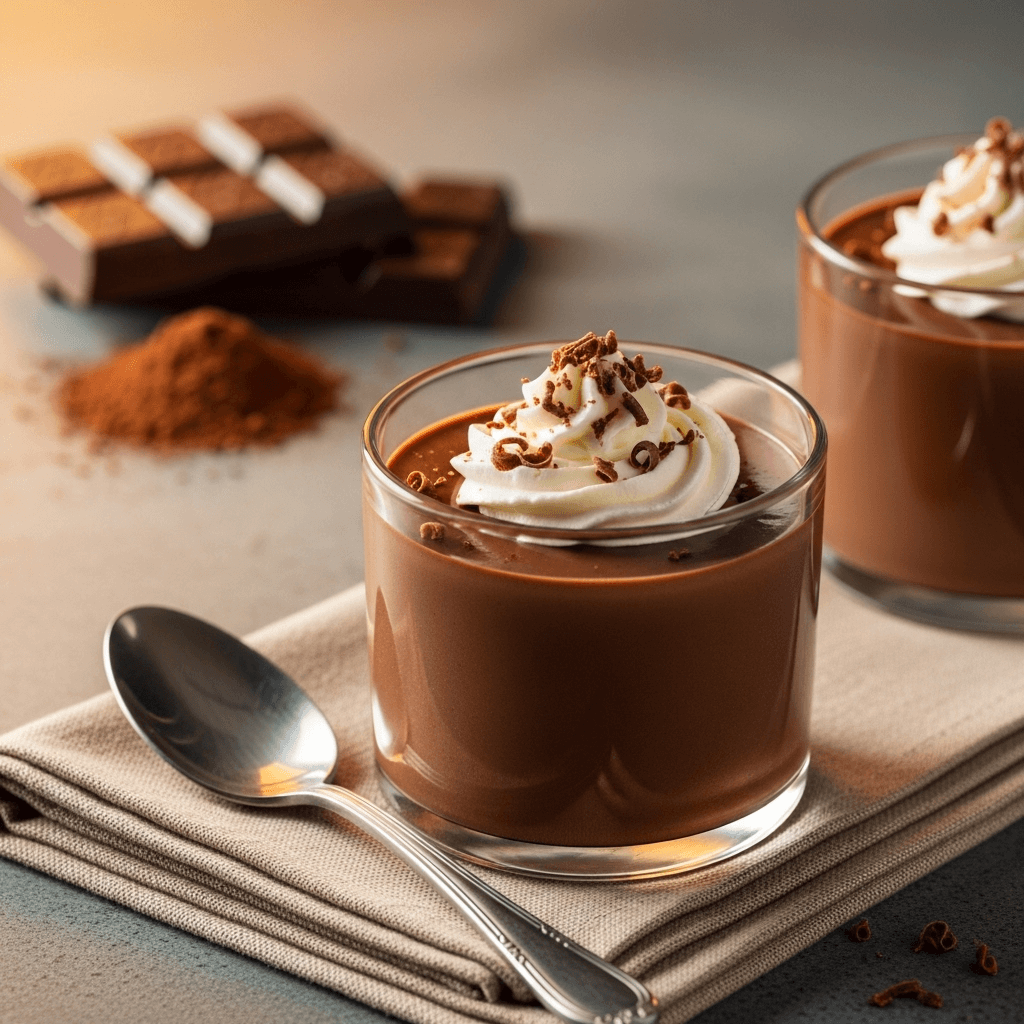

Forget everything you think you know about chocolate pudding from those instant boxes! This homemade chocolate pudding recipe is a game-changer—silky smooth, intensely chocolatey, perfectly sweet, and made from scratch with just a handful of simple ingredients. Once you taste the rich, velvety texture and deep cocoa flavor of real chocolate pudding, there’s absolutely no going back to the packaged stuff.
What makes this easy chocolate pudding truly special is how it achieves that luxurious, creamy texture that coats your spoon and melts on your tongue. This isn’t thin or grainy—it’s thick, luscious, and indulgent enough to serve at dinner parties, yet simple enough to whip up on a random Tuesday when you’re craving something sweet. The best part? It comes together in just 20 minutes on your stovetop with ingredients you probably already have in your pantry.
This creamy chocolate pudding works for so many occasions: an impressive make-ahead dessert for dinner parties, a nostalgic childhood treat that tastes even better than you remember, an elegant parfait base, pie filling, or simply a comforting bowl of chocolate heaven after a long day. Kids and adults alike go crazy for this recipe, and it’s naturally gluten-free, easily made dairy-free, and contains no artificial flavors or preservatives—just pure chocolate bliss.
Whether you’re making it for a special occasion or simply treating yourself to homemade comfort food, this from-scratch chocolate pudding delivers restaurant-quality results with minimal effort. Let’s make the most incredible chocolate pudding you’ve ever tasted!
History / Background
Pudding has a fascinating culinary history that spans centuries and continents. The word “pudding” originally referred to savory dishes in medieval England—think blood pudding or Yorkshire pudding—but sweet puddings as we know them today evolved during the 17th and 18th centuries when sugar became more accessible to European households.
Chocolate pudding specifically has its roots in the collision of European pudding-making traditions and the New World ingredient of cacao. When Spanish conquistadors brought cacao beans back from the Americas in the 1500s, chocolate was initially consumed as a beverage by European aristocracy. It wasn’t until the 1800s, with advancements in chocolate processing and the industrial revolution, that chocolate became affordable enough for everyday desserts.
The thick, custard-style chocolate pudding we know today emerged in American and British kitchens during the Victorian era. Early recipes required lengthy preparation—tempering eggs, carefully cooking custards in double boilers, and constant stirring to prevent scorching. These puddings were signs of culinary skill and household refinement, often molded into elaborate shapes and served at formal dinners.
The democratization of chocolate pudding came in the 1930s and 1940s with two major developments: the invention of cornstarch-thickened puddings (which were easier and more foolproof than egg-based custards) and the introduction of instant pudding mixes. In 1936, My-T-Fine introduced one of the first chocolate pudding mixes. Then in 1948, General Foods launched instant Jell-O pudding that required no cooking—just mixing with milk. These conveniences made chocolate pudding a staple of American childhoods.
However, something was lost in translation. While instant pudding offered convenience, it couldn’t replicate the deep, complex chocolate flavor and silky texture of traditional homemade pudding. The artificial flavors, strange additives, and somewhat plastic-like texture of instant pudding became the norm for generations who never experienced the real thing.
Today, there’s a beautiful renaissance of from-scratch cooking, and homemade chocolate pudding is having its moment again. Food bloggers, home cooks, and even restaurant pastry chefs are rediscovering that making chocolate pudding from scratch isn’t difficult or time-consuming—it just requires about 20 minutes and yields results that are exponentially better than anything from a box.
This recipe represents the best of both worlds: the rich, authentic flavor and texture of traditional chocolate pudding combined with the simplified technique and accessibility of modern home cooking. It honors the culinary traditions of the past while fitting perfectly into our busy modern lives.
Why You’ll Love This Recipe
This isn’t just chocolate pudding—this is THE chocolate pudding that will ruin you for all other versions. Once you make this from-scratch recipe, boxed pudding will never satisfy you again.
Here’s why this homemade chocolate pudding will become your new obsession:
- Ready in 20 minutes – From start to finish, including cooking and cooling time, you’ll have incredible pudding faster than a trip to the store
- Intensely chocolatey – Made with real cocoa powder and dark chocolate for deep, complex chocolate flavor
- Silky smooth texture – That luxurious, spoon-coating consistency you dream about in desserts
- Simple ingredients – Just milk, sugar, cocoa, cornstarch, butter, vanilla, and a pinch of salt—nothing artificial or unpronounceable
- Budget-friendly – Costs less per serving than buying pre-made pudding cups and tastes 100 times better
- Naturally gluten-free – Perfect for those avoiding gluten without any special modifications
- Easily made dairy-free – Simple substitutions create an equally delicious vegan version
- Kid-approved – Even picky eaters devour this rich, creamy chocolate pudding
- Impressive enough for company – Serve in fancy glasses with whipped cream and guests will think you’re a pastry chef
- Perfect make-ahead dessert – Actually improves as it chills, making it ideal for entertaining
- Versatile base recipe – Use as pie filling, parfait layers, or eat straight from the bowl
- No artificial anything – Just real ingredients creating authentic chocolate flavor
- Customizable – Easy to adjust chocolate intensity, sweetness, or add fun flavors
Ingredient Notes
The magic of this chocolate pudding comes from using quality ingredients in the perfect proportions. Here’s what you need to know:
Whole Milk – Creates the creamy base and provides richness. Whole milk (full-fat) yields the best texture and flavor, but 2% milk works if you prefer lighter pudding. Avoid skim milk—there’s not enough fat to create proper creaminess. For dairy-free pudding, use full-fat coconut milk or oat milk (the best non-dairy substitutes for creaminess).
Granulated Sugar – Provides sweetness and helps create the smooth texture. The amount here creates a perfectly balanced sweetness—not too sweet, not too subtle. You can reduce by 2 tablespoons if you prefer less sweet desserts, though this may slightly affect texture.
Unsweetened Cocoa Powder – This is crucial for chocolate flavor! Use high-quality unsweetened cocoa powder (not hot chocolate mix). Dutch-process cocoa creates darker color and more mellow flavor, while natural cocoa provides brighter, more intense chocolate taste. Both work beautifully—it’s personal preference. Brands like Ghirardelli, Valrhona, or Hershey’s Special Dark all produce excellent results.
Cornstarch – The thickening agent that creates that perfect pudding consistency. Cornstarch thickens without eggs, making this recipe easier and more foolproof than traditional custards. Don’t substitute with flour (creates gummy texture) or arrowroot (doesn’t hold up well). Cornstarch is essential here.
Salt – Just a pinch enhances the chocolate flavor and balances sweetness. Never skip salt in chocolate desserts—it makes everything taste more chocolatey and prevents one-dimensional sweetness.
Dark Chocolate – Adding real chocolate along with cocoa powder creates incredible depth and richness. Use good-quality dark chocolate (60-70% cacao) chopped into small pieces or chocolate chips. Semi-sweet chocolate also works but creates slightly sweeter pudding. This ingredient takes your pudding from good to extraordinary.
Unsalted Butter – Adds richness, silky mouthfeel, and a subtle gloss to the finished pudding. Stir it in at the end for the smoothest incorporation. For dairy-free, use vegan butter or coconut oil.
Vanilla Extract – Enhances and rounds out the chocolate flavor. Always use pure vanilla extract, never imitation—the difference is noticeable in simple recipes like this. A quality vanilla makes your chocolate taste even more chocolatey.
Optional: Espresso Powder – Just ½ teaspoon intensifies chocolate flavor without making it taste like coffee. This is a professional pastry chef trick that takes your pudding to the next level.
Equipment Needed
Making chocolate pudding from scratch requires minimal equipment—just basic kitchen tools:
- Medium heavy-bottomed saucepan – Essential for even heat distribution and preventing scorching. A 2-3 quart saucepan works perfectly. Avoid thin, cheap pans which create hot spots.
- Whisk – A good wire whisk is crucial for creating smooth pudding without lumps. You’ll use this constantly during cooking.
- Measuring cups and spoons – Accurate measurements matter in pudding, so use proper measuring tools
- Fine-mesh strainer – Optional but recommended for ultra-smooth, lump-free pudding
- Rubber spatula – For scraping down sides and getting every bit of pudding out of the pan
- Serving bowls or ramekins – Individual serving dishes or one large bowl for family-style serving
- Plastic wrap – To cover pudding while it chills and prevent skin formation
- Medium mixing bowl – If straining the pudding before serving
That’s it! No special equipment, mixers, or gadgets required.
Print
Chocolate Pudding Recipe
- Total Time: 2 hours 15 minutes (includes chilling)
- Yield: 6 servings 1x
- Diet: Gluten Free
Description
This homemade chocolate pudding is rich, creamy, and intensely chocolatey—made from scratch in just 20 minutes with simple ingredients. Smooth and velvety with deep cocoa flavor, this easy chocolate pudding recipe tastes infinitely better than anything from a box. Perfect for make-ahead desserts, chocolate lovers, and impressing dinner guests. Naturally gluten-free and easily made dairy-free!
Ingredients
Main Ingredients:
- 2½ cups whole milk
- ½ cup granulated sugar
- ⅓ cup unsweetened cocoa powder
- 3 tablespoons cornstarch
- ¼ teaspoon salt
- 3 oz dark chocolate, finely chopped (or ½ cup chocolate chips)
- 2 tablespoons unsalted butter
- 1½ teaspoons vanilla extract
- Optional: ½ teaspoon instant espresso powder
For Serving:
- Whipped cream
- Chocolate shavings
- Fresh berries
- Crushed cookies
Instructions
- Combine dry ingredients: In a medium heavy-bottomed saucepan, whisk together the sugar, cocoa powder, cornstarch, and salt until completely combined with no lumps. This dry mixing prevents lumps better than adding liquids first. If using espresso powder, add it here.
- Add milk gradually: Pour in about ½ cup of the milk and whisk vigorously until you have a smooth paste with no lumps. This is important! Once you have a smooth paste, gradually whisk in the remaining 2 cups of milk until everything is well combined and smooth.
- Cook over medium heat: Place the saucepan over medium heat. Whisk constantly—and I mean constantly—as the mixture heats up. At first, nothing will happen for several minutes. Don’t increase the heat to rush it! Just keep whisking patiently.
- Watch for thickening: After 6-8 minutes of constant whisking, the mixture will suddenly start to thicken. You’ll feel resistance on your whisk, and it will begin to bubble. Once it starts bubbling, continue cooking and whisking for 1-2 more minutes. The pudding should be thick enough to coat the back of a spoon.
- Remove from heat and add chocolate: Take the pan off the heat immediately. Add the chopped dark chocolate and butter. Let sit for 30 seconds to allow the chocolate to melt from the residual heat, then whisk until completely smooth and glossy.
- Stir in vanilla: Whisk in the vanilla extract until fully incorporated. The pudding should be thick, smooth, and beautifully glossy.
- Strain for smoothness (optional): For ultra-smooth, professional-quality pudding, pour through a fine-mesh strainer into a clean bowl. Use a rubber spatula to press it through. This removes any tiny lumps or bits of cooked chocolate. This step is optional but recommended for the silkiest texture.
- Portion into serving dishes: Divide the warm pudding among 6 individual serving bowls, ramekins, or small mason jars. Alternatively, pour all of it into one large serving bowl for family-style serving.
- Prevent skin formation: Press plastic wrap directly onto the surface of each pudding (the plastic should touch the pudding surface). This prevents that thick skin from forming on top as it cools. Some people like the skin, but most prefer it without.
- Chill: Refrigerate for at least 2 hours until completely cold and set. The pudding will continue to thicken as it cools. For best texture and flavor, chill for 4 hours or overnight.
- Serve: Remove plastic wrap and serve cold. Top with whipped cream, chocolate shavings, fresh berries, or crushed cookies if desired. Enjoy your incredible homemade chocolate pudding!
Notes
- Constant whisking is essential: Don’t walk away or stop whisking, especially once it starts to thicken, or you’ll get lumps or scorched pudding.
- Medium heat only: High heat causes the mixture to thicken too quickly and unevenly, creating lumps or burning.
- Chocolate quality matters: Better chocolate = better pudding. Use chocolate you’d enjoy eating on its own.
- Thickening timing: If your pudding isn’t thickening after 10 minutes, increase heat slightly. If it thickens too fast, reduce heat.
- Skin prevention: The plastic wrap touching the surface is key to preventing skin formation.
- Pudding will thicken more as it cools: Don’t worry if it seems slightly thin when hot—it firms up perfectly when chilled.
- Prep Time: 5 minutes
- Cook Time: 10 minutes
- Category: Dessert
- Method: Stovetop
- Cuisine: American
Nutrition
- Serving Size: ⅙ of recipe (approximately ¾ cup)
- Calories: 245
- Sugar: 28g
- Sodium: 135mg
- Fat: 11g
- Saturated Fat: 7g
- Unsaturated Fat: 3g
- Trans Fat: 0g
- Carbohydrates: 35g
- Fiber: 3g
- Protein: 5g
- Cholesterol: 20mg
Tips & Variations
The basic chocolate pudding is perfection, but here are ways to customize it:
Dark Chocolate Pudding – Use 4 oz of dark chocolate (70% cacao) instead of 3 oz for more intense, less sweet chocolate flavor. Reduce sugar by 2 tablespoons.
Milk Chocolate Pudding – Use milk chocolate instead of dark chocolate for sweeter, milder pudding that kids especially love. The flavor is less sophisticated but still delicious.
Mexican Chocolate Pudding – Add ¾ teaspoon cinnamon and ¼ teaspoon cayenne pepper to the dry ingredients for spiced chocolate with a warming kick.
Mocha Pudding – Increase espresso powder to 1-2 teaspoons for noticeable coffee flavor that complements the chocolate beautifully.
Peppermint Chocolate Pudding – Replace vanilla with ½ teaspoon peppermint extract. Top with crushed candy canes for festive holiday pudding.
Orange Chocolate Pudding – Add 1 teaspoon orange zest and replace vanilla with ½ teaspoon orange extract for sophisticated orange-chocolate flavor.
Salted Caramel Chocolate Pudding – Drizzle each serving with salted caramel sauce and sprinkle with flaky sea salt. The sweet-salty combination is incredible.
Peanut Butter Chocolate Pudding – Stir 3 tablespoons creamy peanut butter into the hot pudding along with the butter. Swirl for marbled effect or mix completely.
Vegan Chocolate Pudding – Use full-fat coconut milk or oat milk, vegan butter, and dairy-free chocolate. The results are equally creamy and delicious!
Lighter Chocolate Pudding – Use 2% milk and reduce butter to 1 tablespoon for fewer calories while maintaining good flavor. The texture will be slightly less rich but still lovely.
Chocolate Pudding Pie – Pour the warm pudding into a prepared graham cracker or Oreo cookie crust. Chill until set and top with whipped cream for easy chocolate pie.
Parfaits – Layer chilled pudding with whipped cream, crushed cookies, fresh berries, or banana slices in clear glasses for elegant individual desserts.
Pro Chef Tips
These professional techniques will elevate your chocolate pudding from homemade to restaurant-quality:
Use a heavy-bottomed pan – Thin pans create hot spots that cause pudding to scorch or thicken unevenly. Heavy-bottomed stainless steel or enameled cast iron pans distribute heat evenly for perfect results every time.
Create a slurry first – Mixing the dry ingredients with just a bit of milk first creates a lump-free paste. This professional technique prevents lumps far better than trying to whisk dry ingredients into all the liquid at once.
Whisk in a figure-8 pattern – This ensures you’re reaching all parts of the pan bottom where the mixture tends to thicken and stick first. Consistent, thorough whisking is the secret to smooth pudding.
Don’t rush the heating – Medium heat is crucial. High heat causes the edges to thicken before the center, creating lumps and potentially scorching. Patience pays off with silky-smooth texture.
Recognize the thickening point – When pudding starts to thicken, it happens suddenly. The mixture will go from liquid to thick in about 30 seconds. Keep whisking through this critical moment.
Add chocolate off heat – Chocolate can seize or separate if overheated. Removing from heat before adding chocolate prevents this and allows gentle, controlled melting from residual heat.
Strain for perfection – Professional pastry chefs always strain custards and puddings. This extra step removes any tiny lumps, creating flawlessly smooth texture that impresses.
Use quality chocolate – The chocolate flavor is prominent in this pudding, so quality matters. Use chocolate with at least 60% cacao that you’d enjoy eating on its own. Cheap chocolate creates inferior-tasting pudding.
Bloom the cocoa (optional advanced technique) – For even deeper chocolate flavor, bloom the cocoa powder by mixing it with a small amount of boiling water (2-3 tablespoons) before adding to the recipe. This “awakens” the cocoa’s flavor compounds.
Chill overnight for best texture – While 2 hours is the minimum, pudding actually improves when chilled overnight. The flavors meld and the texture becomes even silkier.
Common Mistakes to Avoid
Even simple recipes can go wrong. Here’s what to watch out for:
Not whisking constantly – This is the number one mistake. If you stop whisking even for 30 seconds once the pudding starts heating up, lumps will form or the bottom will scorch. Keep that whisk moving the entire time! Put your phone away and focus on whisking.
Using high heat – Cranking the heat to speed things up backfires. High heat causes uneven thickening, creates lumps, and can scorch the pudding. Medium heat seems slow but delivers perfect results. Be patient!
Not mixing dry ingredients thoroughly – Lumps of cocoa powder or cornstarch that don’t get mixed into the milk will stay as lumps in the finished pudding. Take time to thoroughly whisk the dry ingredients together before adding any liquid.
Overcooking the pudding – Once pudding starts bubbling and thickening, you only need 1-2 more minutes. Cooking too long makes it overly thick, potentially grainy, and can cause it to taste starchy. Remove from heat as soon as it reaches the coating-the-spoon stage.
Not covering properly while chilling – If you don’t press plastic wrap directly onto the pudding surface, a thick skin will form as it cools. This skin is unpleasant and has a different texture than the creamy pudding underneath. Always use the plastic-wrap-touching-the-surface method.
Using low-fat milk – Skim milk or 1% milk doesn’t contain enough fat to create properly creamy pudding. You’ll get watery, less satisfying results. Use at least 2% milk, preferably whole milk.
Expecting it to be thick when hot – Hot pudding always seems thinner than you’d expect. Don’t panic and add more cornstarch! It thickens significantly as it cools. Trust the process and the timing.
Storage & Meal Prep
Chocolate pudding actually improves with time, making it perfect for make-ahead desserts:
Refrigerator Storage – Store chocolate pudding in an airtight container or keep covered with plastic wrap pressed directly on the surface. It will keep in the refrigerator for up to 5 days. The flavor actually deepens and improves after a day or two.
Preventing Skin – Always keep plastic wrap touching the pudding surface during storage. If a skin does form and you don’t like it, simply scrape it off before serving.
Serving After Storage – Pudding may thicken further in the refrigerator. If it’s too thick for your liking, whisk in 1-2 tablespoons of milk until you reach desired consistency.
Individual Portions – For meal prep or portion control, divide pudding among small containers with lids (like mason jars or deli containers). These are perfect for grab-and-go desserts or lunches throughout the week.
Texture After Storage – Homemade pudding maintains its creamy texture beautifully for several days. Unlike instant pudding which can become watery, this pudding stays perfectly smooth and thick.
Rewhisking – If your stored pudding separates slightly (which can happen with homemade versions), simply whisk vigorously for 30 seconds to bring it back together. The texture will be good as new.
Freezing Not Recommended – While you technically can freeze pudding, the texture changes when thawed—it becomes slightly grainy and may separate. This recipe is so quick that making fresh is better than freezing.
Make-Ahead & Freezer Notes
Chocolate pudding is one of the best make-ahead desserts since it needs to chill anyway:
Make-Ahead Timeline – You can (and should!) make this chocolate pudding up to 3 days in advance. The flavors meld and improve as it sits, and the texture remains perfect. This makes it ideal for dinner parties, holiday meals, or any time you want dessert handled ahead of time.
Best Make-Ahead Schedule – For entertaining, make the pudding 1-2 days before your event. This gives it time to fully set and develop flavor, plus gives you one less thing to worry about the day of. Prepare any toppings (whipped cream, chocolate shavings) the morning of serving.
Storing Make-Ahead Pudding – Keep covered with plastic wrap pressed directly on the surface in the refrigerator. Transfer to serving dishes a few hours before serving if desired, or serve directly from storage containers for a more casual presentation.
Freezing Considerations – Freezing is not recommended for this pudding. Cornstarch-based puddings don’t freeze well—they become grainy and watery when thawed, and the smooth texture is compromised. Since this recipe is so quick to make, there’s really no reason to freeze it.
Component Prep – You can measure out all your dry ingredients (sugar, cocoa, cornstarch, salt) into a bowl or container up to 1 week ahead. When ready to make pudding, just dump the dry mixture into your pan and proceed with the recipe. This makes preparation even faster.
Chocolate Prep – Chop your chocolate ahead and store in an airtight container at room temperature for up to 1 week. Having it pre-chopped makes the recipe even more streamlined.
Toppings Prep – Whipped cream can be made 1 day ahead and kept covered in the refrigerator. Chocolate shavings can be made days ahead and stored in the refrigerator. Having all components ready makes serving a breeze.
Serving Suggestions
This versatile chocolate pudding can be served in countless delicious ways:
Classic Presentation – Serve in individual glass bowls or vintage dessert cups with a generous dollop of freshly whipped cream and chocolate shavings. Simple, elegant, and lets the pudding shine.
Parfait Style – Layer pudding with whipped cream and crushed graham crackers, Oreos, or vanilla wafers in clear glasses for a beautiful layered dessert.
With Fresh Berries – Top with fresh raspberries, strawberries, or cherries. The tartness of berries cuts through the richness of chocolate perfectly.
Banana Chocolate Pudding – Layer with fresh banana slices and vanilla wafers for homemade banana chocolate pudding reminiscent of banana cream pie.
S’mores Pudding – Serve with toasted marshmallows, crushed graham crackers, and chocolate chips for a deconstructed s’mores experience.
As Pie Filling – Pour warm pudding into a prepared graham cracker, Oreo, or pastry crust. Chill until set, then top with whipped cream for easy chocolate cream pie.
Cake Filling – Use as filling between cake layers for an incredibly moist, rich chocolate layer cake.
Trifle Component – Layer with brownies, whipped cream, and chocolate chunks in a trifle dish for show-stopping presentation.
Breakfast Treat – Serve with granola, fresh fruit, and a drizzle of nut butter for a dessert-inspired breakfast that feels indulgent.
Beverage Pairing – Serve with cold milk, hot coffee (mocha vibes!), or for adults, dessert wine or coffee liqueur.
Topped with Texture – Add crunch with chopped nuts (pecans, almonds, hazelnuts), toffee bits, cookie crumbles, or sea salt caramel.
Kids’ Presentation – Serve in fun cups with colorful sprinkles, gummy bears, or mini chocolate chips for a kid-friendly dessert they’ll devour.
FAQs Section
Why did my chocolate pudding turn out lumpy?
Lumps happen for two main reasons: not whisking constantly as the pudding heats and thickens, or not properly mixing the dry ingredients before adding liquids. To fix lumpy pudding, pour it through a fine-mesh strainer while still warm, pressing with a spatula to push everything through. To prevent lumps, whisk constantly and make sure your dry ingredients are thoroughly combined before adding milk.
Can I make chocolate pudding without cornstarch?
Cornstarch is the thickening agent in this recipe and is difficult to substitute successfully. You could use an equal amount of arrowroot powder, though it doesn’t hold up as well during storage. Flour doesn’t work—it creates gummy texture. For a different style of pudding, you could make egg-based chocolate custard instead, but that’s essentially a different recipe with different techniques.
How do I prevent the skin from forming on chocolate pudding?
Press plastic wrap directly onto the surface of the pudding while it’s still warm, before refrigerating. The plastic touching the pudding prevents air exposure, which is what causes skin formation. Some people actually like the skin, but if you don’t, this method prevents it completely. You can also spray the surface lightly with cooking spray before covering.
Can I use milk alternatives for dairy-free chocolate pudding?
Yes! Full-fat coconut milk, oat milk, and cashew milk all work beautifully and create creamy dairy-free pudding. Avoid thin, watery plant milks like rice milk or low-fat almond milk—they don’t have enough body to create proper creaminess. Also use dairy-free chocolate and vegan butter. The results are equally delicious and you won’t feel like you’re missing out.
My pudding is too thick/too thin. What went wrong?
If it’s too thick: You cooked it too long after it started bubbling, or your heat was too high. To fix, whisk in milk 1 tablespoon at a time until you reach desired consistency. If it’s too thin: You didn’t cook it long enough after thickening began, or your heat was too low. To fix, you can return it to the stove and cook a bit longer, whisking constantly, until it thickens more.
Is homemade chocolate pudding better than instant?
Absolutely! Homemade pudding has richer, deeper chocolate flavor from real cocoa and chocolate, silkier texture, no artificial ingredients or preservatives, and tastes exponentially better. It only takes 20 minutes—barely longer than instant—and the quality difference is dramatic. Once you try homemade, instant pudding tastes flat and artificial by comparison.
How long does homemade chocolate pudding last?
Properly stored in the refrigerator with plastic wrap pressed on the surface, homemade chocolate pudding keeps for up to 5 days. The flavor actually improves after 24 hours as everything melds. It won’t separate or weep like instant pudding sometimes does. Don’t leave at room temperature for more than 2 hours for food safety.
Conclusion
And there you have it—everything you need to make the most incredible, silky-smooth, intensely chocolatey pudding from scratch! This homemade chocolate pudding recipe proves that the best things in life don’t come from boxes. With just 20 minutes and simple ingredients you already have, you can create a dessert that tastes like it came from a fancy restaurant.
What I love most about this easy chocolate pudding is how it delivers serious wow-factor with minimal effort. Make it for family dinners and watch everyone go back for seconds. Serve it at dinner parties and receive compliments all night. Pack it in your kids’ lunches and become the coolest parent ever. However you serve it, this creamy chocolate pudding brings pure joy to everyone who tastes it.
The best part? Once you make this recipe, you’ll realize how unnecessary instant pudding is. Homemade takes barely any longer, costs less, tastes infinitely better, and contains real ingredients you can actually pronounce. It’s comfort food at its finest—rich, satisfying, and made with love.
Now I want to hear from YOU! Have you made chocolate pudding from scratch before? What’s your favorite way to serve it? Do you like the skin or always prevent it? Are you team whipped cream topping or team naked pudding? Drop a comment below and share your pudding adventures—I love hearing from fellow chocolate lovers!
If this recipe helped you create the perfect homemade chocolate pudding, please give it a 5-star rating and leave a review. Your feedback helps other readers and lets me know what recipes you want more of. And don’t forget to PIN this recipe to your Desserts, Chocolate Recipes, or Make-Ahead Treats boards on Pinterest so you can find it easily whenever a chocolate craving strikes!
Happy pudding making, and may your spoon always be coated in chocolate! 🍫