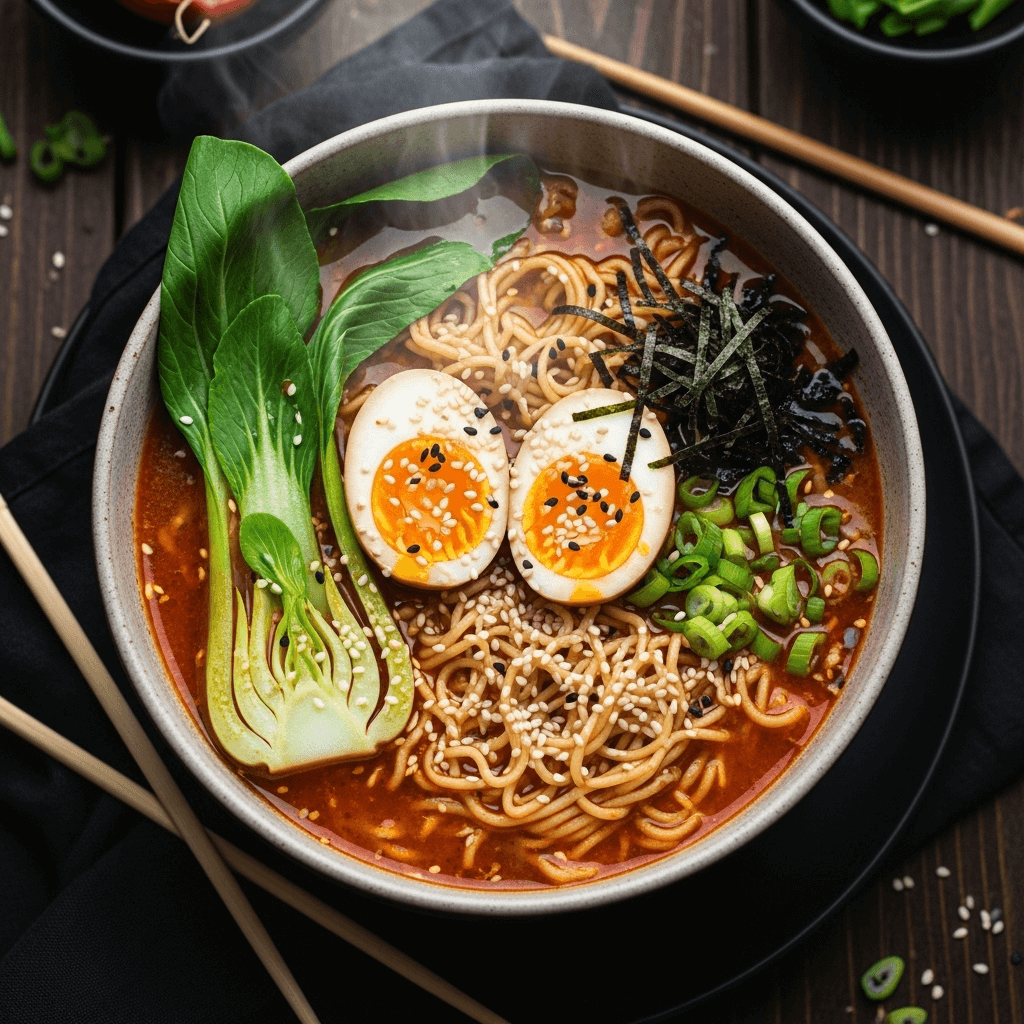

There’s something absolutely magical about slurping up a steaming bowl of spicy ramen on a chilly evening—or honestly, any time you’re craving bold, comforting flavors. This homemade spicy ramen recipe transforms ordinary instant ramen into an extraordinary meal that rivals your favorite ramen shop, and it comes together in just 20 minutes! Whether you’re a college student looking to upgrade your late-night noodle game or a busy parent seeking a quick weeknight dinner that actually excites the family, this spicy ramen bowl delivers restaurant-quality flavor without the restaurant price tag or wait time.
Introduction of Recipe
Spicy ramen is a flavor-packed noodle soup that combines chewy ramen noodles with a rich, spicy broth, topped with jammy soft-boiled eggs, fresh vegetables, and aromatic garnishes. This isn’t your basic dorm room ramen—we’re talking about a complete meal that’s customizable, satisfying, and bursting with umami flavor. It’s perfect for those nights when you want something warming and delicious but don’t have hours to spend in the kitchen. Serve this spicy ramen recipe for quick weeknight dinners, cozy lunch dates at home, casual gatherings with friends, or whenever you need a bowl of comfort that packs some serious heat.
The beauty of homemade spicy ramen lies in its flexibility. You control the spice level, choose your favorite toppings, and can make it as simple or elaborate as your schedule allows. Unlike takeout ramen that can cost $15-20 per bowl, this homemade version costs just a few dollars per serving and tastes even better because you’ve crafted it exactly to your preferences.
History / Background
Ramen’s journey from humble beginnings to global phenomenon is absolutely fascinating. While ramen is synonymous with Japanese cuisine today, its roots actually trace back to China. Chinese wheat noodles made their way to Japan in the late 19th century, where they were adapted and transformed into what we now know as ramen. The word “ramen” itself likely derives from the Chinese “lamian,” meaning hand-pulled noodles.
After World War II, ramen exploded in popularity throughout Japan as an affordable, filling meal during times of economic hardship. Street vendors would set up yatai (food stalls) serving hot bowls of ramen to workers and students, creating the blueprint for Japan’s now-famous ramen culture. In 1958, Momofuku Ando revolutionized food history by inventing instant ramen—those convenient dried noodle blocks that college students worldwide have come to depend on.
Spicy ramen, particularly the fiery red bowls we’re so obsessed with today, gained international fame through Korean and Japanese interpretations. Korean ramyeon (their spelling of ramen) tends to be spicier than traditional Japanese versions, featuring gochugaru (Korean red pepper flakes) and gochujang (fermented red pepper paste). The viral spicy ramen challenges on social media in the 2010s introduced millions of people to brands like Samyang’s Buldak (fire chicken) ramen, cementing spicy ramen’s place in modern food culture.
Today, ramen shops from Tokyo to New York City serve countless regional variations, each with distinct broth styles, noodle types, and toppings. This homemade spicy ramen recipe honors that rich tradition while making it accessible for home cooks who want to create something special without needing specialized ingredients or professional training.
Why You’ll Love This Recipe
This spicy ramen recipe is about to become your new go-to comfort meal, and here’s why it’ll earn a permanent spot in your weekly dinner rotation:
Imagine coming home exhausted, opening your fridge, and knowing you can have a restaurant-quality bowl of steaming, spicy noodles on the table in less time than it takes to order delivery. This recipe delivers that convenience without sacrificing flavor or nutrition.
- Lightning-fast preparation: From start to slurping, you’ll have dinner ready in just 20 minutes—perfect for those hectic weeknights when cooking feels impossible
- Budget-friendly brilliance: Create a satisfying, complete meal for under $5 per serving, making it ideal for students, families, or anyone watching their grocery budget
- Infinitely customizable: Adjust the heat level from mild to volcanic, swap proteins, add your favorite vegetables, or keep it vegetarian—this recipe adapts to your preferences
- One-pot wonder: Minimal cleanup means less time scrubbing dishes and more time enjoying your meal (or your favorite Netflix show)
- Crowd-pleaser potential: Kids, picky eaters, spice lovers, and food snobs alike will find something to love in this versatile bowl
- Meal prep friendly: Make components ahead and assemble individual bowls throughout the week for quick lunches or dinners
- Nutritionally balanced: Unlike plain instant ramen, this upgraded version includes protein, vegetables, and healthy fats for a well-rounded meal
- Impressive presentation: Looks like something from a trendy ramen shop, making it perfect for casual entertaining or Instagram-worthy food photos
Ingredient Notes
Let’s break down what makes this spicy ramen so incredibly delicious and where you have room to improvise:
Ramen Noodles: Fresh ramen noodles from the refrigerated section give you the best texture—chewy, springy, and authentic. If you can’t find fresh, dried ramen works beautifully too. In a pinch, instant ramen noodles are perfectly acceptable (just discard those flavor packets). Look for packages labeled “ramen” rather than “spaghetti”—the texture difference matters.
Chicken or Vegetable Broth: This forms your soup’s foundation. Homemade broth offers superior depth, but quality store-bought broth works wonderfully for weeknight cooking. Choose low-sodium varieties so you can control the saltiness. Bone broth adds extra richness and nutrition if you have it available.
Gochujang (Korean Red Pepper Paste): This fermented condiment delivers complex heat with subtle sweetness and umami depth. Find it in the Asian section of most supermarkets or at Korean grocery stores. Can’t locate gochujang? Substitute with sriracha or sambal oelek, though you’ll lose some of that signature fermented complexity.
Soy Sauce: Adds essential saltiness and umami. Use regular soy sauce, low-sodium, or tamari for gluten-free needs. Each brand varies in intensity, so taste as you go.
Sesame Oil: Just a drizzle of toasted sesame oil transforms the entire bowl with its nutty, aromatic essence. This isn’t the place for plain sesame oil—you want the dark, toasted variety that’s intensely fragrant.
Garlic and Ginger: Fresh is always best for these aromatics. They create the flavor backbone that makes your ramen taste restaurant-quality. Pre-minced versions from jars work in a time crunch.
Eggs: Soft-boiled eggs with jammy, golden yolks are traditional ramen toppers that add richness and protein. The yolk mixing into your broth creates a luxurious, creamy texture.
Green Onions: These provide fresh, sharp contrast to the rich broth. Both the white and green parts offer flavor—whites are more pungent, greens more delicate.
Vegetables: Use whatever you love! Bok choy, spinach, mushrooms, corn, bean sprouts, and napa cabbage all work beautifully. Frozen vegetables are totally acceptable for convenience.
Optional Protein: While eggs provide protein, you can add sliced chicken, pork belly, tofu, or shrimp for a heartier meal.
Equipment Needed
You won’t need any fancy gadgets or specialized ramen-making equipment for this recipe. Here’s what you’ll use:
- Large pot or Dutch oven (for cooking the broth and noodles)
- Medium saucepan (for boiling eggs separately, if making soft-boiled eggs)
- Sharp knife and cutting board (for prep work)
- Measuring spoons and cups (for accuracy with seasonings)
- Whisk or wooden spoon (for stirring)
- Slotted spoon or spider strainer (helpful for removing eggs and noodles)
- Serving bowls (wide, deep bowls work best for ramen)
- Timer (crucial for perfect soft-boiled eggs)
- Ice bath bowl (to stop eggs from overcooking)
Spicy Ramen Recipe
- Total Time: 20 minutes
- Yield: 4 servings 1x
- Diet: Gluten Free
Description
This quick and easy spicy ramen recipe delivers restaurant-quality noodle bowls in just 20 minutes. Featuring a rich, flavorful broth with the perfect amount of heat, chewy noodles, jammy soft-boiled eggs, and fresh toppings, this homemade ramen is infinitely better than takeout and completely customizable to your taste preferences.
Ingredients
For the Broth:
- 6 cups chicken broth or vegetable broth (low-sodium preferred)
- 3 tablespoons gochujang (Korean red pepper paste)
- 2 tablespoons soy sauce
- 1 tablespoon sesame oil
- 4 cloves garlic, minced
- 1 tablespoon fresh ginger, minced
- 1 teaspoon sugar
- 1 teaspoon chili flakes (adjust to taste)
For the Ramen:
- 4 portions fresh or dried ramen noodles (about 12–16 oz)
- 4 large eggs
- 2 cups mixed vegetables (bok choy, mushrooms, spinach, corn)
- 4 green onions, sliced
- 1 sheet nori seaweed, cut into strips (optional)
- Sesame seeds for garnish
- Extra chili oil or sriracha for serving (optional)
Optional Add-Ins:
- Sliced cooked chicken breast or thigh
- Crispy pork belly
- Firm tofu, pan-fried
- Cooked shrimp
- Bean sprouts
- Bamboo shoots
Instructions
Step 1: Prepare the Soft-Boiled Eggs
Bring a medium saucepan of water to a boil. Carefully lower eggs into the boiling water using a slotted spoon. Set a timer for exactly 6-7 minutes (6 for runnier yolks, 7 for jammy yolks). While eggs cook, prepare an ice bath in a bowl. When the timer goes off, immediately transfer eggs to the ice bath and let them cool for 5 minutes. Peel carefully and set aside.
Step 2: Make the Spicy Broth
In a large pot or Dutch oven, heat sesame oil over medium heat. Add minced garlic and ginger, sautéing for about 1 minute until fragrant but not browned. Pour in the chicken or vegetable broth and bring to a simmer. Whisk in the gochujang, soy sauce, sugar, and chili flakes until the gochujang is fully dissolved. Taste and adjust seasonings—add more gochujang for heat, soy sauce for saltiness, or sugar for balance. Let the broth simmer gently for 5 minutes to allow flavors to meld.
Step 3: Cook the Noodles
Bring the spicy broth to a rolling boil. Add your ramen noodles directly to the broth and cook according to package directions (usually 3-4 minutes for fresh noodles, 4-5 minutes for dried). Use chopsticks or a fork to gently separate the noodles as they cook. During the last minute of cooking, add your vegetables to the pot so they soften slightly but retain some crunch.
Step 4: Assemble Your Bowls
Using tongs or a spider strainer, divide the noodles and vegetables evenly among four large serving bowls. Ladle the hot, spicy broth over the noodles, making sure each bowl gets plenty of that flavorful liquid. Slice the soft-boiled eggs in half lengthwise.
Step 5: Add Toppings and Serve
Arrange the egg halves on top of each bowl, cut side up to showcase those gorgeous jammy yolks. Sprinkle generously with sliced green onions and sesame seeds. Add nori strips if using. Place any additional proteins or toppings you’ve prepared around the bowl. Serve immediately with extra chili oil or sriracha on the side for those who want extra heat. Provide chopsticks and a soup spoon for the authentic ramen-eating experience!
Notes
- Spice Level: Start with 2 tablespoons of gochujang if you’re sensitive to heat, or increase to 4 tablespoons for extra spicy ramen. You can always add more heat at the table with chili oil.
- Noodle Alternatives: If you can’t find ramen noodles, use udon, soba, or even spaghetti in a pinch (though the texture won’t be quite the same).
- Make it Vegetarian: Use vegetable broth and skip the egg, or use tofu instead for protein.
- Broth Concentration: If you prefer a more concentrated flavor, reduce the broth amount to 4-5 cups, or simmer longer to reduce.
- Fresh vs. Instant Noodles: Fresh noodles have better texture, but instant ramen works perfectly fine—just discard the seasoning packets and use this homemade broth instead.
- Prep Time: 10 minutes
- Cook Time: 10 minutes
- Category: Dinner
- Method: Stovetop
- Cuisine: Asian Fusion
Nutrition
- Serving Size: 1 bowl (1/4 of recipe)
- Calories: 385
- Sugar: 6g
- Sodium: 1,450mg
- Fat: 12g
- Saturated Fat: 3g
- Unsaturated Fat: 8g
- Trans Fat: 0g
- Carbohydrates: 52g
- Fiber: 4g
- Protein: 18g
- Cholesterol: 185mg
Tips & Variations
Let’s talk about how to make this spicy ramen recipe truly your own:
Adjust the Heat Level: Not everyone has the same spice tolerance, and that’s perfectly okay! Start with just 2 tablespoons of gochujang and taste before adding more. For mild ramen, use only 1 tablespoon of gochujang and skip the chili flakes. For extra spicy ramen that’ll clear your sinuses, add Korean gochugaru (red pepper flakes), a spoonful of chili crisp, or drizzle with spicy sesame oil at serving time.
Vegetarian and Vegan Options: Swap chicken broth for vegetable broth or mushroom broth for deep umami flavor. Replace eggs with pan-fried tofu cubes marinated in soy sauce and sesame oil. Add extra mushrooms (shiitake are particularly meaty) and edamame for protein.
Protein Variations: Transform this into a heartier meal by adding leftover rotisserie chicken, thinly sliced pork belly cooked until crispy, grilled shrimp tossed in at the end, baked or fried tofu cubes, or even leftover steak sliced thin.
Creamy Spicy Ramen: Stir in 2 tablespoons of tahini or natural peanut butter for a creamy, nutty variation. You can also add a splash of coconut milk for richness. Some people even swirl in a tablespoon of cream cheese—sounds weird, but trust the process!
Kimchi Ramen: Add half a cup of chopped kimchi to your broth for funky, fermented flavor complexity. The kimchi juice adds wonderful depth too.
Miso Spicy Ramen: Whisk in 2 tablespoons of white or red miso paste along with the gochujang for extra umami depth and a more complex flavor profile.
Low-Carb Version: Replace ramen noodles with spiralized zucchini noodles, shirataki noodles, or kelp noodles for a keto-friendly option.
Kids’ Version: Make a separate, milder bowl by reducing or omitting the gochujang and letting kids customize with their favorite toppings.
Pro Chef Tips
Want to take your homemade spicy ramen from good to absolutely exceptional? Here are insider secrets from professional ramen chefs:
Toast Your Spices: Before adding gochujang to the broth, toast it in the pot with the sesame oil for 30 seconds. This blooms the flavors and adds a subtle smoky note that makes the difference between good ramen and great ramen.
Layer Your Flavors: Instead of adding all the broth at once, build it in stages. Start with aromatics, add pastes and fermented ingredients, then liquid. This creates complexity you can’t achieve by dumping everything together.
The Tare Technique: Professional ramen shops use tare (a concentrated seasoning base). Make your own by combining the gochujang, soy sauce, sesame oil, and some of the minced garlic in a small bowl before adding it to the broth. This ensures even distribution and deeper flavor integration.
Perfect Noodle Texture: Slightly undercook your noodles by about 30 seconds since they’ll continue cooking in the hot broth. This prevents mushy noodles and maintains that ideal chewy texture called “koshi” in Japanese.
Oil Matters: Always finish with a small drizzle of sesame oil on top of the assembled bowl, not just in the broth. The aromatic oil hits your nose first and enhances the entire eating experience.
Temperature Control: Keep your broth at a bare simmer, not a rolling boil, once you’ve added the seasonings. Aggressive boiling can make the broth cloudy and bitter.
The Egg Hack: Add a teaspoon of vinegar to your egg-boiling water. It helps the whites coagulate faster if any eggs crack, though it won’t affect properly boiled eggs.
Marinated Eggs: For next-level eggs, peel your soft-boiled eggs and marinate them in a mixture of soy sauce, mirin, and water (2:1:1 ratio) for at least 2 hours or overnight. These “ajitsuke tamago” are what you get at authentic ramen shops.
Common Mistakes to Avoid
Even with a simple recipe like this, there are a few pitfalls that can derail your spicy ramen dreams. Here’s what to watch out for:
Overcooking the Noodles: This is the number one mistake home cooks make with ramen. Follow the package directions exactly, or even err on the side of slightly undercooked. Remember, the noodles will continue cooking in the hot broth after you assemble the bowls. Mushy noodles are sad noodles.
Forgetting to Prep Toppings First: Ramen waits for no one! Once those noodles are cooked, you need to serve immediately. Have all your toppings sliced, eggs cooked, and bowls ready to go before you start boiling the noodles. Cold ramen is a disappointment.
Using Too Much Soy Sauce: It’s tempting to keep adding soy sauce, but it can quickly overpower the other flavors and make your broth too salty. Start with the recommended amount and add slowly, tasting as you go. You can always add more, but you can’t take it out.
Boiling Instead of Simmering: Once you’ve added your gochujang and seasonings, keep the broth at a gentle simmer rather than a rolling boil. Aggressive boiling can cause the gochujang to separate and make the broth look grainy instead of smooth and silky.
Skipping the Aromatics Step: Don’t rush past the garlic and ginger sauté. This step blooms the aromatics and creates a flavor foundation that raw garlic and ginger simply can’t match. Just don’t let them burn—burned garlic is bitter and will ruin your entire pot.
Adding Cold Eggs to Hot Broth: If you’re storing eggs in the refrigerator, let them sit at room temperature for 10 minutes before slicing and adding to your bowl. Cold eggs will cool down your perfectly hot broth.
Not Tasting as You Go: Your palate is your best tool. Taste the broth after adding seasonings and adjust before adding noodles. Every brand of gochujang, soy sauce, and broth has different salt and spice levels, so trust your taste buds over exact measurements.
Storage & Meal Prep
One of the beautiful things about this spicy ramen recipe is how well the components store separately, making it ideal for meal prep:
Storing Leftovers: The key to leftover ramen is storing components separately. The broth can be refrigerated in an airtight container for up to 5 days and actually tastes better the next day as flavors continue to develop. Cooked noodles should be stored separately in a container with a tiny drizzle of sesame oil to prevent sticking—they’ll keep for 3-4 days. Soft-boiled eggs should be stored in their shells if possible, or peeled in water, for up to 5 days.
Reheating Instructions: Never microwave assembled ramen—you’ll end up with mushy noodles and sad vegetables. Instead, bring the broth to a simmer in a pot, add the noodles for just 30-60 seconds to warm through, then assemble in a bowl with fresh or reheated toppings. You can quickly refresh vegetables by blanching them in the hot broth.
Broth Concentrates: For ultimate meal prep efficiency, make a double or triple batch of the spicy broth base and freeze it in portions. It freezes beautifully for up to 3 months in freezer-safe containers or bags. Thaw overnight in the refrigerator, then reheat and add fresh noodles and toppings.
Vegetable Prep: Wash, chop, and portion your vegetables into individual containers at the beginning of the week. When ramen craving strikes, everything’s ready to go. Most vegetables will stay fresh for 3-4 days prepped this way.
Avoiding Soggy Noodles: If you must store assembled ramen, understand that the noodles will absorb liquid and soften considerably. For best results, always cook noodles fresh when possible.
Make-Ahead & Freezer Notes
Planning ahead can make weeknight ramen even easier than it already is:
Make-Ahead Components: The spicy broth base (without the final broth added) can be made up to a week in advance. Combine the gochujang, soy sauce, sesame oil, garlic, and ginger in a jar and refrigerate. When ready to eat, simply add it to heated broth. Marinated eggs can be prepared 1-2 days ahead and stored in their marinade for intensified flavor.
Freezer-Friendly Options: The spicy broth freezes exceptionally well. Make a big batch and freeze in 2-cup portions using freezer bags (lay flat for easy stacking) or containers. Label with the date and defrost overnight in the refrigerator before using. Freeze for up to 3 months without any loss of flavor.
What NOT to Freeze: Never freeze cooked ramen noodles—they become mushy and unappetizing when thawed. Also skip freezing soft-boiled eggs, fresh vegetables, and any crispy toppings. These components should always be fresh.
Meal Prep Strategy: Here’s the smartest approach: On Sunday, make a large batch of spicy broth and marinate a half-dozen eggs. Portion the broth into containers. Throughout the week, boil fresh noodles (takes only 4 minutes), heat your pre-made broth, and assemble with fresh vegetables. You get a from-scratch meal in under 10 minutes on busy weeknights.
Reheating from Frozen: Transfer frozen broth to a pot and heat gently over medium heat, stirring occasionally. It’ll be ready to use in about 10-15 minutes. Add a splash of water if it seems too concentrated after freezing.
Serving Suggestions
While spicy ramen is absolutely a complete meal on its own, here are some delicious accompaniments that’ll make your ramen dinner even more special:
Side Dishes: Serve your spicy ramen with crispy gyoza (pot stickers) for textural contrast—the crispy bottom against the soft noodles is perfection. Japanese-style coleslaw with a sesame dressing adds refreshing crunch. Edamame sprinkled with sea salt makes a perfect appetizer while your broth simmers. Vegetable spring rolls or cucumber salad with rice vinegar dressing provide cooling counterpoints to the spicy broth.
Beverages: Pair your spicy ramen with cold Japanese beer like Sapporo or Asahi—the carbonation and crisp flavor cut through the richness beautifully. Green tea or oolong tea offer traditional, palate-cleansing options. For non-alcoholic choices, try iced barley tea, sparkling water with yuzu, or even a cold glass of milk (trust us, it helps with the spice).
Make it a Feast: Turn ramen night into an Asian-inspired dinner party by setting up a ramen bar. Prepare a large pot of spicy broth and set out an array of toppings in small bowls: different proteins, various vegetables, soft-boiled eggs, nori, sesame seeds, chili crisp, and lime wedges. Let everyone customize their own bowl—it’s interactive, fun, and everyone gets exactly what they want.
Bread and Crackers: While not traditional, some people love dunking toasted garlic bread or sesame crackers into their ramen broth. It’s unconventional but undeniably delicious.
Dessert: After a spicy, savory meal, cleanse your palate with something light and refreshing. Fresh fruit like watermelon or Asian pear works wonderfully. Mochi ice cream, green tea ice cream, or even a simple bowl of lychees in syrup provide the perfect sweet ending.
FAQs Section
Can I make spicy ramen without gochujang?
Absolutely! While gochujang provides unique fermented flavor, you can substitute with sriracha, sambal oelek, or red chili paste. For each tablespoon of gochujang, use about 1½ tablespoons of sriracha plus a pinch of sugar to mimic gochujang’s sweet-spicy balance. The flavor will be different but still delicious.
How do I make my ramen broth thicker and creamier?
For a richer, more luxurious broth, try these techniques: whisk in a tablespoon of tahini or peanut butter, add a splash of heavy cream or coconut milk, blend some of the cooked vegetables back into the broth, or add a teaspoon of cornstarch mixed with cold water (called a slurry) and simmer for a minute. Some people also swirl in an egg yolk just before serving for instant creaminess.
What’s the secret to perfect soft-boiled eggs?
The magic formula is timing and temperature. Bring water to a rolling boil before adding room-temperature eggs. Cook for exactly 6 minutes for runny yolks or 7 minutes for jammy yolks. Immediately plunge into ice water to stop the cooking process. This prevents that gray-green ring around the yolk and ensures perfectly cooked eggs every time.
Can I use instant ramen noodles for this recipe?
Yes! Instant ramen noodles work perfectly well for this recipe. Simply discard the seasoning packets and use our homemade spicy broth instead. Cook the noodles according to package directions—usually around 3 minutes. The texture won’t be quite as authentic as fresh ramen noodles, but you’ll still have a delicious bowl of homemade spicy ramen.
How can I make my ramen less spicy for kids?
Reduce or completely omit the gochujang and chili flakes for a mild version. Use just 1 tablespoon of gochujang for gentle warmth without overwhelming heat. You can also add a splash of milk or coconut milk to temper the spice. Make a large pot of base broth without the spicy elements, portion out what you need for kids, then add the spicy ingredients to the remaining broth for adults.
Why is my ramen broth bland?
Bland broth usually means insufficient seasoning or low-quality broth. Make sure you’re using a flavorful base—homemade or high-quality store-bought broth. Don’t skimp on the aromatics (garlic and ginger) or the gochujang. Always taste and adjust seasonings before serving. Sometimes a squeeze of lime or a splash more soy sauce is all you need to bring everything to life.
Can I make this recipe in an Instant Pot or slow cooker?
While you technically can, ramen is so quick that these methods don’t save time. However, if you’re making broth from scratch, a slow cooker or Instant Pot is perfect for that step. Cook chicken or pork bones with aromatics for hours to create rich broth, then follow this recipe’s method for the final assembly with noodles and toppings.
Conclusion
There you have it—your complete guide to making restaurant-quality spicy ramen right in your own kitchen! This recipe proves that incredible, soul-warming comfort food doesn’t have to take hours or require a culinary degree. In just 20 minutes, you can create a bowl of noodles so delicious, so perfectly customized to your taste, that you’ll wonder why you ever ordered takeout ramen.
The beauty of this homemade spicy ramen recipe lies in its versatility. Whether you’re cooking for one on a quiet Tuesday night, meal prepping for the week ahead, or hosting a casual ramen bar for friends, this recipe adapts to your needs. Make it vegetarian, dial up the heat, load it with vegetables, or keep it simple—there’s no wrong way to enjoy a steaming bowl of homemade ramen.
So grab your chopsticks, get that broth simmering, and prepare for some serious slurping (it’s encouraged—even expected!). Your taste buds are about to thank you.
Ready to make this spicy ramen recipe? I’d love to see your creations! Take a photo of your beautiful bowl and share it on Pinterest—tag me so I can admire your handiwork. Leave a comment below telling me how you customized your ramen or what toppings you loved most. And if you’re obsessed with this recipe (I’m betting you will be), please share it with your fellow ramen-loving friends. Happy cooking, and even happier slurping!