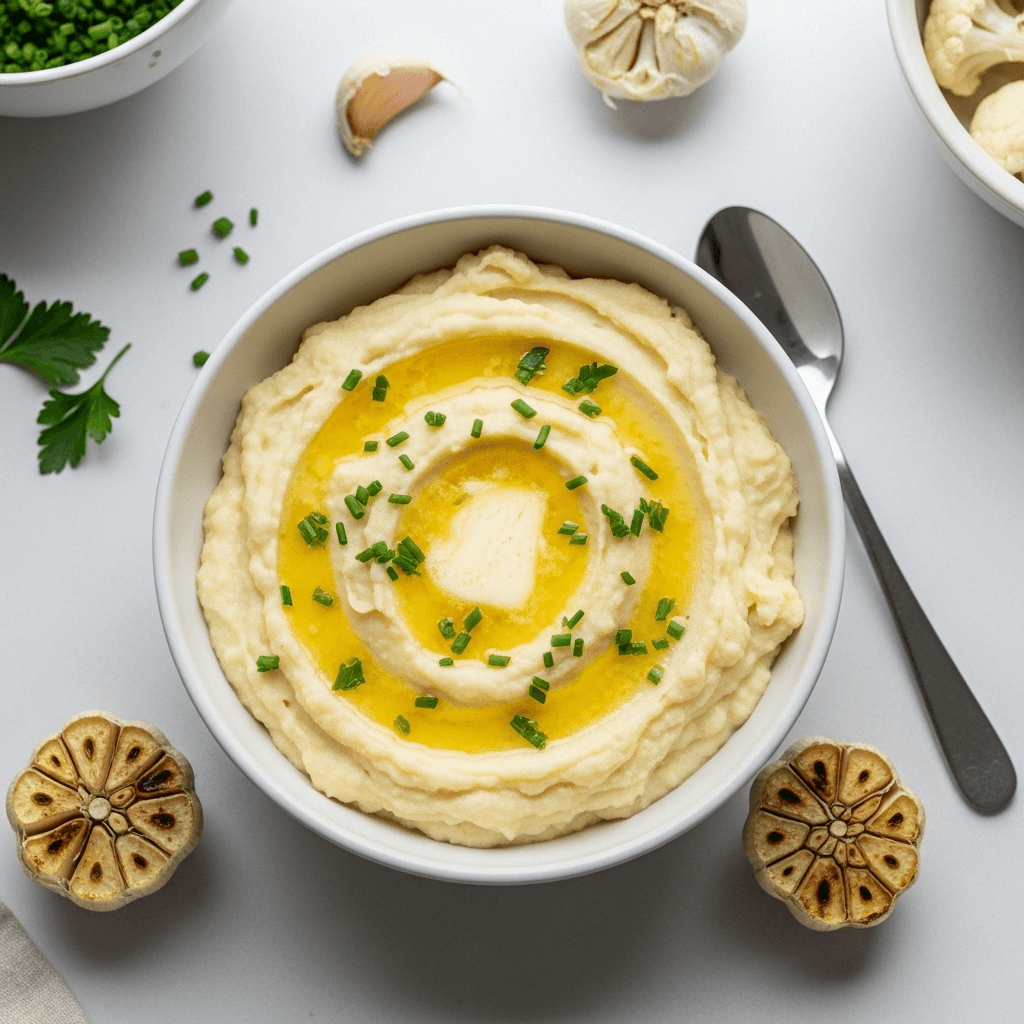

If you’ve been searching for the perfect low-carb alternative to mashed potatoes, your search ends here! This creamy garlic mashed cauliflower is silky smooth, rich, buttery, and so delicious that even potato lovers won’t believe it’s made from cauliflower. With just a few simple ingredients and about 20 minutes of your time, you can create a side dish that’s healthier than traditional mashed potatoes but tastes every bit as indulgent.
What makes this keto mashed cauliflower truly special is its incredibly creamy texture—no grainy, watery, or vegetable-y taste here. The secret lies in properly cooking the cauliflower, draining it thoroughly, and blending it with butter, cream cheese, garlic, and seasonings until it reaches that luxurious, velvety consistency that rivals the best mashed potatoes. The roasted garlic adds a sweet, mellow depth that elevates this simple side dish into something restaurant-worthy.
This low-carb cauliflower mash is perfect for so many occasions: holiday dinners when you want a lighter option alongside all that turkey and stuffing, weeknight meals when you’re watching your carbs, meal prep Sundays, or anytime you’re craving comfort food without the guilt. It pairs beautifully with everything from grilled steak and roasted chicken to pork chops and meatloaf. Plus, it’s naturally gluten-free, keto-friendly, and can easily be made dairy-free with simple substitutions.
Whether you’re following a low-carb lifestyle, trying to eat more vegetables, or simply looking for a delicious side dish that happens to be healthier, this garlic cauliflower mash delivers on all fronts. Let’s dive into making the creamiest, most flavorful mashed cauliflower you’ve ever tasted!
History / Background
Mashed cauliflower emerged as a popular low-carb alternative to mashed potatoes during the low-carb diet boom of the early 2000s, particularly with the rise of the Atkins diet and later the ketogenic (keto) diet movement. While cauliflower has been cultivated in the Mediterranean region for thousands of years—with origins tracing back to ancient Asia Minor—its use as a potato substitute is a distinctly modern American phenomenon born from our collective desire to enjoy comfort foods while reducing carbohydrate intake.
The concept of using cauliflower as a substitute for starchy vegetables gained mainstream traction around 2010-2015 when food bloggers and health-conscious cooks began experimenting with ways to recreate beloved dishes in lower-carb versions. Cauliflower proved to be the perfect canvas—mild in flavor, creamy when cooked and pureed, and incredibly versatile. It could be transformed into “rice,” “pizza crust,” “breadsticks,” and of course, “mashed potatoes.”
Traditional mashed potatoes have been a beloved comfort food in European and American cuisine for centuries. When potatoes were introduced to Europe from South America in the 16th century, they eventually became a dietary staple, particularly in Ireland, Britain, and France. Mashed potatoes as we know them—buttery, creamy, and fluffy—became especially popular in the 18th and 19th centuries. The French created pommes purée, an ultra-refined version with copious amounts of butter and cream, while American and British cooks developed heartier, chunkier versions.
Mashed cauliflower honors the spirit of this beloved side dish while addressing modern dietary concerns. What started as a niche recipe in low-carb cookbooks has now become mainstream, appearing on restaurant menus from casual diners to upscale steakhouses. Even people not following low-carb diets have embraced mashed cauliflower simply because it’s lighter, allows room for other indulgences, and is an easy way to incorporate more vegetables into their meals.
The addition of roasted garlic to mashed cauliflower is a technique borrowed from contemporary American cooking, where roasted garlic became trendy in the 1990s for its sweet, mellow, almost caramelized flavor that’s far less harsh than raw garlic. This combination creates a side dish that’s both health-conscious and indulgent—a perfect representation of how modern American home cooking has evolved to balance nutrition with pleasure.
Today, creamy mashed cauliflower has earned its place as a legitimate side dish in its own right, not just a diet food or potato substitute. It represents our growing appreciation for vegetables prepared thoughtfully and our desire to make healthier choices without sacrificing flavor or comfort.
Why You’ll Love This Recipe
This isn’t just another bland cauliflower side dish—this is the creamy, dreamy, garlicky mashed cauliflower that’ll convert even the biggest skeptics. Once you try this recipe, you’ll understand why it’s become a staple in so many homes.
Here’s why this garlic mashed cauliflower will become your new favorite side dish:
- Incredibly creamy texture – So smooth and velvety that it rivals traditional mashed potatoes
- Low-carb and keto-friendly – Only 8g net carbs per serving compared to 30g+ in mashed potatoes
- Ready in 20 minutes – Faster than making mashed potatoes and requires less hands-on time
- Naturally gluten-free – Perfect for those avoiding gluten without any special modifications
- Rich, garlicky flavor – The roasted garlic adds amazing depth without being overpowering
- Budget-friendly – Cauliflower is inexpensive and you need just a few other simple ingredients
- Meal prep friendly – Makes great leftovers and reheats beautifully throughout the week
- Lighter than potatoes – 75% fewer calories and carbs than traditional mashed potatoes
- Versatile – Pairs with virtually any protein and works for holidays or weeknight dinners
- Kid-approved – The creamy texture and mild flavor make it surprisingly popular with children
- Foolproof recipe – Nearly impossible to mess up if you follow the simple steps
- Customize easily – Add cheese, herbs, or bacon to make it your own signature dish
- Impressive presentation – Looks just like mashed potatoes, so guests won’t even realize it’s cauliflower
Ingredient Notes
The beauty of this recipe lies in its simplicity—just a handful of quality ingredients create something truly special.
Cauliflower – The star of the show! Choose firm, creamy-white heads with tightly packed florets and fresh green leaves. One large head (about 2 lbs) or two smaller heads work perfectly. You can buy pre-cut cauliflower florets to save time, though whole heads are usually fresher and less expensive. Avoid cauliflower with brown spots or a strong sulfur smell.
Butter – Provides richness, flavor, and helps create that silky texture. Use real butter, not margarine—the flavor difference is significant. Salted or unsalted both work; if using salted, reduce the added salt slightly. For dairy-free versions, use plant-based butter or extra olive oil.
Cream Cheese – This is the secret ingredient that creates incredible creaminess! Full-fat cream cheese works best as it provides body and richness without adding liquid that would make the mash watery. Make sure it’s softened to room temperature for easy blending. Greek yogurt or sour cream can substitute but will give slightly different texture and tang.
Garlic – Fresh garlic cloves roasted until golden and sweet provide the best flavor. You’ll need 4-6 cloves depending on how garlicky you like it. Roasting mellows garlic’s harshness and brings out natural sweetness. In a pinch, you can use ½-1 teaspoon garlic powder, though fresh roasted garlic is incomparably better.
Heavy Cream or Milk – Just a small amount adds luxurious creaminess. Heavy cream provides the richest result, half-and-half offers a middle ground, and whole milk works for a lighter version. For dairy-free, use unsweetened almond milk, cashew milk, or coconut cream.
Salt and Black Pepper – Essential for bringing out all the flavors. Cauliflower needs adequate salt to taste good—don’t be shy. Freshly ground black pepper adds a pleasant bite. Start with the recommended amounts and adjust to taste.
Optional Additions – Grated Parmesan cheese, fresh chives, sour cream, or a splash of chicken broth can all enhance the flavor. Some people like adding a pinch of nutmeg or white pepper for extra sophistication.
Equipment Needed
This recipe requires minimal equipment—just basic kitchen tools:
- Large pot – For boiling the cauliflower florets
- Colander or strainer – For draining the cooked cauliflower thoroughly
- Food processor or immersion blender – Essential for achieving that smooth, creamy texture. A potato masher creates a chunkier texture that’s not as convincing as a potato substitute
- Small skillet or pan – For roasting the garlic (or you can roast in the oven)
- Knife and cutting board – For breaking down the cauliflower head
- Measuring cups and spoons – For accurate measurements
- Clean kitchen towel – For pressing out excess moisture from cooked cauliflower (optional but recommended)
- Serving bowl – For presenting your beautiful mashed cauliflower
Creamy Garlic Mashed Cauliflower Recipe
- Total Time: 25 minutes
- Yield: 6 servings 1x
- Diet: Gluten Free
Description
This creamy garlic mashed cauliflower is the ultimate low-carb side dish that tastes incredibly rich and indulgent while being healthier than traditional mashed potatoes. Smooth, buttery, and loaded with roasted garlic flavor, this keto-friendly cauliflower mash has only 8g net carbs per serving and pairs perfectly with any protein. Ready in just 25 minutes with simple ingredients, it’s perfect for weeknight dinners, holiday meals, or meal prep.
Ingredients
Main Ingredients:
- 1 large head cauliflower (about 2 lbs), cut into florets
- 4–6 cloves garlic, peeled
- 3 tablespoons butter
- 4 oz (½ cup) cream cheese, softened to room temperature
- ¼ cup heavy cream (or milk)
- ¾ teaspoon salt (or to taste)
- ¼ teaspoon black pepper
- Optional: 2 tablespoons grated Parmesan cheese
- Optional: Fresh chives or parsley for garnish
Instructions
- Prepare cauliflower: Remove leaves and core from cauliflower head. Cut or break into medium-sized florets of similar size for even cooking. Rinse under cold water and drain.
- Roast the garlic: While preparing cauliflower, heat 1 tablespoon butter in a small skillet over medium-low heat. Add peeled garlic cloves and cook for 8-10 minutes, stirring occasionally, until golden and softened. The garlic should be sweet and mellow, not browned or bitter. Remove from heat and set aside.
- Boil cauliflower: Bring a large pot of salted water to a boil. Add cauliflower florets and cook for 10-12 minutes until very tender—a fork should easily pierce through with no resistance. Don’t undercook or your mash will be grainy.
- Drain thoroughly: Drain cauliflower in a colander and let it sit for 2-3 minutes to release steam and excess moisture. This is crucial! For even drier cauliflower, place florets on a clean kitchen towel and gently press to remove extra water. The drier your cauliflower, the creamier your mash.
- Blend until smooth: Transfer drained cauliflower to a food processor. Add the roasted garlic, remaining 2 tablespoons butter, softened cream cheese, heavy cream, salt, and pepper. Process for 1-2 minutes, stopping to scrape down sides as needed, until completely smooth and creamy with no lumps.
- Adjust consistency and taste: If the mixture is too thick, add another tablespoon of cream or milk and pulse to combine. Taste and adjust salt and pepper as needed—cauliflower needs adequate seasoning to shine.
- Optional cheese: If using Parmesan, pulse it in at the end or stir in by hand for extra flavor and richness.
- Serve warm: Transfer to a serving bowl. Make a small well in the center and add a pat of butter if desired. Garnish with fresh chives, parsley, or a sprinkle of black pepper. Serve immediately while hot.
Notes
- Moisture is the enemy: The key to creamy (not watery) mashed cauliflower is removing as much moisture as possible after cooking. Don’t skip the draining and resting step.
- Cook until very tender: Undercooked cauliflower creates a grainy texture. Cook until completely soft—overcooking is better than undercooking here.
- Room temperature cream cheese: Cold cream cheese won’t blend smoothly. Let it sit out for 30 minutes or microwave for 10-15 seconds to soften.
- Adjust consistency: If too thick, add liquid; if too thin, return to the stovetop and cook over medium heat, stirring, to evaporate excess moisture.
- Garlic alternatives: No time to roast garlic? Use ½ teaspoon garlic powder or 2 teaspoons minced jarred roasted garlic.
- Make it ahead: This reheats beautifully, so you can make it 1-2 days in advance.
- Prep Time: 10 minutes
- Cook Time: 15 minutes
- Category: Side Dish
- Method: Boiling
- Cuisine: American
Nutrition
- Serving Size: ⅙ of recipe (approximately ¾ cup)
- Calories: 155
- Sugar: 3g
- Sodium: 380mg
- Fat: 13g
- Saturated Fat: 8g
- Unsaturated Fat: 4g
- Trans Fat: 0g
- Carbohydrates: 8g
- Fiber: 3g
- Protein: 4g
- Cholesterol: 40mg
Note: Nutrition information is approximate and will vary based on specific ingredients and brands used. Traditional mashed potatoes contain approximately 30g carbs and 240 calories per serving.
Tips & Variations
The basic recipe is delicious, but here are ways to customize it to your preferences:
Loaded Cauliflower Mash – Stir in shredded cheddar cheese, crispy bacon bits, and sliced green onions for a loaded baked potato-inspired version. This is perfect for game day or as a hearty side dish.
Herb Garlic Cauliflower Mash – Add 2 tablespoons fresh chopped herbs like chives, parsley, thyme, or rosemary for a fresh, garden-inspired flavor profile.
Parmesan Cauliflower Mash – Increase Parmesan to ½ cup for a rich, cheesy version with extra umami flavor. This pairs exceptionally well with Italian dishes.
Truffle Cauliflower Mash – Add 1-2 teaspoons truffle oil and a sprinkle of truffle salt for an elegant, restaurant-quality side dish perfect for special occasions.
Dairy-Free Version – Use vegan butter, dairy-free cream cheese (like Kite Hill), and unsweetened almond or coconut milk. The texture is slightly different but still delicious.
Ranch Cauliflower Mash – Add 2-3 tablespoons ranch seasoning mix for a tangy, herby flavor kids especially love.
Horseradish Cauliflower Mash – Stir in 1-2 tablespoons prepared horseradish for a spicy kick that pairs beautifully with roast beef or prime rib.
Greek-Inspired – Use olive oil instead of butter, add feta cheese, fresh dill, and a squeeze of lemon juice for Mediterranean flair.
Wasabi Cauliflower Mash – Add 1-2 teaspoons wasabi paste for a spicy, Asian-inspired side that pairs well with fish or steak.
Lighter Version – Replace cream cheese with Greek yogurt and use milk instead of heavy cream for fewer calories and added protein.
Cheesy Cauliflower Mash – Stir in ½ cup shredded Gruyere, cheddar, or Swiss cheese for ultimate richness.
Chunky Style – Use a potato masher instead of food processor for a rustic, chunky texture that’s more potato-like in appearance.
Pro Chef Tips
These professional techniques will take your mashed cauliflower from good to absolutely restaurant-quality:
Salt the cooking water generously – Just like pasta water, your cauliflower cooking water should taste like the sea. This seasons the cauliflower from the inside out, which makes a huge difference in the final flavor. Don’t rely only on salt added at the end.
Don’t skip the moisture removal step – This is the single most important tip for success. Watery cauliflower creates watery mash. After draining, let it steam dry for several minutes, or spread on a kitchen towel and gently press. Some chefs even return the drained cauliflower to the hot pot for 1-2 minutes over low heat to evaporate remaining moisture.
Add hot ingredients to hot cauliflower – Keep your butter, cream, and cream cheese warm when blending. Cold ingredients will cool down the cauliflower and make it harder to achieve a smooth consistency. Warm cream cheese blends more easily too.
Process longer than you think – Keep processing until the mixture is completely smooth with zero visible pieces or graininess. This takes 1-2 full minutes in a food processor. Scrape down sides and process again. The smoothness is what makes people believe it’s mashed potatoes.
Season aggressively – Cauliflower has a mild flavor and needs more salt than you’d expect. Always taste before serving and adjust. Under-seasoned mashed cauliflower tastes bland and diet-food-like. Properly seasoned, it tastes rich and indulgent.
Roast garlic properly – Don’t rush the garlic roasting. Cook over medium-low heat until golden and soft, not dark brown or burned. Burned garlic is bitter and will ruin your dish. Properly roasted garlic is sweet, mellow, and almost caramelized.
Use a food processor, not a blender – Food processors create the perfect creamy-but-thick texture. Blenders can make it too thin and soup-like. If using an immersion blender, be careful not to over-blend into liquid.
Serve immediately or keep warm – Mashed cauliflower is best served hot. If making ahead, reheat gently on the stovetop with a splash of cream, stirring frequently. You can also keep warm in a slow cooker on low.
Consider a finishing butter – Just before serving, create a well in the center of your mashed cauliflower and add a pat of butter with a sprinkle of flaky sea salt. This restaurant technique adds visual appeal and extra richness.
Taste your raw cauliflower – If your cauliflower tastes bitter or strongly sulfurous when raw, it’s old or been stored improperly. Fresh cauliflower should taste mild and slightly sweet. Starting with quality produce makes all the difference.
Common Mistakes to Avoid
Even this simple recipe can go wrong if you’re not careful. Here’s what to watch out for:
Undercooking the cauliflower – This is the most common mistake. Cauliflower must be very tender—almost falling-apart tender—to create a smooth, creamy mash. If there’s any resistance when you pierce it with a fork, it needs more time. Undercooked cauliflower creates a grainy, unpleasant texture that no amount of blending will fix.
Not removing enough moisture – Cauliflower releases a lot of water when cooked. If you don’t drain it thoroughly and let it steam dry, you’ll end up with watery, soupy mash instead of thick, creamy mash. Take the extra time to press it with a towel if needed—this step is crucial.
Using cold cream cheese – Cold cream cheese doesn’t blend smoothly and creates lumps in your mash. Always bring it to room temperature first, or microwave it for 10-15 seconds to soften. It should be soft enough to easily spread with a knife.
Adding too much liquid – Start with the smaller amount of cream and add more only if needed. It’s easy to add more liquid but impossible to remove it (other than cooking it down, which is tedious). The mixture should be thick and hold its shape on a spoon.
Not seasoning enough – Cauliflower needs more salt than you’d expect because it’s so mild. Under-seasoned mashed cauliflower tastes bland and diet-food-like. Always taste before serving and adjust salt until the flavors pop.
Over-processing – While you need to blend well for smoothness, over-processing can make the texture gummy or glue-like. Process until smooth, but don’t run the food processor for 5+ minutes straight.
Skipping the garlic roasting – Raw garlic would be harsh and overpowering. Roasted garlic is sweet, mellow, and adds incredible depth. If you’re short on time, at least sauté the garlic in butter until fragrant rather than using it raw.
Storage & Meal Prep
Mashed cauliflower stores beautifully, making it perfect for meal prep and make-ahead cooking:
Refrigerator Storage – Store cooled mashed cauliflower in an airtight container in the refrigerator for up to 4-5 days. Make sure it’s completely cooled before sealing to prevent condensation, which would make it watery.
Reheating from Refrigerator – The best method is to reheat in a saucepan over medium-low heat, stirring frequently. Add a splash of cream, milk, or butter to restore creaminess. You can also microwave in a covered dish, stirring every 30 seconds, until heated through (2-3 minutes total). Add liquid if it seems dry.
Preventing Separation – As mashed cauliflower sits, it may release some liquid. This is normal. Simply stir it back in when reheating, or drain off excess liquid and add fresh cream or butter to restore texture.
Meal Prep Strategy – Make a large batch on Sunday and portion into individual containers with your protein and vegetables for easy grab-and-go lunches. Reheat for 90 seconds in the microwave with a lid.
Keeping Warm for Serving – If making ahead for a dinner party, you can keep mashed cauliflower warm in a slow cooker on low for up to 2 hours. Stir occasionally and add a splash of cream if it thickens too much.
Best for Same-Day Serving – While it reheats well, mashed cauliflower is absolutely best when freshly made. The texture is creamiest and the flavors are brightest. If possible, make it within 2-3 hours of serving.
Portion Control – Freeze or refrigerate in individual portions for easy weeknight sides. This prevents having to reheat the entire batch multiple times, which can degrade texture.
Make-Ahead & Freezer Notes
Planning ahead makes weeknight dinners or holiday entertaining so much easier:
Make-Ahead Instructions – You can make mashed cauliflower up to 2 days in advance. Let it cool completely, store in an airtight container in the refrigerator, and reheat gently on the stovetop or in the microwave with a splash of cream when ready to serve. The texture may be slightly less fluffy than fresh, but the flavor remains excellent.
Freezing Cooked Mashed Cauliflower – Yes, you can freeze it! Let the mashed cauliflower cool completely, then transfer to freezer-safe containers or heavy-duty freezer bags. Remove as much air as possible to prevent freezer burn. Freeze for up to 3 months. Label with the date so you remember when you made it.
Thawing Instructions – Thaw frozen mashed cauliflower in the refrigerator overnight. It will release some liquid as it thaws, which is normal. Don’t thaw at room temperature for food safety reasons.
Reheating from Frozen – You can reheat directly from frozen, though it takes longer. Place in a saucepan over medium-low heat with a splash of cream or butter, stirring frequently as it thaws and heats. This takes about 10-15 minutes. Alternatively, microwave on defrost setting, then heat normally.
Texture After Freezing – The texture may be slightly less fluffy after freezing and thawing due to moisture changes. To restore creaminess, reheat with extra butter, cream cheese, or heavy cream, and whip vigorously with a whisk or fork. Some people find that re-processing briefly in a food processor helps restore the original texture.
Pre-Prepped Components – For ultimate convenience, you can prep the cauliflower florets and roasted garlic 1-2 days ahead. Store separately in airtight containers in the refrigerator. When ready to make the mash, simply cook the cauliflower and blend with the pre-roasted garlic and other ingredients.
Holiday Prep Strategy – For Thanksgiving or Christmas, make the mashed cauliflower completely 1-2 days before, refrigerate, and reheat on the stovetop or in a 300°F oven (covered) for 20-30 minutes before serving. This frees up precious stovetop space on the big day.
Serving Suggestions
Creamy garlic mashed cauliflower pairs beautifully with countless main dishes and works for any occasion:
Classic Proteins – This side dish is perfect with grilled steak, roasted chicken, pork chops, meatloaf, pot roast, or lamb chops. Anywhere you’d serve mashed potatoes, mashed cauliflower works beautifully.
Holiday Dinners – Serve alongside Thanksgiving turkey, Christmas ham, or Easter lamb. It’s a lighter alternative that leaves room for all the other indulgent holiday dishes. Your health-conscious guests will especially appreciate it.
Surf and Turf – Pairs wonderfully with salmon, cod, shrimp scampi, or any seafood. The creamy, garlicky flavor complements both land and sea proteins.
With Gravy – Just like mashed potatoes, this cauliflower mash is fantastic with beef gravy, turkey gravy, or mushroom gravy. Make a well in the center and fill it with gravy for classic comfort food appeal.
Keto and Low-Carb Meals – Perfect for keto meal prep bowls with grilled chicken or steak, roasted vegetables, and a butter or cream-based sauce.
As a Base – Use as a bed for saucy dishes like braised short ribs, coq au vin, osso buco, or any dish with a flavorful sauce that needs soaking up.
Shepherd’s Pie Topping – Use in place of mashed potatoes as the topping for shepherd’s pie or cottage pie. It creates a delicious, golden crust when baked.
Weeknight Dinners – Serve with simple grilled chicken breasts, pan-seared pork tenderloin, or baked salmon for an easy, healthy weeknight meal that feels special.
Complete Plate Ideas – Pair with a protein, this mashed cauliflower, and a green vegetable like roasted Brussels sprouts, green beans, or sautéed spinach for a balanced, satisfying plate.
Buffet and Potlucks – This travels well and can be kept warm in a slow cooker. It’s a crowd-pleaser that offers a lighter option alongside heavier sides.
FAQs Section
Does mashed cauliflower really taste like mashed potatoes?
While mashed cauliflower has its own unique flavor, when prepared correctly (very smooth, properly seasoned, with butter and cream), it’s remarkably similar to mashed potatoes in texture and can definitely satisfy that comfort food craving. The key is cooking the cauliflower until very tender, removing all moisture, and blending until completely smooth. It won’t fool a potato purist, but most people find it delicious in its own right and a satisfying lower-carb alternative.
Why is my mashed cauliflower watery?
Watery mashed cauliflower happens when the cooked cauliflower retains too much moisture. After draining, let it sit in the colander for several minutes to steam dry, or spread on a clean kitchen towel and gently press out excess water. Some cooks even return drained cauliflower to the hot pot over low heat for 1-2 minutes to evaporate remaining moisture. Also, avoid adding too much cream or milk—start with less and add more only if needed.
Can I use frozen cauliflower for this recipe?
Yes, frozen cauliflower works, though fresh produces slightly better texture. If using frozen, steam or boil according to package directions until very tender, then proceed with draining extremely well (frozen cauliflower releases even more water). You may need to cook it a bit longer to ensure it’s soft enough. The flavor will be virtually identical to fresh.
How do I make mashed cauliflower ahead for Thanksgiving?
Make it completely 1-2 days before Thanksgiving and store in an airtight container in the refrigerator. On the big day, reheat gently on the stovetop over medium-low heat, stirring frequently and adding a splash of cream or butter to restore creaminess. You can also reheat covered in a 300°F oven for 20-30 minutes. This frees up your stovetop for other dishes.
What can I use instead of cream cheese?
Greek yogurt, sour cream, or mascarpone cheese can substitute for cream cheese. Greek yogurt creates a tangier, slightly less rich version. Sour cream is similar to cream cheese but thinner. Mascarpone is even richer and creamier. For dairy-free, use dairy-free cream cheese alternatives. The texture may vary slightly, but all create delicious results.
How many carbs are in mashed cauliflower compared to mashed potatoes?
This mashed cauliflower recipe contains about 8g total carbs and 5g net carbs per serving. Traditional mashed potatoes contain approximately 30-35g carbs per serving—more than 6 times as many! Mashed cauliflower also has about 75% fewer calories. This makes it an excellent choice for low-carb, keto, or calorie-conscious eaters.
Can I make this without a food processor?
Yes, though the texture won’t be quite as smooth. You can use an immersion blender directly in the pot (be careful not to over-blend into soup), a potato masher for a chunkier texture, or even a regular blender (work in small batches and be careful with hot ingredients). A food processor gives the best results, but other methods work in a pinch.
Conclusion
And there you have it—the ultimate guide to making incredibly creamy, garlicky mashed cauliflower that rivals traditional mashed potatoes while being so much healthier! This low-carb cauliflower mash proves that eating healthier doesn’t mean sacrificing flavor or comfort. With its velvety smooth texture, rich buttery taste, and aromatic roasted garlic, this side dish is something you’ll crave regularly, not just tolerate as a potato substitute.
What I love most about this garlic cauliflower mash is how it fits into any meal plan or occasion. Making a special holiday dinner? It’s elegant enough for the fanciest table. Need quick weeknight sides? It’s ready in 25 minutes. Following keto or low-carb? It’s perfectly aligned with your goals. Feeding picky eaters? Most kids love the creamy texture. This recipe truly works for everyone.
The beauty of mashed cauliflower is that once you master the basic technique—cook until tender, drain thoroughly, blend until smooth, season generously—you can customize it endlessly with your favorite flavors. Make it loaded with cheese and bacon, keep it simple with just butter and herbs, or experiment with truffle oil for special occasions. Every version is delicious.
Now I want to hear from YOU! Have you tried mashed cauliflower before? Were you skeptical at first? What’s your favorite way to serve it? Do you have any secret ingredients that make yours extra special? Drop a comment below and share your experience—I love learning from fellow home cooks and hearing about your creative variations!
If this recipe helped you create the perfect low-carb side dish, please give it a 5-star rating and leave a review. Your feedback helps other readers decide if they should try it and helps me create more recipes you’ll love. And don’t forget to PIN this recipe to your Pinterest boards—save it to your Low-Carb Recipes, Keto Sides, or Holiday Dinners boards so you can find it easily whenever you need it!
Happy cooking, and here’s to delicious, guilt-free comfort food!