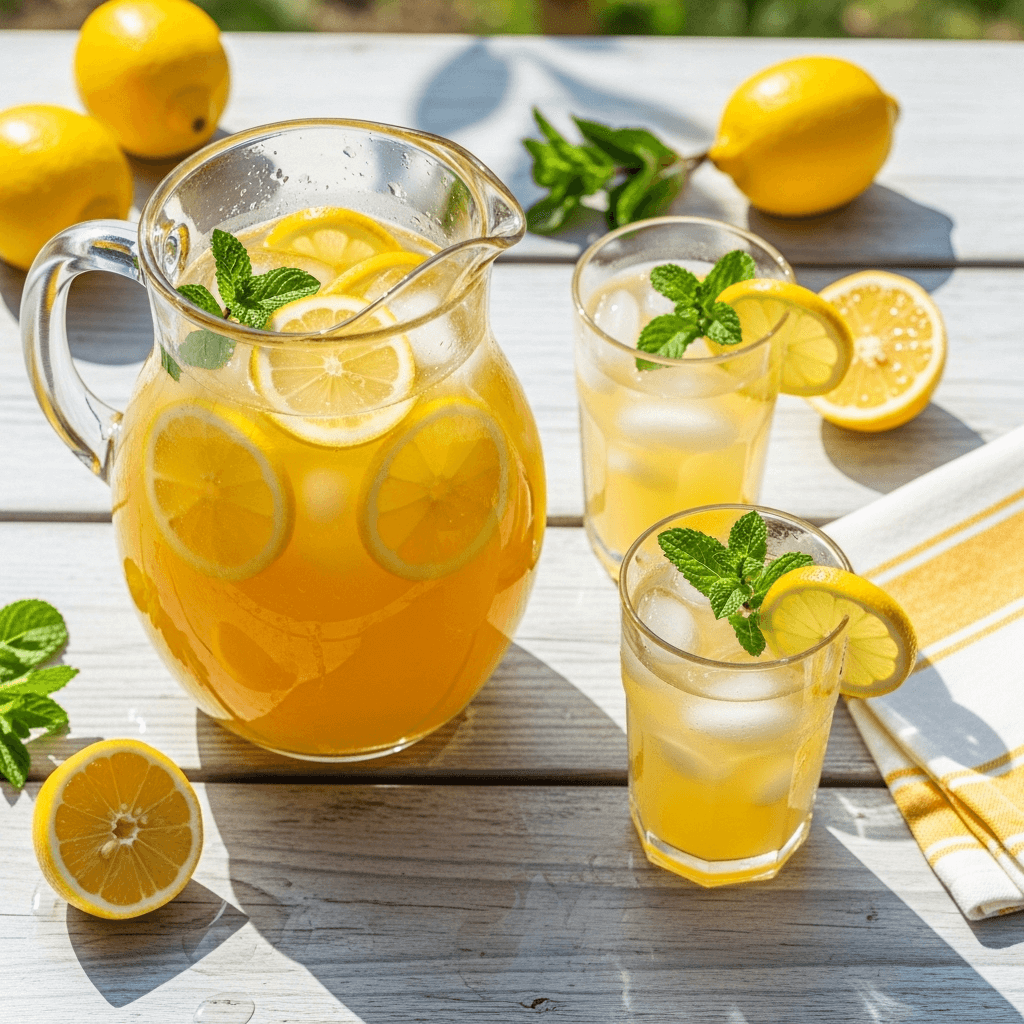

Nothing says summer quite like a tall, ice-cold glass of homemade lemonade. This easy lemonade recipe is the ultimate refreshing beverage that combines fresh lemon juice, sugar, and water into liquid sunshine. Unlike store-bought lemonade that’s loaded with artificial flavors and preservatives, this homemade version tastes bright, tangy, and perfectly balanced with just the right amount of sweetness.
Whether you’re hosting a backyard barbecue, planning a summer picnic, setting up a lemonade stand with the kids, or simply craving something cool and refreshing on a hot day, this classic lemonade recipe delivers every single time. It comes together in just 15 minutes and uses simple ingredients you probably already have in your kitchen.
This recipe makes about 8 cups of delicious lemonade, perfect for serving a family or small gathering. The best part? You can easily customize it with fresh herbs like mint or basil, muddle in berries, or even create a sparkling version by using club soda. It’s the perfect base recipe that you’ll turn to all summer long and beyond.
History / Background
Lemonade has a surprisingly ancient history that spans continents and centuries. While we think of it as a quintessentially American summer drink, lemonade’s origins can be traced back to medieval Egypt around the 10th century. The earliest mention of a lemon-based drink appears in Egyptian writings, where a beverage called “qatarmizat” was made from lemon juice and sugar. This drink was popular among merchants and travelers because lemons were relatively easy to preserve during long journeys.
Lemons themselves originated in Asia, likely in northeastern India, northern Myanmar, or China, before spreading westward through trade routes. As lemons made their way to the Mediterranean region and Europe, various cultures began creating their own versions of lemon beverages. In 17th century Paris, vendors called “limonadiers” sold lemonade on the streets from tanks they carried on their backs, making it one of the first commercially sold soft drinks in Europe.
Lemonade arrived in America with European colonists and quickly became a beloved beverage. By the 19th century, homemade lemonade was a staple at American social gatherings, church functions, and county fairs. The iconic image of children selling lemonade from front-yard stands became embedded in American culture, representing entrepreneurship, innocence, and summertime.
The classic American lemonade differs from versions in other countries. European lemonade is typically carbonated (similar to what Americans call lemon-lime soda), while American lemonade is traditionally still and sweeter. Pink lemonade, which became popular in the United States in the mid-1800s, has several origin stories, with most suggesting it was created accidentally when circus vendors ran out of regular lemonade and improvised with various red ingredients.
Throughout the 20th century, lemonade remained a cultural touchstone in America. The phrase “when life gives you lemons, make lemonade” became a popular saying about maintaining optimism during difficult times. Commercial lemonade mixes and concentrates became available, but many home cooks continued making it from scratch, passing recipes down through generations. Today, fresh homemade lemonade represents simple pleasures, summer memories, and the joy of sharing something delicious with the people you love.
Why You’ll Love This Recipe
This easy homemade lemonade is about to become your family’s go-to summer drink, and once you taste the difference between fresh-squeezed and store-bought, you’ll never go back to powder or concentrate again. The flavor is incomparably bright, with that perfect balance of sweet and tart that makes lemonade so irresistibly refreshing.
Making lemonade from scratch might seem like extra work, but this recipe proves it’s actually incredibly simple. With just three basic ingredients and about 15 minutes of your time, you can create a pitcher of lemonade that tastes like it came from a fancy café or a farm-to-table restaurant. Plus, there’s something deeply satisfying about squeezing fresh lemons and watching that beautiful yellow juice transform into the perfect summer beverage.
Here’s what makes this recipe absolutely perfect:
- Incredibly Refreshing – Nothing quenches thirst quite like fresh lemonade on a hot summer day
- Simple Ingredients – Just lemons, sugar, and water—that’s it! No artificial flavors or weird chemicals
- Quick to Make – Ready in 15 minutes from start to finish, with most of that being squeezing time
- Budget-Friendly – Costs a fraction of fancy bottled lemonades and serves 6-8 people
- Perfectly Balanced – Not too sweet, not too tart—this recipe hits the sweet spot every time
- Customizable – Easily adapt with fresh herbs, berries, or sparkling water for endless variations
- Kid-Approved – Children absolutely love helping make this and drinking the results
- No Artificial Ingredients – You control exactly what goes in, avoiding preservatives and food dyes
- Great for Crowds – Easily doubles or triples for parties, showers, and summer gatherings
- Naturally Gluten-Free & Vegan – Suitable for virtually any dietary restriction
- Picnic Perfect – Transports beautifully in a pitcher or dispenser for outdoor events
Ingredient Notes
The beauty of this lemonade recipe is in its simplicity. With just three core ingredients, quality really matters. Here’s what you need and why each component is important:
Fresh Lemons – This is where the magic happens. You’ll need about 6-8 medium lemons to yield 1 cup of fresh lemon juice. Always use fresh lemons rather than bottled lemon juice for the brightest, most authentic flavor. Look for lemons that are heavy for their size (indicating lots of juice), with smooth, thin skin in bright yellow color. Meyer lemons create a slightly sweeter, less acidic lemonade, while Eureka or Lisbon lemons (the most common supermarket varieties) provide that classic tart lemon flavor.
Granulated Sugar – Essential for balancing the tartness of lemon juice and creating that signature sweet-tart flavor. White granulated sugar dissolves easily and provides clean sweetness without competing with the lemon flavor. You can substitute with organic cane sugar, superfine sugar (which dissolves even faster), or honey for a different flavor profile. For lower-sugar options, use monk fruit sweetener or stevia, though you’ll need to adjust quantities as these are sweeter than sugar.
Cold Water – The base that transforms lemon juice and sugar into drinkable lemonade. Always use cold or room temperature water for the main batch, then add ice when serving. Filtered water is ideal if your tap water has a strong mineral taste or chlorine flavor. For a sparkling lemonade variation, replace some or all of the water with club soda or sparkling water.
Ice – While not technically an ingredient in the lemonade itself, plenty of ice is crucial for serving lemonade at its most refreshing. Use large ice cubes or ice spheres if possible, as they melt more slowly and won’t dilute your lemonade as quickly.
Optional Flavor Boosters:
- Fresh Mint – Muddle a few sprigs in the pitcher for refreshing mint lemonade
- Fresh Berries – Strawberries, raspberries, or blueberries add beautiful color and subtle fruit flavor
- Lavender – A little culinary lavender creates sophisticated floral notes
- Ginger – Fresh grated ginger adds warmth and complexity
- Cucumber – Thin slices create a spa-like, ultra-refreshing version
Equipment Needed
You don’t need any fancy equipment to make this easy lemonade recipe, but having the right tools makes the process faster and easier. Here’s what you’ll want on hand:
- Citrus Juicer or Reamer – Essential for extracting juice from lemons. A handheld citrus reamer, manual press, or electric citrus juicer all work well. Electric juicers are fastest if you’re making large batches frequently.
- Large Pitcher – A 2-quart or larger pitcher for mixing and serving. Glass pitchers are ideal because they don’t retain odors or stains, but BPA-free plastic works too.
- Measuring Cups – You’ll need both 1-cup and 1-tablespoon measures for accurate ingredient ratios.
- Fine-Mesh Strainer – Optional but recommended for catching pulp and seeds, giving you perfectly smooth lemonade.
- Wooden Spoon or Long Whisk – For stirring and ensuring the sugar dissolves completely.
- Cutting Board and Sharp Knife – For cutting lemons in half before juicing.
- Medium Saucepan – If making simple syrup (optional method for easier sugar dissolution).
- Serving Glasses – 8-12 ounce glasses are perfect for serving lemonade.
- Lemon Zester or Microplane (Optional) – For adding lemon zest as garnish or extra flavor.

The Best Easy Lemonade Recipe
- Total Time: 15 minutes
- Yield: 8 cups (8 servings) 1x
- Diet: Gluten Free
Description
This easy homemade lemonade recipe is perfectly refreshing with the ideal balance of sweet and tart. Made with fresh lemon juice, sugar, and cold water, it’s ready in just 15 minutes and tastes infinitely better than store-bought versions. Perfect for summer parties, barbecues, or anytime you need a cool, thirst-quenching beverage.
Ingredients
For the Lemonade:
- 1 cup (240ml) fresh lemon juice (from 6–8 medium lemons)
- 1 cup (200g) granulated sugar
- 6 cups (1.4L) cold water
- Ice, for serving
- Lemon slices and fresh mint, for garnish (optional)
For Simple Syrup Method (Optional):
- 1 cup (200g) granulated sugar
- 1 cup (240ml) water
- 1 cup (240ml) fresh lemon juice
- 5 cups (1.2L) cold water
Instructions
Standard Method:
- Roll and juice the lemons: Before cutting, roll each lemon firmly on your countertop using your palm. This breaks down the internal membranes and makes the lemons easier to juice. Cut lemons in half and juice them using a citrus juicer until you have 1 cup of fresh lemon juice. Strain through a fine-mesh strainer to remove seeds and pulp if desired.
- Dissolve the sugar: In a large pitcher, combine the fresh lemon juice and sugar. Stir vigorously with a wooden spoon or whisk for 1-2 minutes until the sugar is completely dissolved. You shouldn’t feel any grittiness at the bottom of the pitcher.
- Add water: Pour in 6 cups of cold water and stir well to combine everything evenly. Taste and adjust sweetness if needed by adding more sugar (dissolve it first in a small amount of warm water) or more lemon juice for extra tartness.
- Chill and serve: Refrigerate the lemonade for at least 30 minutes to get it nice and cold, or serve immediately over plenty of ice. Pour into glasses filled with ice and garnish with lemon slices and fresh mint if desired.
Simple Syrup Method (For Smoother Lemonade):
- Make simple syrup: In a medium saucepan, combine 1 cup of sugar with 1 cup of water. Heat over medium heat, stirring frequently, until the sugar is completely dissolved and the mixture is clear, about 3-5 minutes. Do not let it boil. Remove from heat and let cool completely.
- Combine ingredients: In a large pitcher, mix the cooled simple syrup with 1 cup fresh lemon juice and 5 cups cold water. Stir well to combine.
- Serve: Fill glasses with ice, pour lemonade over ice, and garnish as desired.
Notes
- For best results, use fresh-squeezed lemon juice rather than bottled juice
- Lemonade can be made 1-2 days ahead and stored covered in the refrigerator
- Adjust sweetness to taste—start with ¾ cup sugar if you prefer less sweet lemonade
- The simple syrup method creates a smoother texture because the sugar dissolves more completely
- For sparkling lemonade, replace 2-3 cups of water with club soda or sparkling water (add just before serving)
- Save a few lemon halves after juicing to add to the pitcher for visual appeal
- If lemons are very firm, microwave them for 10-15 seconds before juicing to release more juice
- Prep Time: 15 minutes
- Cook Time: 0 minutes
- Category: Beverage
- Method: No-Cook
- Cuisine: American
Nutrition
- Serving Size: 1 cup (240ml)
- Calories: 103
- Sugar: 25g
- Sodium: 8mg
- Fat: 0g
- Saturated Fat: 0g
- Unsaturated Fat: 0g
- Trans Fat: 0g
- Carbohydrates: 28g
- Fiber: 0g
- Protein: 0g
- Cholesterol: 0mg
Tips & Variations
One of the best things about homemade lemonade is how endlessly customizable it is. Once you master the basic recipe, you can experiment with different flavors and creative twists. Here are some delicious variations:
Strawberry Lemonade – Blend 1 cup of fresh or frozen strawberries until smooth, strain if desired, and stir into the finished lemonade. The result is beautiful pink lemonade with natural strawberry flavor.
Raspberry Lemonade – Muddle ½ cup of fresh raspberries in the bottom of your pitcher before adding the lemon juice and sugar, or blend raspberries and strain for a smoother texture.
Mint Lemonade – Add ¼ cup of fresh mint leaves to the pitcher and muddle gently, or blend a handful of mint with the lemon juice before straining. This creates incredibly refreshing mojito-style lemonade.
Lavender Lemonade – Make the simple syrup with 1 tablespoon of dried culinary lavender buds. Let steep for 10 minutes, then strain before adding to lemon juice and water. This creates an elegant, floral version.
Ginger Lemonade – Add 2 tablespoons of fresh grated ginger to your simple syrup while heating, then strain. Or muddle fresh ginger slices directly in the pitcher.
Blueberry Lemonade – Blend ¾ cup fresh or frozen blueberries, strain, and add to lemonade for a beautiful purple-pink color and subtle berry flavor.
Sparkling Lemonade – Replace half or all of the water with club soda or sparkling water. Add the carbonated water just before serving to maintain the fizz.
Arnold Palmer – Mix equal parts lemonade and unsweetened iced tea for this classic golf course refresher.
Cucumber Lemonade – Blend half a cucumber with the lemon juice, strain, and proceed with the recipe. Add thin cucumber slices to the pitcher for a spa-like presentation.
Watermelon Lemonade – Blend 2 cups of fresh watermelon chunks, strain, and use in place of 2 cups of water in the recipe.
Lemonade with Honey – Replace granulated sugar with ¾ cup of honey for a different sweetness profile and smooth texture.
Coconut Lemonade – Replace 1-2 cups of water with coconut water for tropical flair and added electrolytes.
Reduced Sugar Version – Use only ½ to ¾ cup of sugar, or replace sugar with monk fruit sweetener or stevia (adjust quantities according to package directions).
Pro Chef Tips
Take your homemade lemonade from good to absolutely spectacular with these professional techniques:
Roll lemons before juicing – Always roll whole lemons firmly on the counter with your palm before cutting. This simple step breaks down the membranes inside and can yield up to 30% more juice from each lemon.
Use room temperature lemons – Cold lemons from the refrigerator are harder to juice. If your lemons are refrigerated, let them sit at room temperature for 30 minutes, or microwave them for 10-15 seconds to warm them slightly.
Make simple syrup for perfectly smooth lemonade – While you can dissolve sugar directly in lemon juice, making simple syrup first ensures no grittiness and creates a smoother, more professional texture. The sugar is completely incorporated into the liquid.
Strain your lemon juice – For the clearest, most refined lemonade, strain your lemon juice through a fine-mesh strainer to remove pulp, seeds, and membranes. However, if you like pulpy lemonade, skip this step.
Add a pinch of salt – This might sound odd, but a tiny pinch of salt (about ⅛ teaspoon for the whole recipe) enhances all the flavors and makes the lemonade taste more complex and balanced.
Use filtered water – If your tap water has a strong mineral or chlorine taste, it will affect your lemonade. Filtered or bottled water ensures the cleanest, freshest flavor.
Zest before juicing – If you want to add lemon zest for extra flavor, zest the lemons before you cut and juice them. It’s nearly impossible to zest a lemon half after it’s been juiced.
Taste and adjust – Lemons vary in acidity and juiciness. Always taste your lemonade before serving and adjust by adding more sugar (dissolved in a bit of warm water first), more lemon juice, or more water until it’s perfectly balanced to your preference.
Chill ingredients before mixing – For immediately drinkable lemonade, use cold water and freshly squeezed juice, then serve over lots of ice. If using simple syrup, make sure it’s completely cooled before mixing.
Don’t add sparkling water too early – If making sparkling lemonade, add the club soda or sparkling water just before serving. Adding it too early means you’ll lose all the bubbles.
Use large ice cubes – Large ice cubes or ice spheres melt more slowly than small cubes, preventing your lemonade from becoming diluted too quickly.
Make concentrated lemonade for easy serving – Make a concentrated version using less water, then dilute individual glasses to preference. This is perfect for parties where guests have different sweetness preferences.
Common Mistakes to Avoid
Even with such a simple recipe, there are a few pitfalls that can affect your results. Here’s what to watch out for:
Using bottled lemon juice – Bottled lemon juice simply cannot compare to fresh-squeezed. It often tastes flat, overly acidic, and slightly bitter due to preservatives. Always use fresh lemons for the best-tasting lemonade. This is the number one mistake that prevents people from making truly delicious lemonade.
Not dissolving sugar completely – If you don’t stir vigorously enough or long enough, you’ll end up with grainy, undissolved sugar settling at the bottom of your pitcher. Either stir for 2-3 minutes until completely dissolved, or use the simple syrup method to ensure smooth lemonade.
Making it too sweet or too tart – The sugar-to-lemon ratio in this recipe is balanced for most palates, but lemons vary in acidity. Always taste before serving and adjust. A good rule of thumb: you should taste both the sweetness and the tartness—neither should overpower the other.
Adding ice to the pitcher – Never add ice directly to your lemonade pitcher unless you’re serving it immediately. The ice will melt and dilute the lemonade, making it watery. Instead, keep the lemonade in the refrigerator and add ice only to individual serving glasses.
Using old or underripe lemons – Lemons that are too firm, underripe, or old and dried out won’t yield much juice and may taste overly bitter or harsh. Choose lemons that feel heavy for their size and have thin, smooth skin. They should give slightly when squeezed.
Not chilling before serving – Lemonade needs to be cold to be refreshing. If you serve it at room temperature, it won’t taste nearly as good. Either refrigerate for at least 30 minutes before serving or serve over plenty of ice.
Skipping the taste test – Different lemons have different levels of acidity and sweetness. What works perfectly with one batch of lemons might need adjustment with another. Always taste and adjust your lemonade before declaring it finished.
Storage & Meal Prep
Homemade lemonade stores beautifully and actually tastes even better after the flavors have had time to meld. Here’s how to store and serve it properly:
Refrigerator Storage: Store lemonade in a covered pitcher or airtight container in the refrigerator for up to 5 days. The flavor is actually best after chilling for at least a few hours or overnight. Give it a good stir before serving, as the lemon juice may separate slightly during storage.
Best Storage Containers: Glass pitchers with lids are ideal for storing lemonade because glass doesn’t absorb odors or stains. If using plastic, choose BPA-free containers. Mason jars also work beautifully for storing individual portions.
Separation is Normal: You may notice the lemon juice settling or separating after the lemonade sits for a while. This is completely normal. Simply stir well before pouring and the lemonade will look perfect again.
Serving from Storage: Always stir lemonade well before serving from the refrigerator. Add fresh ice to glasses rather than to the pitcher to prevent dilution. Garnish with fresh lemon slices just before serving for the prettiest presentation.
Longevity: While lemonade will keep for up to 5 days, it’s best consumed within 2-3 days when the lemon flavor is at its brightest and most vibrant.
Signs It’s Gone Bad: If your lemonade develops an off smell, mold appears, or it tastes fermented or funky, discard it. Properly stored lemonade should smell fresh and citrusy.
Make-Ahead & Freezer Notes
Planning a party or want to prep ahead? Here are your make-ahead options for lemonade:
Make-Ahead Timeline: You can make lemonade up to 2 days before you need it. In fact, making it the night before often improves the flavor as everything has time to meld together. Store covered in the refrigerator until ready to serve.
Simple Syrup Prep: The simple syrup component can be made up to 2 weeks in advance and stored in an airtight container in the refrigerator. When you’re ready to make lemonade, just combine the chilled simple syrup with fresh lemon juice and cold water.
Lemon Juice Freezing: You can freeze fresh lemon juice in ice cube trays for up to 3 months. Once frozen, pop the cubes out and store in a freezer bag. Each cube equals about 2 tablespoons of juice, making it easy to thaw exactly what you need.
Lemonade Ice Cubes: For parties, freeze lemonade in ice cube trays. Use these lemonade cubes in glasses instead of regular ice cubes so your lemonade doesn’t get diluted as the ice melts. This is a game-changer for outdoor summer events.
Freezing Full Batches: Lemonade can be frozen in airtight containers for up to 3 months. Leave about an inch of headspace for expansion. Thaw overnight in the refrigerator, stir well, and serve over ice. The texture may be slightly different, but the flavor remains excellent.
Lemonade Concentrate: Make a concentrated version using half the water, then freeze in portions. When ready to serve, thaw and dilute with water or sparkling water to the proper strength. This saves freezer space.
Lemonade Slushies: Pour lemonade into popsicle molds and freeze for a fun frozen treat. Or partially freeze lemonade in the pitcher and blend for instant lemonade slushies.
Party Prep Strategy: For large gatherings, make a double or triple batch the day before and store in large pitchers or beverage dispensers in the refrigerator. Set out with plenty of ice and garnishes, and let guests serve themselves.
Serving Suggestions
Lemonade is delicious on its own, but pairing it with the right foods and serving it in creative ways can make your gathering even more special:
Perfect Food Pairings:
- BBQ ribs, pulled pork, or grilled chicken (lemonade cuts through rich, smoky flavors beautifully)
- Fried chicken, fish and chips, or any fried foods (the acidity balances the richness)
- Fresh summer salads with grilled vegetables
- Sandwiches and wraps for picnic lunches
- Tacos, enchiladas, or Mexican food
- Pizza and burgers for casual gatherings
- Fresh fruit platters and cheese boards
- Cookies, brownies, or pound cake for dessert
- Hot dogs and hamburgers at cookouts
Serving Ideas for Special Occasions:
Backyard BBQs: Set up a self-serve lemonade station with a large beverage dispenser, stacks of cups, and a bucket of ice. Provide lemon slices, mint sprigs, and berries for guests to customize their drinks.
Kids’ Birthday Parties: Serve in colorful plastic cups with fun straws and add fresh fruit as garnish. Set up a lemonade stand as an activity where kids can help make and serve it.
Bridal Showers & Baby Showers: Use elegant glass pitchers and serve in champagne flutes or pretty stemware. Add edible flowers or lavender sprigs for a sophisticated look.
Summer Picnics: Transport lemonade in large mason jars or insulated beverage containers. Bring a separate container of ice and combine when ready to serve.
Pool Parties: Keep a large cooler or beverage dispenser of lemonade poolside for easy access. Use plastic cups to avoid glass near the pool.
Holiday Gatherings: Turn lemonade festive by adding cranberries for Christmas, raspberries for Valentine’s Day, or blueberries and strawberries for Fourth of July.
Presentation Ideas:
- Rim glasses with sugar by dipping rims in lemon juice then sugar
- Freeze edible flowers or berries in ice cubes for a stunning visual
- Thread lemon slices and berries on skewers as drink garnishes
- Serve in vintage glass bottles with paper straws for rustic charm
- Use mason jars with handle attachments for casual gatherings
- Float thin lemon wheels on top of the pitcher for elegant presentation
FAQs Section
How many lemons do I need for one cup of juice?
You’ll typically need 6-8 medium lemons to yield 1 cup of fresh lemon juice, though this varies based on the size and juiciness of your lemons. A good rule of thumb is that one medium lemon produces about 2-3 tablespoons of juice. Choose lemons that feel heavy for their size and have thin, smooth skin—these are the juiciest. Rolling lemons firmly on the counter before cutting and juicing at room temperature helps maximize juice extraction.
Can I use bottled lemon juice instead of fresh lemons?
While you technically can use bottled lemon juice, I strongly recommend against it. Fresh-squeezed lemon juice has a bright, vibrant flavor that bottled juice simply cannot match. Bottled lemon juice often contains preservatives that give it a slightly bitter, flat taste. The difference in your lemonade will be night and day. If you absolutely must use bottled juice, choose organic 100% lemon juice without additives and be prepared for less impressive results.
How do I make lemonade less sweet or more tart?
The beauty of homemade lemonade is that you can adjust it to your exact preference. To make it less sweet, reduce the sugar to ¾ cup or even ½ cup and taste as you go. To make it more tart, add an extra ¼ cup of fresh lemon juice. Always adjust gradually and taste after each addition. Remember that lemonade served over ice will taste slightly less sweet and tart than when you taste it at room temperature, so factor that in.
Why is my lemonade bitter?
Bitterness in lemonade usually comes from two sources: over-juicing the lemons (which extracts bitter compounds from the pith and seeds) or using old, underripe lemons. To avoid bitterness, juice lemons gently without pressing too hard, and strain your juice through a fine-mesh strainer to remove any pith or membrane. Also ensure you’re using ripe, fresh lemons with bright yellow color and smooth skin.
Can I make lemonade with honey instead of sugar?
Absolutely! Honey makes a delicious alternative to granulated sugar and adds subtle floral notes. Use about ¾ cup of honey in place of 1 cup of sugar, as honey is sweeter. Warm the honey slightly or dissolve it in a small amount of warm water first for easier mixing. Keep in mind that honey lemonade won’t be clear—it will have a slightly cloudy appearance, which is perfectly fine and still delicious.
How long does homemade lemonade last in the refrigerator?
Properly stored in a covered pitcher or airtight container, homemade lemonade stays fresh for 3-5 days in the refrigerator. For best quality and flavor, consume it within 2-3 days. Always give it a good stir before serving, as the lemon juice naturally separates during storage. If you notice any off odors, mold, or fermented taste, discard the lemonade.
Can I make lemonade ahead of time for a party?
Yes! Lemonade actually tastes better when made a day ahead, as the flavors have time to meld. Make it the night before your party and store covered in the refrigerator. For large gatherings, consider making a concentrated version (using less water) and diluting it to proper strength just before serving. This saves refrigerator space. Alternatively, make lemonade ice cubes that won’t dilute the lemonade as they melt.
Conclusion
There’s something magical about a pitcher of fresh, homemade lemonade that instantly transforms any ordinary day into something special. Whether you’re cooling off on a hot summer afternoon, entertaining friends at a backyard barbecue, or creating childhood memories with a lemonade stand, this easy lemonade recipe delivers pure, refreshing deliciousness every single time.
The best part about making lemonade from scratch is knowing exactly what goes into it—just fresh lemons, sugar, and water. No artificial flavors, no mysterious ingredients, no preservatives. Just pure, bright, tangy-sweet perfection that tastes like sunshine in a glass. Once you experience how simple it is to make and how much better it tastes than store-bought versions, you’ll wonder why you ever bought the powdered stuff.
This recipe has been perfected to give you the ideal balance of sweet and tart, but remember that the beauty of homemade lemonade is that you can customize it to your exact preferences. Make it sweeter, make it tangier, add fresh herbs or berries, or keep it classically simple. There’s no wrong way to enjoy fresh lemonade.
I’d love to hear how your lemonade turns out! Drop a comment below and let me know if you tried any of the flavor variations or if you have your own secret lemonade tips. Did you add strawberries? Fresh mint? Served it at a party? I want to hear all about it!
Don’t forget to save this recipe to your Pinterest boards so you can find it whenever summer refreshment calls! Pin it to your “Summer Drinks,” “Easy Recipes,” “Party Beverages,” or “Backyard BBQ” boards. Share it with friends who love fresh, homemade beverages as much as you do.
Now grab those lemons and get squeezing—the perfect pitcher of homemade lemonade is just 15 minutes away! 🍋