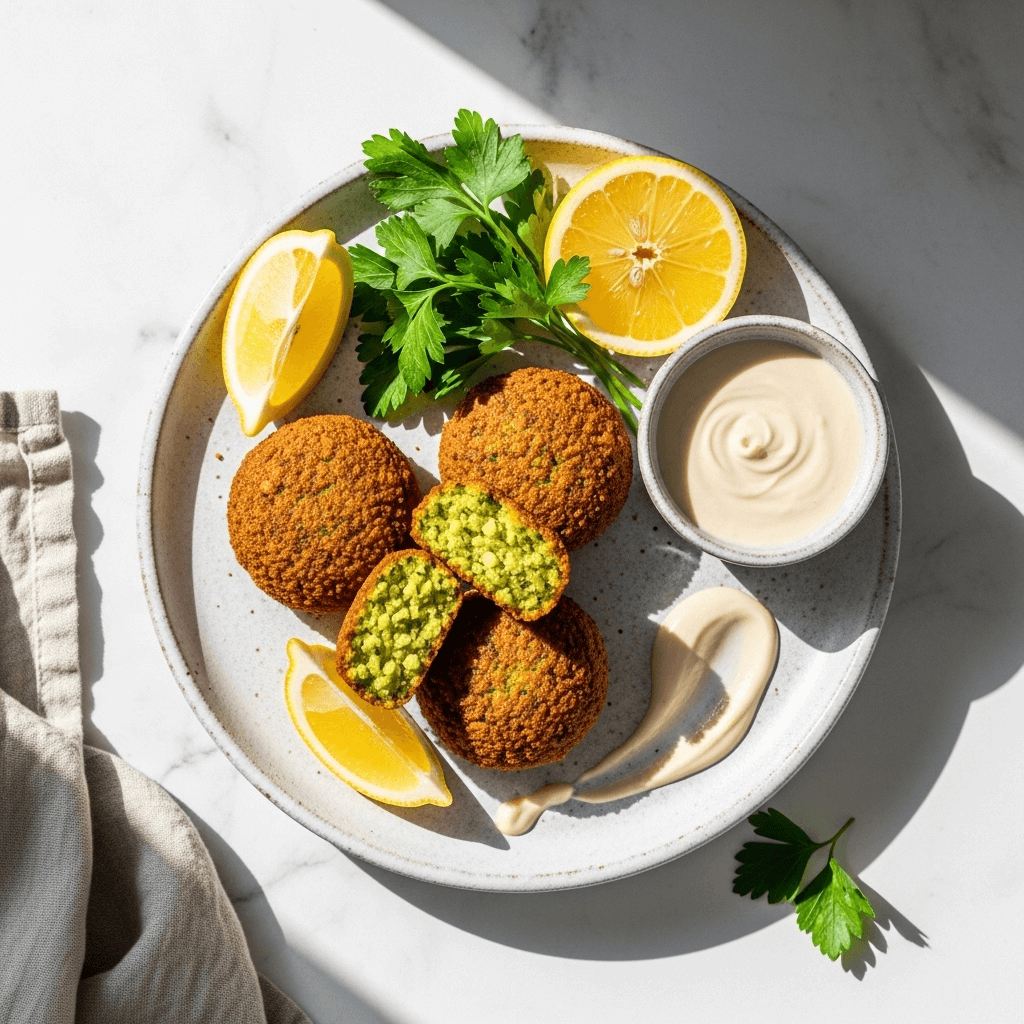

If you’ve ever bitten into a perfectly crispy falafel—golden on the outside, tender and herbaceous on the inside—you know exactly why this Middle Eastern staple has captured hearts (and taste buds) around the world. This easy falafel recipe brings that authentic street food experience right into your kitchen, and trust me, once you make these flavorful chickpea fritters at home, you’ll never want the store-bought version again.
Falafel is incredibly versatile, making it perfect for lunch, dinner, or even as a protein-packed snack. Serve these crispy beauties in warm pita bread with creamy tahini sauce, stuff them into a fresh salad bowl, or enjoy them as appetizers at your next gathering. Whether you’re hosting a Mediterranean-themed dinner party or simply craving something delicious and nutritious, homemade falafel delivers every single time.
What makes this recipe truly special is that it’s made entirely from scratch using dried chickpeas (not canned!), fresh herbs, and aromatic spices. The result? Authentic flavor and that signature crispy exterior that shatters with each bite, revealing a fluffy, flavorful center packed with parsley, cilantro, and warming spices.
History / Background
Falafel’s exact origins have been debated for generations, with both Egypt and the Levant region (including modern-day Lebanon, Syria, Palestine, and Israel) claiming to be the birthplace of this beloved dish. What we do know is that falafel has been nourishing people in the Middle East for centuries, with some food historians suggesting it may have originated in Egypt as early as the 4th century, where it was traditionally made with fava beans.
As falafel traveled throughout the Middle East, the recipe evolved. In the Levant region, chickpeas became the primary legume of choice, and this is the version that has gained worldwide popularity today. The word “falafel” itself is thought to come from the Arabic word “filfil,” meaning pepper, though others believe it derives from the Coptic “pha la phel,” which translates to “of many beans.”
Traditionally, falafel was a street food enjoyed by people from all walks of life—affordable, filling, and utterly delicious. Vendors would fry fresh batches throughout the day, serving them hot in flatbread with pickled vegetables, tahini sauce, and fresh herbs. This humble food became a symbol of Middle Eastern culinary identity and has since spread across the globe, becoming a vegetarian and vegan favorite everywhere from food trucks in New York City to trendy cafes in London.
Today, falafel represents more than just a meal—it’s a cultural bridge that brings people together over shared love of good food. Making it at home connects you to this rich history while allowing you to customize the flavors to your personal taste.
Why You’ll Love This Recipe
This homemade falafel recipe strikes the perfect balance between authentic flavor and home-cooking ease. While it does require some planning ahead (you’ll need to soak your chickpeas overnight), the actual hands-on time is minimal, and the results are absolutely worth it. These aren’t your average falafels—they’re restaurant-quality bites that will have your family and friends asking for seconds and thirds.
Here’s why this recipe is a keeper:
- Authentically Crispy: Made with dried chickpeas for that perfect texture—crispy outside, fluffy inside
- Packed with Fresh Herbs: Loads of parsley and cilantro give these falafels their signature bright, fresh flavor
- Budget-Friendly: Dried chickpeas and pantry spices make this an economical meal that feeds a crowd
- Naturally Plant-Based: Completely vegan and vegetarian-friendly without any substitutions needed
- Meal Prep Champion: Makes a large batch that freezes beautifully for quick weeknight meals
- Customizable: Easy to adjust spice levels and add your favorite flavors
- Crowd-Pleaser: Even picky eaters and non-vegetarians love these flavor-packed fritters
- Healthier Than Restaurant Versions: Control the oil and ingredients for a lighter option
Ingredient Notes
The beauty of falafel lies in its simplicity—just a handful of wholesome ingredients come together to create something truly magical. Here’s what you need to know about each component:
Dried Chickpeas: This is non-negotiable for authentic falafel. Canned chickpeas contain too much moisture and will result in falafel that falls apart during frying. Dried chickpeas, soaked overnight, maintain the perfect texture and absorb flavors beautifully. You can substitute with dried fava beans for an Egyptian-style version.
Fresh Parsley: The MVP of falafel flavor. Use flat-leaf Italian parsley for the best taste—it’s less bitter than curly parsley. Don’t skimp on this! The abundance of fresh herbs is what makes falafel taste authentic.
Fresh Cilantro: Adds a bright, citrusy note that complements the earthiness of chickpeas. If you’re in the cilantro-tastes-like-soap camp, you can use all parsley instead or add fresh dill.
Onion: Yellow or white onions work best. They add moisture and a subtle sweetness that balances the herbs and spices. Shallots can be substituted for a milder flavor.
Garlic: Fresh cloves only—garlic powder won’t give you the same punchy flavor. Four to six cloves might seem like a lot, but it mellows during cooking.
Ground Cumin & Coriander: These warming spices are essential to falafel’s distinctive flavor profile. Freshly ground spices will give you the most vibrant taste.
Cayenne Pepper: Just a pinch adds depth without making the falafel spicy. Adjust according to your heat preference or omit entirely.
Baking Powder: The secret ingredient for extra-fluffy interiors! It creates tiny air pockets that lighten the texture.
Sesame Seeds: Optional but traditional, they add a lovely nutty flavor and extra crunch to the exterior.
Salt & Black Pepper: Essential for bringing all the flavors together. Season generously.
Equipment Needed
You don’t need any fancy kitchen gadgets to make perfect falafel at home. Here’s what you’ll want to have ready:
- Food Processor: Absolutely essential for achieving the right texture. A blender won’t work as well—you need the pulsing action of a food processor to create the proper coarse meal consistency.
- Large Bowl: For soaking chickpeas overnight and mixing your falafel mixture.
- Fine-Mesh Strainer: To drain and rinse your soaked chickpeas thoroughly.
- Measuring Cups and Spoons: For accurate measurements of spices and baking powder.
- Cookie Scoop or Falafel Scoop: A 2-tablespoon cookie scoop helps create uniform-sized falafel, but you can also shape them by hand.
- Large Plate or Baking Sheet: For holding shaped falafel before frying.
- Deep Pot, Dutch Oven, or Deep Fryer: For frying the falafel. A heavy-bottomed pot works best for maintaining oil temperature.
- Thermometer: Optional but helpful for monitoring oil temperature (350°F is ideal).
- Slotted Spoon or Spider Strainer: For safely removing falafel from hot oil.
- Paper Towels or Wire Rack: For draining excess oil after frying
Crispy Homemade Falafel Recipe
- Total Time: 35 minutes
- Yield: 20-24 falafel (serves 6-8) 1x
- Diet: Vegetarian
Description
Crispy, golden-brown homemade falafel made from dried chickpeas, fresh herbs, and aromatic spices. These authentic Middle Eastern chickpea fritters are naturally vegan, incredibly flavorful, and perfect for stuffing into pita bread or serving over salads.
Ingredients
- 1 pound (2 cups) dried chickpeas, soaked overnight
- 1 cup fresh parsley leaves, packed (about 1 large bunch)
- ½ cup fresh cilantro leaves, packed
- 1 medium yellow onion, roughly chopped
- 6 cloves garlic, peeled
- 2 teaspoons ground cumin
- 1 teaspoon ground coriander
- 1 teaspoon salt (or to taste)
- ½ teaspoon black pepper
- ¼ teaspoon cayenne pepper (optional)
- 1 teaspoon baking powder
- 4–6 tablespoons all-purpose flour (or chickpea flour)
- 2 tablespoons sesame seeds (optional)
- Vegetable oil for frying (about 3 cups)
Instructions
- Soak the Chickpeas: Place dried chickpeas in a large bowl and cover with at least 3 inches of cold water. Let soak at room temperature for 12-24 hours. The chickpeas will double in size. Drain completely and pat dry with paper towels.
- Process the Mixture: Add the soaked and drained chickpeas to your food processor along with parsley, cilantro, onion, and garlic. Pulse in short bursts (about 10-15 pulses) until the mixture resembles coarse breadcrumbs or sand. You want texture—not a smooth paste. Scrape down the sides as needed.
- Add Spices: Transfer the chickpea mixture to a large bowl. Add cumin, coriander, salt, black pepper, cayenne (if using), baking powder, and sesame seeds. Mix thoroughly with a spoon or your hands until everything is evenly distributed.
- Add Flour: Sprinkle 4 tablespoons of flour over the mixture and stir to combine. The mixture should hold together when squeezed but still look crumbly. If it’s too wet and won’t hold its shape, add 1-2 more tablespoons of flour. Cover the bowl and refrigerate for at least 1 hour (or up to 24 hours). This rest time is crucial—it allows the mixture to firm up and makes shaping much easier.
- Shape the Falafel: Remove the mixture from the refrigerator. Using a cookie scoop or your hands, form the mixture into balls about 1½ inches in diameter (roughly the size of a golf ball), then gently flatten them into thick patties about 2 inches wide and ¾ inch thick. Place shaped falafel on a plate or baking sheet.
- Heat the Oil: Pour 3 inches of vegetable oil into a large, heavy-bottomed pot or Dutch oven. Heat over medium-high heat until the oil reaches 350°F on a thermometer. To test without a thermometer, drop a small piece of the falafel mixture into the oil—it should sizzle immediately and float to the surface.
- Fry the Falafel: Working in batches (don’t overcrowd the pot), carefully add 5-6 falafel to the hot oil. Fry for 3-4 minutes, turning once halfway through, until deep golden brown on all sides. The falafel should be crispy and make a hollow sound when tapped.
- Drain and Serve: Use a slotted spoon to transfer fried falafel to a paper towel-lined plate or wire rack. Let excess oil drain for a minute, then serve immediately while hot and crispy.
Notes
- Don’t Skip the Soaking: Using canned chickpeas will result in falafel that falls apart. Dried chickpeas that have been soaked overnight are essential for the right texture.
- Refrigeration is Key: Chilling the mixture for at least 1 hour helps it hold together during frying. For best results, refrigerate overnight.
- Oil Temperature Matters: If the oil is too cool, falafel will absorb oil and become greasy. If it’s too hot, they’ll burn outside while staying raw inside. Maintain 350°F throughout frying.
- Baking Option: For a lighter version, brush shaped falafel with oil and bake at 375°F for 25-30 minutes, flipping halfway through. They won’t be as crispy but will still be delicious.
- Freezing Uncooked: Shape falafel and freeze on a baking sheet, then transfer to a freezer bag. Fry from frozen, adding 1-2 extra minutes to cooking time.
- Prep Time: 15 minutes (plus overnight soaking)
- Cook Time: 20 minutes
- Category: Appetizer
- Method: Frying
- Cuisine: Middle Eastern
Nutrition
- Serving Size: 3 falafel
- Calories: 285
- Sugar: 6g
- Sodium: 385mg
- Fat: 10g
- Saturated Fat: 8g
- Unsaturated Fat: 10g
- Trans Fat: 0g
- Carbohydrates: 35g
- Fiber: 8g
- Protein: 11g
Tips & Variations
Spice It Up: Add ½ teaspoon of red pepper flakes or diced jalapeño to the mixture for extra heat. A pinch of smoked paprika adds wonderful depth.
Herb Variations: Try adding fresh mint or dill for a different flavor profile. Middle Eastern za’atar seasoning mixed into the batter is also delicious.
Make It Green: For extra-green falafel, add a handful of baby spinach or increase the herbs to 1½ cups total.
Baked Falafel: Brush shaped falafel generously with olive oil and bake at 375°F for 25-30 minutes, flipping halfway through. They won’t be quite as crispy but are still fantastic.
Air Fryer Method: Spray falafel with cooking spray and air fry at 375°F for 12-15 minutes, flipping halfway through.
Gluten-Free Option: Substitute the all-purpose flour with chickpea flour, rice flour, or cornstarch.
Add Texture: Mix in 2 tablespoons of toasted pine nuts or chopped walnuts for extra crunch and richness.
Falafel Burgers: Shape the mixture into larger patties (about 4 inches wide) and cook slightly longer for vegetarian burgers.
Pro Chef Tips
Texture is Everything: The key to perfect falafel is achieving the right texture in your food processor. You want a coarse meal—almost like wet sand—not a smooth hummus-like paste. This gives you crispy exteriors and fluffy interiors. Pulse in short bursts and check frequently.
Keep Everything Cold: Cold ingredients hold together better. After processing, keep the mixture refrigerated until you’re ready to shape and fry. This is especially important on warm days.
Double Fry for Extra Crispiness: For restaurant-quality crispiness, try the double-fry method: fry once at 325°F for 3 minutes, let rest for 5 minutes, then fry again at 375°F for 1-2 minutes until deeply golden.
Season Your Frying Oil: Add a bay leaf and a smashed garlic clove to your frying oil for subtle background flavor. Remove before frying the falafel.
The Squeeze Test: Before refrigerating your mixture, squeeze a small amount in your palm. It should hold together firmly but still have visible texture. If it crumbles apart, add a bit more flour. If it’s too pasty, add a handful more of the processed chickpea mixture.
Size Matters: Keep your falafel uniform in size so they cook evenly. Smaller falafel (about 1 inch) cook faster and are crispier, while larger ones (2 inches) have a more dramatic crispy-to-fluffy ratio.
Fresh Oil is Best: For the cleanest flavor, use fresh vegetable oil rather than oil that’s been used for other foods. You can strain and reuse falafel frying oil 2-3 times if stored properly.
Common Mistakes to Avoid
Using Canned Chickpeas: This is the number one mistake that leads to falafel falling apart. Canned chickpeas contain too much moisture and lack the structure needed to hold together during frying. Always use dried chickpeas that you’ve soaked overnight.
Over-Processing the Mixture: If you blend the chickpeas into a smooth paste, your falafel will be dense and gummy instead of light and fluffy. Stop processing while the mixture is still coarse and grainy.
Skipping the Refrigeration Time: Trying to fry the mixture immediately after processing usually results in falafel that disintegrate in the oil. The resting time allows the flour to hydrate and the mixture to firm up. Give it at least 1 hour, preferably longer.
Frying at the Wrong Temperature: Too-cool oil leads to greasy, oil-soaked falafel that fall apart. Too-hot oil burns the outside while leaving the inside undercooked. Use a thermometer and maintain 350°F for perfect results every time.
Overcrowding the Pan: Adding too many falafel at once drops the oil temperature dramatically, resulting in soggy, greasy results. Fry in small batches with plenty of space between each piece.
Not Drying the Soaked Chickpeas: After soaking, drain your chickpeas thoroughly and even pat them dry with paper towels. Excess water will make your mixture too wet and more likely to fall apart.
Storage & Meal Prep
Refrigerator Storage: Cooked falafel can be stored in an airtight container in the refrigerator for up to 5 days. Place parchment paper between layers to prevent sticking. They’ll lose some crispiness but are still delicious cold in salads or sandwiches.
Reheating Cooked Falafel: For best results, reheat in a 350°F oven for 8-10 minutes until warmed through and crispy again. You can also reheat in an air fryer at 350°F for 5-6 minutes. Avoid the microwave if possible, as it makes them soggy.
Storing Uncooked Mixture: The uncooked falafel mixture keeps well in the refrigerator for up to 3 days. In fact, the flavor actually improves as it sits! Keep it covered tightly to prevent it from drying out.
Meal Prep Strategy: Shape all your falafel at once and store uncooked on a parchment-lined baking sheet in the refrigerator, covered with plastic wrap. Fry fresh batches as needed throughout the week for the crispiest results.
Travel-Friendly: Cooked falafel travel well for packed lunches. Pack them with pita, vegetables, and sauce in separate containers to assemble fresh at lunchtime.
Make-Ahead & Freezer Notes
Making Ahead: This recipe is perfect for advance preparation. You can soak your chickpeas up to 24 hours ahead, then process the mixture and refrigerate for up to 3 days before shaping and frying. The flavors actually deepen and improve with time.
Freezing Uncooked Falafel: This is my preferred method! Shape the falafel and place them on a parchment-lined baking sheet. Freeze until solid (about 2 hours), then transfer to freezer bags or containers. They’ll keep for up to 3 months. Fry directly from frozen, adding just 1-2 extra minutes to the cooking time. No thawing needed!
Freezing Cooked Falafel: Cooked falafel can be frozen for up to 3 months. Let them cool completely, then freeze in a single layer before transferring to freezer bags. Reheat from frozen in a 375°F oven for 15-18 minutes until heated through and crispy.
Freezing the Mixture: You can also freeze the uncooked mixture in an airtight container for up to 2 months. Thaw in the refrigerator overnight, then shape and fry as directed. The texture may be slightly softer, so you might need an extra tablespoon of flour.
Best Reheating Method for Frozen: Whether you froze them cooked or uncooked, oven reheating or air frying gives you the best texture. Avoid microwave reheating as it makes falafel rubbery and soggy.
Serving Suggestions
The beauty of falafel is its incredible versatility. Here are some delicious ways to serve your homemade falafel:
Classic Pita Sandwich: Stuff warm pita bread with falafel, shredded lettuce, diced tomatoes, cucumbers, pickled turnips, and a generous drizzle of tahini sauce or tzatziki. Add some hot sauce if you like it spicy!
Falafel Platter: Serve falafel over a bed of fluffy rice or warm couscous with hummus, baba ganoush, tabbouleh, and fresh vegetables for a complete Mediterranean feast.
Buddha Bowl: Create a colorful bowl with quinoa or greens as the base, topped with falafel, roasted vegetables, chickpeas, olives, feta cheese, and lemon-tahini dressing.
Falafel Salad: Break falafel over a large Mediterranean salad with romaine, cherry tomatoes, cucumbers, red onion, kalamata olives, and feta with a lemon vinaigrette.
Mezze Spread: Serve as part of a mezze platter alongside hummus, stuffed grape leaves, marinated olives, warm pita, fresh vegetables, and assorted dips.
Side Dishes That Complement Falafel:
- Creamy tahini sauce or tahini-yogurt sauce
- Fresh tabbouleh salad
- Middle Eastern pickled vegetables
- Crispy french fries (falafel and fries is a classic combo!)
- Fattoush salad with sumac dressing
- Warm pita bread or flatbread
- Lemon wedges for squeezing
- Cucumber-yogurt sauce (tzatziki)
- Spicy harissa or hot sauce
- Fresh mint leaves and herbs
Drinks to Serve: Iced mint tea, fresh lemonade, or ayran (a yogurt-based drink) are traditional Middle Eastern beverages that pair beautifully with falafel.
FAQs Section
Can I use canned chickpeas instead of dried?
I strongly advise against it. Canned chickpeas contain too much moisture and will result in falafel that falls apart during frying. The texture will also be gummy and dense rather than light and crispy. Dried chickpeas that have been soaked overnight are essential for authentic falafel texture. If you’re short on time, this recipe isn’t for you—but trust me, the overnight soak is worth the wait!
Why are my falafel falling apart when I fry them?
The most common reasons are: using canned instead of dried chickpeas, not refrigerating the mixture long enough before frying, adding too much liquid or not enough flour, or frying at too low a temperature. Make sure your mixture holds together firmly when squeezed, refrigerate for at least 1 hour, and maintain oil temperature at 350°F.
Can I bake falafel instead of frying them?
Absolutely! While baked falafel won’t be quite as crispy as fried, they’re still delicious and much lighter. Brush shaped falafel generously with olive oil on all sides and bake at 375°F for 25-30 minutes, flipping halfway through, until golden brown. You can also use an air fryer at 375°F for 12-15 minutes with excellent results.
How do I know when the oil is hot enough?
The ideal temperature for frying falafel is 350°F. If you don’t have a thermometer, drop a small piece of the falafel mixture into the oil—it should sizzle immediately, float to the surface, and start browning within 30 seconds. If it sinks and sits at the bottom, the oil isn’t hot enough. If it browns in less than 10 seconds, the oil is too hot.
Can I make falafel ahead of time?
Yes! In fact, falafel is perfect for meal prep. You can refrigerate the uncooked mixture for up to 3 days, or shape the falafel and freeze them for up to 3 months. Cooked falafel can be refrigerated for up to 5 days or frozen for 3 months. Fry uncooked frozen falafel directly from the freezer—no thawing needed!
What can I substitute for the fresh herbs?
Fresh herbs are really essential to authentic falafel flavor, but if you absolutely can’t find them, you can use 3 tablespoons of dried herbs total (a mix of parsley and cilantro or just parsley). The flavor won’t be quite as bright, but it will still work. You could also try fresh dill, mint, or basil for interesting variations.
My falafel mixture seems too dry/crumbly. What should I do?
If your mixture won’t hold together when squeezed, you can add 1-2 tablespoons of water or olive oil, one tablespoon at a time, mixing well after each addition. The mixture should be moist enough to hold its shape but still look crumbly and textured, not paste-like. Sometimes letting it rest longer in the refrigerator helps as the chickpeas continue to absorb moisture.
Conclusion
There’s something truly special about making falafel from scratch in your own kitchen. Yes, it requires a bit of planning with the overnight soak, but the hands-on time is minimal, and the reward is absolutely incredible. These crispy, golden-brown falafel are bursting with fresh herb flavor, aromatic spices, and that perfect texture contrast that makes every bite irresistible.
Whether you’re stuffing them into warm pita with all the fixings, adding them to a vibrant salad bowl, or serving them as part of a stunning mezze spread, homemade falafel elevates any meal. Plus, they’re naturally vegan, packed with plant-based protein, and budget-friendly—a win for your taste buds, your health, and your wallet!
The best part? Once you master this easy falafel recipe, you’ll have a versatile dish in your cooking repertoire that impresses every single time. Make a big batch and freeze half for those busy weeknights when you need something quick, delicious, and satisfying.
I’d love to hear how your falafel turns out! Drop a comment below with your experience, any creative variations you tried, or how you served them. And if you loved this recipe as much as I do, please share it on Pinterest so other home cooks can discover the joy of homemade falafel too. Don’t forget to tag me in your falafel creations on social media—I can’t wait to see your beautiful results!
Happy cooking, and enjoy every crispy, flavorful bite!