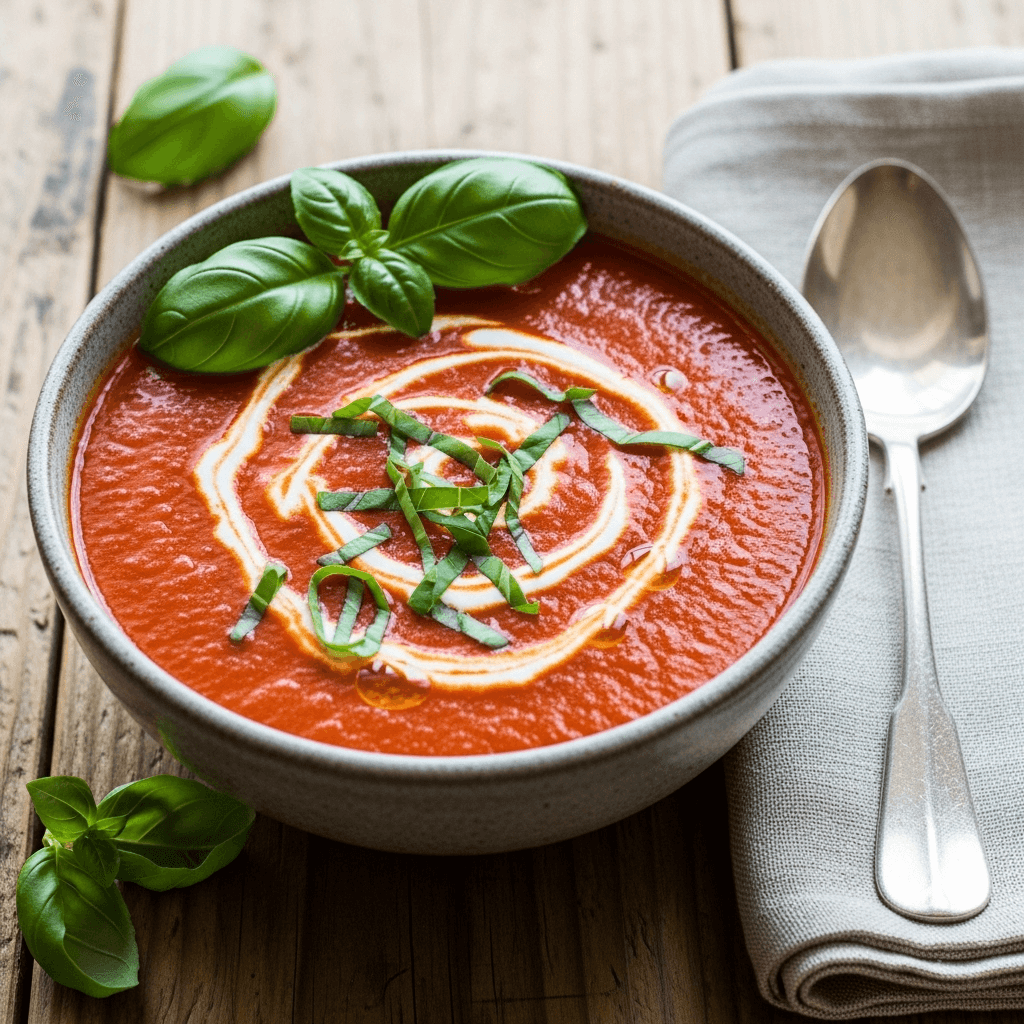
Few things bring as much comfort as a bowl of rich, velvety creamy tomato soup that warms you from the inside out. This homemade creamy tomato soup recipe transforms simple, humble ingredients into a restaurant-quality dish that tastes like it took hours to prepare, but actually comes together in about 30 minutes on your stovetop.
This isn’t your average canned tomato soup. We’re talking about a silky-smooth, luxuriously creamy soup with bright tomato flavor balanced by aromatic garlic, sweet onions, and fresh herbs, finished with just enough cream to create that dreamy, velvety texture. Every spoonful delivers pure comfort and satisfaction that brings back childhood memories while feeling sophisticated enough for company.
Creamy tomato soup is incredibly versatile and perfect for so many occasions. Serve it as a cozy lunch with a grilled cheese sandwich for the ultimate comfort food pairing. It makes an elegant first course for dinner parties when served in small bowls with a drizzle of cream and fresh basil. It’s the perfect meal to warm up cold winter evenings, and it’s gentle enough for sick days when you need something soothing and nourishing. Whether you’re feeding a family on a busy weeknight or meal prepping for the week ahead, this creamy tomato soup checks all the boxes.
The best part? This recipe uses pantry-friendly ingredients like canned tomatoes, so you can make it year-round without relying on expensive fresh tomatoes. It’s naturally vegetarian, easily made vegan, and can be adapted to suit various dietary preferences. Once you taste how incredible homemade tomato soup can be, you’ll never reach for a can again.
History / Background
Tomato soup has a fascinating history that spans continents and centuries. While tomatoes originated in South America and were brought to Europe by Spanish conquistadors in the 16th century, they weren’t immediately embraced as food. Europeans initially grew tomatoes as ornamental plants, believing them to be poisonous due to their relation to the deadly nightshade family.
It wasn’t until the 18th century that tomatoes became widely accepted as food in European cuisine, particularly in Italy, Spain, and southern France where the climate was perfect for growing them. The first recorded tomato soup recipe appeared in an 1872 cookbook, though it bore little resemblance to the creamy version we know and love today.
The transformation of tomato soup into an American comfort food icon happened in 1897 when Joseph A. Campbell, a wholesale fruit and vegetable merchant in Camden, New Jersey, hired a chemist named John T. Dorrance. Dorrance developed a method of condensing soup, reducing water content to make it easier and cheaper to package and ship. Campbell’s Condensed Tomato Soup became one of the company’s first products and quickly became a pantry staple in American households.
The pairing of tomato soup with grilled cheese sandwiches became a beloved American tradition during the Great Depression and World War II era, when families needed inexpensive, filling meals that could be stretched to feed many mouths. The combination was affordable, comforting, and deeply satisfying.
In the 1960s, Andy Warhol’s famous Campbell’s Soup Can paintings elevated the humble soup to pop art icon status, cementing its place in American cultural history. Today, while canned soup remains popular for convenience, there’s been a renaissance of homemade soup making, with cooks rediscovering how easy and infinitely more delicious fresh tomato soup can be.
This creamy version, enriched with heavy cream or half-and-half and seasoned with fresh herbs, represents the evolution of tomato soup from simple peasant food to a sophisticated comfort dish that’s equally at home in casual family kitchens and upscale restaurants.
Why You’ll Love This Recipe
This creamy tomato soup recipe has been perfected over countless batches to deliver the absolute best flavor and texture every single time. Unlike the thin, overly sweet canned versions you might remember, this homemade soup boasts rich, concentrated tomato flavor with layers of depth from sautéed aromatics, a touch of sweetness to balance the acidity, and just the right amount of cream to create that luxurious, silky texture.
What makes this recipe truly special is how it transforms simple pantry ingredients into something extraordinary. The secret lies in properly caramelizing the onions and garlic to build a flavor foundation, using quality canned tomatoes (which are often more flavorful than off-season fresh ones), and finishing with cream to create that restaurant-quality smoothness. A touch of sugar cuts through the natural acidity of tomatoes, and fresh basil adds brightness that makes every spoonful taste fresh and vibrant.
Here’s why this creamy tomato soup will become your new favorite:
- Quick and easy – ready in just 30 minutes from start to finish with minimal hands-on time
- Deeply comforting with that nostalgic, cozy flavor that makes you feel warm and cared for
- Restaurant-quality results that taste like you ordered it from your favorite bistro
- Budget-friendly using affordable pantry staples like canned tomatoes instead of expensive fresh produce
- Naturally vegetarian and easily made vegan by substituting the cream with coconut milk or cashew cream
- Kid-approved with a smooth texture and balanced flavor that even picky eaters love
- Impressive to guests elegant enough to serve as a sophisticated first course at dinner parties
- Freezer-friendly making it perfect for meal prep and always having homemade soup on hand
- Customizable with countless variations to suit your taste preferences and dietary needs
- Pairs perfectly with grilled cheese, crusty bread, salads, and makes the ultimate comfort food meal
- No special equipment needed just a pot and an immersion blender or regular blender
- Healthier than canned with no preservatives, artificial flavors, or excessive sodium
Ingredient Notes
The beauty of this creamy tomato soup lies in its simplicity. Here’s what you’ll need and why each ingredient matters:
Olive Oil or Butter: Your cooking fat creates the flavor foundation. Olive oil adds a subtle fruity note, while butter creates extra richness. Many recipes use a combination of both for the best of both worlds. Don’t skip this step or skimp on the fat, as it helps extract and develop flavors from the aromatics.
Yellow Onion: Sweet yellow onions provide aromatic depth and natural sweetness that balances tomato acidity. As they cook, they caramelize slightly, adding complex flavor layers. You can substitute sweet Vidalia onions for even more sweetness, or use shallots for a more delicate flavor.
Garlic: Fresh garlic cloves add pungent, savory depth that makes the soup taste richer and more complex. Minced garlic works best as it distributes evenly throughout. Never substitute garlic powder here – fresh garlic is essential for the best flavor.
Canned Whole Tomatoes or Crushed Tomatoes: High-quality canned tomatoes are the star ingredient. Whole peeled tomatoes (preferably San Marzano) offer the best flavor and texture, as they’re picked at peak ripeness and canned immediately. Crushed tomatoes work well too and save a processing step. Avoid diced tomatoes as they contain calcium chloride that prevents them from breaking down smoothly.
Tomato Paste: This concentrated tomato product adds intensity and deep umami flavor. Cooking the tomato paste for a minute or two before adding liquid removes any metallic taste and develops its natural sweetness. Don’t skip this ingredient – it makes a significant difference.
Vegetable or Chicken Broth: Provides liquid and depth of flavor. Vegetable broth keeps the soup vegetarian, while chicken broth adds extra savory notes. Quality matters here, so use low-sodium varieties so you can control the salt level.
Heavy Cream or Half-and-Half: Creates that signature silky, luxurious texture and mellows the tomato acidity. Heavy cream offers the richest result, while half-and-half is lighter but still creamy. For dairy-free versions, use full-fat coconut milk or cashew cream.
Granulated Sugar: A small amount of sugar (usually 1-2 teaspoons) balances the natural acidity of tomatoes without making the soup taste sweet. This is a crucial ingredient that many people overlook, but it makes the difference between good and great tomato soup.
Fresh Basil: Fresh basil leaves add brightness, herbaceous notes, and that classic Italian flavor pairing with tomatoes. Add some while cooking and reserve some for garnish. Dried basil can substitute in a pinch, but fresh is significantly better.
Salt and Black Pepper: Essential for bringing all flavors together. Season in layers throughout cooking, tasting and adjusting at the end. Freshly cracked black pepper adds the best flavor.
Optional Add-ins: Dried oregano, red pepper flakes for heat, a parmesan rind simmered in the soup for umami, or a splash of balsamic vinegar for extra depth.
Equipment Needed
This creamy tomato soup requires minimal equipment, most of which you likely already have:
- Large heavy-bottomed pot or Dutch oven (4-6 quart capacity) for even heat distribution and preventing burning
- Immersion blender for blending directly in the pot (easiest option and less cleanup)
- OR regular blender (if you don’t have an immersion blender) for achieving silky-smooth texture
- Wooden spoon or silicone spatula for stirring and scraping
- Sharp knife and cutting board for chopping vegetables
- Measuring cups and spoons for accurate measurements
- Can opener for opening canned tomatoes
- Ladle for serving
- Fine-mesh strainer (optional, for ultra-smooth soup)
Blending Safety Note: If using a regular blender, let the soup cool slightly and blend in batches, filling the blender only halfway. Hot liquids expand when blended and can cause dangerous splatters. Always hold the lid down with a folded kitchen towel.
Print
Cozy Creamy Tomato Soup Recipe
- Total Time: 35 minutes
- Yield: 6 servings 1x
- Diet: Vegetarian
Description
This restaurant-quality creamy tomato soup features rich tomato flavor balanced with aromatic garlic and onions, finished with heavy cream for a silky, luxurious texture. Ready in just 35 minutes with simple pantry ingredients, it’s the ultimate comfort food that pairs perfectly with grilled cheese sandwiches.
Ingredients
- 2 tablespoons olive oil or unsalted butter
- 1 large yellow onion, diced (about 1½ cups)
- 4 cloves garlic, minced
- 2 tablespoons tomato paste
- 1 (28-ounce) can whole peeled tomatoes with juices (preferably San Marzano)
- 1 (14.5-ounce) can crushed tomatoes
- 3 cups vegetable broth or chicken broth (low-sodium)
- 1 to 2 teaspoons granulated sugar (to taste)
- 1 teaspoon dried oregano
- ½ teaspoon dried basil (or 5–6 fresh basil leaves)
- ¾ cup heavy cream or half-and-half
- Salt and freshly ground black pepper, to taste
- Fresh basil leaves, for garnish
- Extra cream or olive oil, for drizzling (optional)
Instructions
Step 1: Sauté the Aromatics
Heat the olive oil or butter in a large, heavy-bottomed pot or Dutch oven over medium heat. Once shimmering, add the diced onion and a pinch of salt. Cook for 5-7 minutes, stirring occasionally, until the onions are soft, translucent, and just beginning to turn golden at the edges. Add the minced garlic and cook for 1 minute more, stirring constantly until fragrant. Don’t let the garlic burn or it will taste bitter.
Step 2: Cook the Tomato Paste
Add the tomato paste to the pot and stir it into the onions and garlic. Cook for 1-2 minutes, stirring frequently, until the tomato paste darkens slightly and becomes fragrant. This step cooks out the raw metallic taste and concentrates the tomato flavor.
Step 3: Add Tomatoes and Broth
Pour in the whole peeled tomatoes with their juices, crushing them by hand as you add them to the pot, or break them up with a wooden spoon. Add the crushed tomatoes, vegetable or chicken broth, sugar (start with 1 teaspoon), dried oregano, and dried basil (or fresh basil leaves). Stir everything together to combine well.
Step 4: Simmer the Soup
Bring the mixture to a boil over medium-high heat, then reduce the heat to low and let it simmer gently, uncovered, for 15-20 minutes. This allows the flavors to meld together and the tomatoes to break down further. Stir occasionally to prevent sticking.
Step 5: Blend Until Smooth
Remove the pot from the heat. Using an immersion blender, carefully blend the soup directly in the pot until completely smooth and creamy. If you don’t have an immersion blender, carefully transfer the soup in batches to a regular blender (filling it only halfway each time), and blend until smooth. Return the blended soup to the pot.
Step 6: Add Cream and Season
Place the pot back over low heat. Stir in the heavy cream or half-and-half until fully incorporated. Taste the soup and season with salt and freshly ground black pepper. If the soup tastes too acidic, add the remaining teaspoon of sugar. Let the soup warm through for 2-3 minutes, but don’t let it boil once the cream is added.
Step 7: Serve
Ladle the creamy tomato soup into bowls. Garnish with fresh basil leaves, a drizzle of cream or olive oil, and an extra crack of black pepper if desired. Serve immediately with grilled cheese sandwiches or crusty bread.
Notes
- For extra-smooth soup: After blending, strain the soup through a fine-mesh strainer to remove any remaining tomato seeds or skin pieces for restaurant-quality texture.
- Cream substitutions: For dairy-free soup, use full-fat coconut milk, cashew cream, or your favorite non-dairy creamer. The flavor will be slightly different but still delicious.
- Roasted variation: For deeper flavor, roast the canned tomatoes, onions, and garlic on a baking sheet at 400°F for 20-25 minutes before adding to the pot.
- Thickness adjustment: If your soup is too thick, thin it with additional broth. If it’s too thin, simmer longer to reduce and concentrate.
- Sugar is important: Don’t skip the sugar. It balances the natural acidity of tomatoes and brings out their sweetness without making the soup taste sweet.
- Prep Time: 10 minutes
- Cook Time: 25 minutes
- Category: Soup
- Method: Stovetop
- Cuisine: American
Nutrition
- Serving Size: 1½ cups (approximately)
- Calories: 185
- Sugar: 9g
- Sodium: 520mg
- Fat: 13g
- Saturated Fat: 7g
- Unsaturated Fat: 5g
- Trans Fat: 0g
- Carbohydrates: 16g
- Fiber: 3g
- Protein: 4g
- Cholesterol: 35mg
Tips & Variations
Roasted Tomato Soup:
For even deeper, more complex flavor, roast your tomatoes before making the soup. Drain canned tomatoes, spread on a baking sheet with halved onions and whole garlic cloves, drizzle with olive oil, and roast at 400°F for 25-30 minutes until caramelized. Then proceed with the recipe, adding the roasted vegetables to the pot with broth.
Spicy Tomato Soup:
Add ½ to 1 teaspoon of red pepper flakes with the garlic, or stir in a pinch of cayenne pepper. For smoky heat, add a diced chipotle pepper in adobo sauce when adding the tomatoes. Adjust the heat level to your preference.
Italian Tomato Soup:
Increase the fresh basil to a full bunch, add 2 teaspoons of Italian seasoning, and stir in ¼ cup of freshly grated Parmesan cheese just before serving. A parmesan rind simmered in the soup adds incredible umami depth.
Tomato Basil Bisque:
Use all heavy cream instead of broth for an ultra-rich, decadent bisque. Add a generous handful of fresh basil leaves before blending. This version is thicker and more luxurious, perfect for special occasions.
Vegan Creamy Tomato Soup:
Replace butter with olive oil and use full-fat coconut milk or cashew cream instead of dairy cream. The soup will be just as creamy and delicious. Add nutritional yeast for a cheesy, umami flavor.
Tomato Soup with Fire-Roasted Tomatoes:
Use fire-roasted canned tomatoes instead of regular for a smoky, charred flavor that adds complexity. This works especially well if you like a more rustic, bold-flavored soup.
Chunky Tomato Soup:
Skip the blending step entirely or blend only half the soup and stir it back into the chunky portion for a rustic, textured soup with more body and character.
Mediterranean Twist:
Add ½ cup of sun-dried tomatoes (chopped) when simmering, and finish with a splash of balsamic vinegar and fresh oregano. Drizzle with good quality olive oil before serving.
Pro Chef Tips
Tip #1: Quality Tomatoes Make All the Difference
Not all canned tomatoes are created equal. Look for San Marzano tomatoes (or San Marzano-style) from Italy or California. These have lower acidity, fewer seeds, and sweeter, more concentrated flavor than standard canned tomatoes. The investment in quality tomatoes pays off dramatically in the final soup flavor. Check the ingredients – they should list only tomatoes and perhaps salt or basil, never calcium chloride.
Tip #2: Caramelize Your Onions Properly
Don’t rush the onion cooking step. Taking the full 5-7 minutes to properly soften and lightly caramelize the onions develops natural sweetness and depth that forms the flavor foundation of your soup. The onions should be very soft and translucent with golden edges. If you’re short on time, a pinch of baking soda can speed up caramelization.
Tip #3: The Cream Temperature Matters
Always add cream to soup that’s been removed from high heat or reduced to the lowest setting. High heat can cause cream to curdle or separate, creating an unpleasant grainy texture. Bring the cream to room temperature before adding for easier incorporation. Never let the soup boil after adding cream.
Tip #4: Balance Acidity with Sugar and Fat
Tomatoes are naturally acidic, which can make soup taste sharp or harsh. The combination of sugar (to balance acidity) and cream (fat coats the palate and mellows sharpness) creates perfect balance. Always taste and adjust these elements at the end. Different tomato brands have different acidity levels, so you may need anywhere from 1-2 teaspoons of sugar.
Tip #5: Blend Hot for Silkiest Texture
Blending the soup while it’s still very hot (but not boiling) creates the smoothest, most velvety texture. The heat helps break down tomato solids more completely. If using a regular blender, this is especially important. Just be careful with splattering – never fill the blender more than halfway and hold the lid with a towel.
Tip #6: Layer Your Seasoning
Season with salt in layers throughout cooking: a pinch when cooking onions, some when adding tomatoes and broth, and then final adjustment after adding cream. This builds flavor complexity better than adding all salt at the end. Taste frequently and adjust as you go.
Tip #7: Fresh Herbs Make It Sing
While dried herbs are fine for cooking, finishing with fresh basil makes an enormous difference. The bright, aromatic quality of fresh basil complements the rich, cooked flavors beautifully. Tear the leaves rather than cutting them to prevent bruising and oxidation.
Common Mistakes to Avoid
Mistake #1: Not Cooking the Tomato Paste
Many home cooks add tomato paste directly to the broth without cooking it first. This is a critical error that results in a metallic, tinny taste. Always cook tomato paste in the fat with the aromatics for 1-2 minutes until it darkens and smells sweet and caramelized. This transforms its flavor completely.
Mistake #2: Using Low-Fat Dairy Products
Substituting heavy cream with skim milk or low-fat alternatives will result in thin, watery soup without that signature silky mouthfeel. The fat content in cream is essential for texture and flavor. If you want a lighter soup, use half-and-half, but avoid anything lower in fat. For dairy-free options, use full-fat coconut milk or cashew cream.
Mistake #3: Over-Blending or Under-Blending
Under-blending leaves chunky bits that aren’t appealing in a creamy soup, while over-blending (especially in a high-powered blender) can incorporate too much air, making the soup frothy or incorporating bitter flavors from tomato seeds. Blend just until completely smooth, then stop. If you want ultra-smooth texture, strain through a fine-mesh sieve after blending.
Mistake #4: Boiling After Adding Cream
Once you add cream, never let the soup come to a full boil. High heat causes the cream proteins to separate and curdle, creating an unappetizing grainy or curdled appearance and texture. Keep the heat low and gentle after adding cream, just warming it through without boiling.
Mistake #5: Skipping the Sugar
Many home cooks avoid adding sugar, thinking it will make the soup taste like dessert. In reality, a small amount of sugar (1-2 teaspoons) is essential for balancing tomato acidity and bringing out natural sweetness. Without it, your soup will taste harsh and one-dimensional. You won’t taste “sweetness” – you’ll taste perfectly balanced tomato flavor.
Storage & Meal Prep
Refrigerator Storage:
Let the soup cool to room temperature, then transfer to airtight containers. Store in the refrigerator for up to 5 days. The flavors actually develop and improve after a day or two, making this perfect for meal prep. Always store in glass or plastic containers rather than metal, as tomatoes can react with metal and develop an off taste.
Reheating Instructions:
Reheat gently on the stovetop over low to medium-low heat, stirring occasionally, until warmed through. If the soup has thickened in the refrigerator, thin it with a splash of broth, water, or cream. You can also reheat individual portions in the microwave on 50% power, stirring every minute, until heated through. Never boil the soup when reheating, especially if it contains cream.
Meal Prep Tips:
This soup is ideal for meal prep. Make a double batch on Sunday and portion it into individual containers for quick lunches throughout the week. Pair with pre-made grilled cheese sandwiches that you can quickly reheat, or keep crusty bread on hand for easy dipping. The soup also makes a great base for other meals – add cooked pasta for tomato soup pasta, stir in white beans for protein, or use it as a sauce over chicken or fish.
Texture Changes:
Note that cream-based soups may separate slightly when stored and reheated. This is normal and not harmful. Simply stir well while reheating to recombine the ingredients. If you plan to store the soup for several days, you might consider storing it without the cream, then adding cream to individual portions as you reheat them for the freshest taste and best texture.
Make-Ahead & Freezer Notes
Make-Ahead Instructions:
Creamy tomato soup is excellent for making ahead. You can prepare the soup through Step 5 (before adding cream) up to 3 days in advance. Store the base in the refrigerator, then reheat and add the cream just before serving. This method actually allows the flavors to develop even more deeply.
Freezing Guidelines:
This soup freezes beautifully, but there’s a trick: freeze it before adding the cream. Cream-based soups can sometimes separate or become grainy when frozen and thawed. Make the soup through the blending step, cool completely, then freeze in airtight containers or freezer bags for up to 3 months. Leave about an inch of headspace in containers as liquids expand when frozen.
Thawing and Finishing:
Thaw frozen soup overnight in the refrigerator or in a covered pot over very low heat on the stovetop. Once completely thawed and heated through, stir in the cream and season as directed. This gives you fresh-tasting, creamy soup anytime without compromising quality.
Portioning for Freezing:
Consider freezing in individual or family-sized portions for maximum convenience. Use freezer-safe containers, heavy-duty freezer bags (laid flat for space-saving storage), or even mason jars (leaving headspace and ensuring they’re freezer-safe). Label with the date and contents.
Quick Thaw Method:
If you need soup quickly, you can reheat from frozen. Place the frozen soup in a pot with a splash of broth or water, cover, and heat over low heat, breaking up the frozen block as it thaws. Once fully thawed and heated, stir in the cream. This method takes 20-30 minutes but requires no advance planning.
Serving Suggestions
The classic pairing for creamy tomato soup is grilled cheese, but the possibilities are endless:
Bread Pairings:
- Classic Grilled Cheese Sandwiches – made with sharp cheddar, Gruyere, or a three-cheese blend on buttery toasted bread
- Crispy Croutons – homemade garlic herb croutons for topping and dipping
- Crusty Artisan Bread – a rustic baguette, sourdough boule, or ciabatta for tearing and dunking
- Garlic Bread – buttery, herb-filled garlic bread or garlic knots
- Cheesy Breadsticks – soft or crispy breadsticks with parmesan and herbs
- Grilled Panini – turkey, pesto, and mozzarella panini for a heartier meal
Salad Combinations:
Pair your soup with a fresh, crisp salad for a complete lunch or light dinner:
- Classic Caesar salad with crispy romaine and parmesan
- Simple mixed green salad with balsamic vinaigrette
- Caprese salad with fresh mozzarella, tomatoes, and basil
- Arugula salad with lemon vinaigrette and shaved parmesan
- Kale salad with apples, walnuts, and honey mustard dressing
Protein Additions:
Make the soup more substantial by adding:
- Shredded rotisserie chicken stirred in just before serving
- Crispy bacon or pancetta crumbled on top
- Italian sausage (cooked and sliced) added to the soup
- White cannellini beans for plant-based protein and fiber
- Cheese tortellini cooked and added to individual bowls
Garnish Ideas:
Elevate presentation with thoughtful garnishes:
- Swirl of heavy cream or crème fraîche
- Fresh basil leaves (whole or chiffonade)
- Grated Parmesan or Pecorino Romano cheese
- Drizzle of good quality extra virgin olive oil
- Crispy fried sage leaves
- Homemade pesto dollop
- Red pepper flakes for heat
- Fresh cracked black pepper
Beverage Pairings:
- Iced tea (sweet or unsweetened)
- Lemonade for a refreshing contrast
- Sparkling water with lemon
- Light red wine like Pinot Noir
- Crisp white wine like Pinot Grigio
- Hot tea (chamomile or green tea)
FAQs Section
Q: Can I use fresh tomatoes instead of canned?
Yes, but with some caveats. You’ll need about 3 pounds of fresh, ripe tomatoes. Roma or plum tomatoes work best. Core and roughly chop them, then proceed with the recipe. However, canned tomatoes are often superior for soup because they’re picked and canned at peak ripeness, while fresh tomatoes at the grocery store are often picked under-ripe. If using fresh tomatoes, choose the ripest, most flavorful ones you can find, preferably in summer when they’re in season. You may need to adjust the sugar and seasoning more with fresh tomatoes.
Q: My soup is too acidic. How do I fix it?
Acidity in tomato soup can be balanced several ways. First, add more sugar – start with another half teaspoon and taste, repeating until the sharp acidic edge is gone. You won’t taste sweetness; the sugar simply neutralizes acid. Adding more cream also helps, as fat coats the palate and mellows acidity. A pinch of baking soda (just 1/4 teaspoon) will chemically neutralize acid, but be careful as it can make the soup foamy. Finally, stirring in grated Parmesan cheese adds savory depth that balances acidity beautifully.
Q: How can I make this soup dairy-free or vegan?
This soup adapts easily to dairy-free diets. Use olive oil instead of butter for sautéing the onions. Replace the heavy cream with full-fat coconut milk (use the cream from the top of the can for richest texture), cashew cream (blend soaked raw cashews with water until smooth), or a high-quality non-dairy creamer. Oat cream also works well. The soup will have a slightly different flavor profile but will still be deliciously creamy. Use vegetable broth to keep it fully plant-based.
Q: Can I make this soup in a slow cooker or Instant Pot?
Absolutely! For the slow cooker: Sauté the onions, garlic, and tomato paste in a skillet first (this step is important for flavor), then transfer to the slow cooker with tomatoes, broth, and seasonings. Cook on low for 4-6 hours or high for 2-3 hours. Blend and stir in cream before serving. For the Instant Pot: Use the sauté function for the aromatics, add remaining ingredients (except cream), pressure cook on high for 10 minutes, natural release for 10 minutes, blend, then stir in cream. Both methods work beautifully.
Q: Why is my soup watery and not thick enough?
Thin soup can result from too much liquid or not enough tomato solids. To thicken, simmer the soup uncovered for an additional 10-15 minutes to reduce and concentrate it. You can also add an extra 2-3 tablespoons of tomato paste and simmer for a few minutes. Another trick is to blend in a slice of bread (sounds odd, but it adds body without changing flavor). Finally, using more crushed tomatoes and less whole tomatoes creates a naturally thicker consistency.
Q: How do I make the soup completely smooth without any seeds or skin pieces?
After blending the soup, strain it through a fine-mesh sieve or food mill, pressing on the solids with the back of a ladle to push through as much liquid as possible while leaving behind seeds and skins. This creates ultra-smooth, restaurant-quality texture. While this extra step isn’t necessary, it does make a noticeable difference if you want truly silky soup. Some high-powered blenders can pulverize seeds and skins completely, but straining is the most reliable method.
Q: My soup curdled when I added the cream. What went wrong and can I fix it?
Curdling happens when cream is added to soup that’s too hot or when the soup is boiled after adding cream. The proteins in cream coagulate and separate. To prevent this, always reduce heat to low before adding cream and never let the soup boil afterward. If your soup has already curdled, try blending it again with an immersion blender – sometimes you can re-emulsify it. If that doesn’t work, strain out the curds and stir in fresh cream. For future batches, temper the cream by whisking a ladle of hot soup into the cream first, then slowly pour the cream mixture back into the pot.
Conclusion
There’s truly nothing quite like a bowl of homemade creamy tomato soup to warm your heart and satisfy your soul. This recipe takes simple, humble ingredients and transforms them into something absolutely extraordinary – velvety smooth, perfectly balanced, and bursting with rich tomato flavor that tastes like sunshine and comfort in a bowl.
Whether you’re making this soup for a quick weeknight dinner paired with grilled cheese, serving it as an elegant first course at your next dinner party, or meal prepping for cozy lunches throughout the week, you’ll love how easy it is to create restaurant-quality results at home.