Description
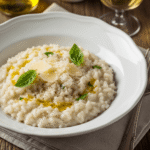
This classic creamy risotto recipe delivers authentic Italian restaurant-quality results with simple ingredients and straightforward technique. The Arborio rice becomes perfectly tender with a slight bite, suspended in a silky, luxurious sauce created by the rice’s natural starches. Ready in just 30 minutes with patient stirring and love.
Ingredients
Scale
- 6 cups chicken stock or vegetable stock (low-sodium)
- 3 tablespoons unsalted butter, divided
- 2 tablespoons extra-virgin olive oil
- 1 medium yellow onion or 2 large shallots, finely diced
- 2 cups Arborio rice
- ¾ cup dry white wine (Pinot Grigio or Sauvignon Blanc)
- 1 cup freshly grated Parmigiano-Reggiano cheese
- 1 teaspoon kosher salt (adjust to taste)
- ½ teaspoon freshly ground black pepper
- 2 tablespoons fresh parsley, chopped (for garnish, optional)
Instructions
- Warm the stock by pouring it into a medium saucepan and bringing it to a gentle simmer over medium-low heat. Reduce heat to low to keep it warm throughout the cooking process. This is crucial—cold stock will shock the rice and slow down cooking significantly.
- Prepare the base by heating 2 tablespoons of butter and the olive oil in a large, heavy-bottomed saucepan over medium heat. Once the butter has melted and starts to foam, add the finely diced onion or shallot. Cook, stirring frequently, for 3-4 minutes until softened and translucent but not browned. The onions should look glossy and release a sweet aroma.
- Toast the rice by adding the Arborio rice to the pot. Stir constantly for 2-3 minutes, coating every grain with the butter-oil mixture. The rice should become slightly translucent around the edges and make a clicking sound against the pot—this is called “tostatura” and it’s essential for proper texture. You should smell a light, nutty aroma. Don’t skip this step—it seals the grains and helps them maintain structure.
- Deglaze with wine by pouring in the white wine all at once. Stir constantly while the wine bubbles vigorously and is absorbed into the rice, about 2-3 minutes. The alcohol will cook off and the liquid will almost completely evaporate. The kitchen will smell amazing—this is where the depth of flavor begins building.
- Begin adding stock by adding one ladle (about ½ cup) of the warm stock to the rice. Stir constantly until the liquid is almost completely absorbed—you should be able to drag your spoon through the rice and see the bottom of the pan briefly before the rice flows back. The mixture should look creamy, not soupy or dry.
- Continue the process by adding another ladle of stock and stirring until absorbed. Repeat this process, adding stock one ladle at a time and stirring constantly, for about 18-20 minutes. Maintain a gentle simmer—the rice should be bubbling gently but not violently boiling. This is the meditative part where the magic happens. Stir in a smooth, rhythmic motion, making sure to scrape the bottom and sides of the pan.
- Test for doneness after about 18 minutes by tasting a grain of rice. It should be tender with a very slight firmness at the center (al dente)—creamy on the outside with just a tiny bit of resistance when you bite down. The risotto itself should be loose and flow slowly when you tilt the pan—not stiff or gloppy. If it’s still too firm, continue adding stock and stirring for another 3-5 minutes.
- Finish with butter and cheese by removing the pan from heat once the rice reaches perfect doneness. Add the remaining 1 tablespoon of butter and the freshly grated Parmesan cheese. Stir vigorously for 1-2 minutes—this technique called “mantecatura” creates extra creaminess and a glossy sheen. The risotto should be fluid and creamy, moving like slow lava when you tilt the pan (all’onda or “like a wave”).
- Season and adjust by tasting and adding salt and pepper as needed. Remember that the cheese and stock already contain salt, so go carefully. If the risotto seems too thick, stir in a splash more warm stock to loosen it.
- Serve immediately by dividing among warm shallow bowls. Garnish with fresh parsley and additional grated Parmesan if desired. Risotto waits for no one—it continues absorbing liquid and thickens as it sits, so serve and eat right away for the best texture.
Notes
- Stock Temperature: Keeping the stock warm is crucial. Cold stock will lower the cooking temperature and extend cooking time significantly, potentially resulting in mushy rice.
- Constant Stirring: While you don’t need to stir every single second, frequent stirring is essential for releasing the starches that create creaminess. Set aside the 25-30 minutes without distractions.
- Al Dente Texture: The rice should have a slight firmness at the center. Overcooked risotto becomes mushy and loses its signature texture.
- Consistency: Properly finished risotto should flow slowly when you tilt the pan. If it’s stiff, add more warm stock. If it’s too soupy, simmer for another minute while stirring.
- Parmesan Addition: Always add cheese off heat to prevent it from becoming stringy and clumping.
- Prep Time: 5 minutes
- Cook Time: 25 minutes
- Category: Main Dish
- Method: Stovetop
- Cuisine: Italian
Nutrition
- Serving Size: 1½ cups
- Calories: 445
- Sugar: 3g
- Sodium: 890mg
- Fat: 15g
- Saturated Fat: 7g
- Unsaturated Fat: 7g
- Trans Fat: 0g
- Carbohydrates: 58g
- Fiber: 2g
- Protein: 14g
- Cholesterol: 30mg