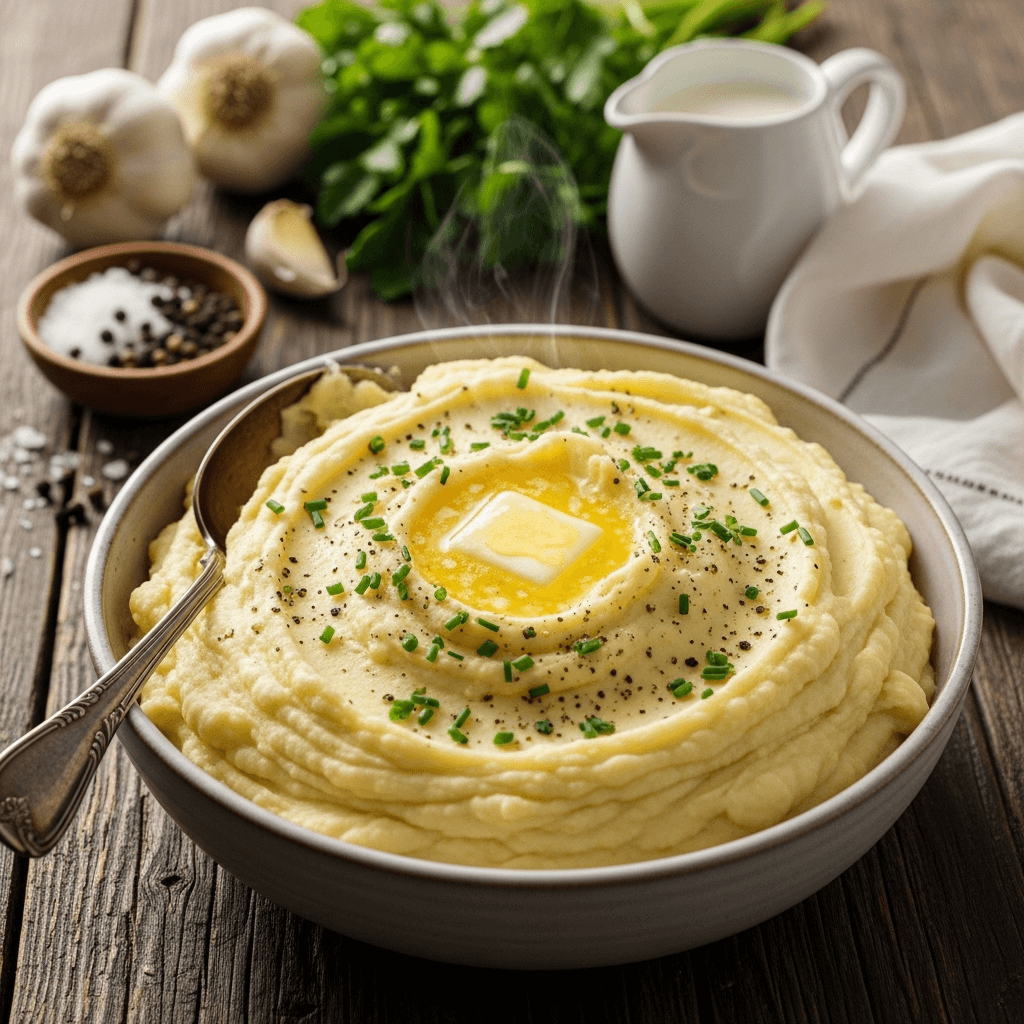

Is there anything more comforting than a big bowl of creamy, buttery garlic mashed potatoes? This beloved side dish is the ultimate crowd-pleaser that transforms simple potatoes into something absolutely heavenly. With the perfect balance of rich butter, aromatic roasted garlic, and silky smooth texture, these homemade garlic mashed potatoes elevate any meal from ordinary to extraordinary.
What makes this garlic mashed potato recipe so special is its foolproof method for achieving restaurant-quality results every single time. The potatoes are perfectly fluffy yet creamy, infused with the sweet, mellow flavor of garlic that’s been tamed through cooking. Unlike raw garlic that can be harsh and overpowering, this recipe creates a sophisticated garlic flavor that everyone—even picky eaters—will love.
These creamy mashed potatoes with garlic are perfect for holiday dinners like Thanksgiving and Christmas, Sunday family dinners, special celebrations, or any weeknight when you want to make an ordinary meal feel special. They pair beautifully with roasted meats, grilled chicken, pot roast, meatloaf, or even as a base for shepherd’s pie. Whether you’re hosting a crowd or cooking for your family, this easy garlic mashed potatoes recipe is guaranteed to disappear from the table in minutes.
History / Background
Mashed potatoes have a rich culinary history that spans centuries and continents. The potato itself originated in the Andean mountains of South America over 7,000 years ago, where indigenous peoples cultivated and consumed them in various forms. When Spanish conquistadors arrived in the 16th century, they brought potatoes back to Europe, where they slowly gained acceptance as a food crop.
Mashed potatoes as we know them today likely originated in 1771, when a French pharmacist and nutritionist named Antoine-Augustin Parmentier published a treatise promoting potatoes as a nutritious food source during times of famine. He helped popularize potatoes among French nobility, and French chefs began developing elegant preparations including “pommes de terre en purée”—mashed potatoes. The French technique of passing cooked potatoes through a sieve or ricer and enriching them with butter and cream created the smooth, luxurious texture we associate with quality mashed potatoes today.
The addition of garlic to mashed potatoes reflects a more modern culinary evolution, likely gaining popularity in American cuisine during the late 20th century as garlic became more widely embraced in home cooking. Before the 1970s, many American cookbooks barely mentioned garlic, viewing it as too ethnic or strong-flavored. As American palates expanded and Mediterranean and European cooking techniques became mainstream, garlic evolved from an ingredient used sparingly to a beloved flavor enhancer.
Today’s garlic mashed potatoes represent a perfect marriage of French technique and bold American flavor preferences. The dish has become so ubiquitous that it’s hard to imagine holiday tables or steakhouse menus without it. From humble peasant food to elegant restaurant fare, mashed potatoes have truly stood the test of time, proving that simple ingredients prepared with care can create something timelessly delicious.
Why You’ll Love This Recipe
These aren’t your average lumpy, bland mashed potatoes from a box. This recipe creates ultra-creamy, restaurant-quality garlic mashed potatoes that taste like they took hours to make, but actually come together in about 30 minutes. The secret is in the technique and the perfect ratio of potatoes to butter to cream.
Here’s why these homemade garlic mashed potatoes will become your go-to recipe:
- Incredibly Creamy Texture – Smooth and velvety without being gluey or gummy, achieving that perfect consistency everyone loves
- Perfect Garlic Flavor – Not too strong or overwhelming, with sweet, mellow roasted garlic notes that enhance rather than dominate
- Ready in 30 Minutes – Quick enough for weeknight dinners yet impressive enough for holiday entertaining
- Crowd-Pleasing – Universally loved by kids and adults alike, making them perfect for family gatherings
- Make-Ahead Friendly – Can be prepared in advance and reheated, saving you precious time on busy cooking days
- Budget-Friendly – Uses affordable, readily available ingredients that don’t break the bank
- Versatile Side Dish – Pairs perfectly with virtually any main course from casual to elegant
- Foolproof Method – Clear, tested instructions ensure perfect results even for beginner cooks
- Customizable – Easily adjusted for dietary preferences or to match your desired level of richness
- Comfort Food at Its Best – Delivers that nostalgic, cozy feeling that only homemade mashed potatoes can provide
Ingredient Notes
Understanding your ingredients is crucial for making the best possible garlic mashed potatoes. Let’s break down each component and why it matters.
Russet Potatoes – Also called Idaho potatoes, these are the gold standard for mashed potatoes. Their high starch content creates that fluffy, light texture we all love. Russets also absorb butter and cream beautifully without becoming gluey. Yukon Gold potatoes are an excellent alternative—they have a naturally buttery flavor and create slightly creamier, more golden mashed potatoes with a hint of sweetness. Avoid waxy potatoes like red potatoes or fingerlings, which become dense and gummy when mashed.
Garlic – Fresh garlic cloves are essential for authentic flavor. This recipe uses whole cloves that are boiled with the potatoes, which mellows their sharpness and creates sweet, tender garlic that mashes easily into the potatoes. Using 4-6 cloves provides noticeable garlic flavor without being overpowering. If you love garlic, feel free to add more. Pre-minced garlic from a jar works in a pinch but lacks the fresh, aromatic quality of whole cloves.
Butter – Unsalted butter is preferred so you can control the salt level precisely. Butter adds rich flavor and helps create that luxurious mouthfeel. European-style butter with higher butterfat content (like Kerrygold) creates even more decadent results. For dairy-free versions, use quality vegan butter or olive oil, though the flavor will be different.
Heavy Cream – Creates ultra-rich, restaurant-style mashed potatoes with incredible creaminess. Half-and-half works if you want slightly lighter potatoes, or whole milk for an even lighter version. For the richest possible result, use sour cream or cream cheese in addition to heavy cream. Non-dairy alternatives like oat cream or cashew cream work for dairy-free diets.
Salt and Pepper – Essential for bringing out the flavors of all the other ingredients. Always season your cooking water generously with salt—this is your first opportunity to season the potatoes from the inside out. Freshly ground black pepper adds a subtle kick and visual appeal.
Optional Add-Ins – Fresh chives, parsley, or green onions add color and freshness. Sour cream or cream cheese adds tanginess. Parmesan cheese creates savory depth. Roasted garlic instead of boiled creates more intense garlic flavor.
Equipment Needed
Having the right tools makes preparing perfect garlic mashed potatoes much easier. Here’s what you’ll need:
- Large Pot or Dutch Oven – At least 4-quart capacity for boiling potatoes with plenty of room. A wide pot helps potatoes cook more evenly.
- Potato Masher or Ricer – A potato masher creates rustic, slightly chunky mashed potatoes. A ricer or food mill produces silky-smooth, lump-free results that rival restaurant quality.
- Colander or Strainer – For draining the cooked potatoes thoroughly. Excess water leads to watery, thin mashed potatoes.
- Sharp Knife and Cutting Board – For cutting potatoes into uniform pieces so they cook evenly.
- Vegetable Peeler – For peeling potatoes quickly and efficiently, though some people prefer leaving skins on for rustic mashed potatoes.
- Large Mixing Bowl – For mashing and mixing the potatoes with butter and cream.
- Measuring Cups and Spoons – For accurate measurements of butter, cream, and seasonings.
- Wooden Spoon or Rubber Spatula – For stirring and folding ingredients together gently.
- Small Saucepan (Optional) – For warming the cream and melting the butter before adding to potatoes, which helps maintain temperature.
Creamy Garlic Mashed Potatoes Recipe
- Total Time: 30 minutes
- Yield: 6-8 servings 1x
- Diet: Gluten Free
Description
Ultra-creamy, buttery garlic mashed potatoes with the perfect smooth texture and rich, comforting flavor. This easy recipe uses simple ingredients and foolproof techniques to create restaurant-quality mashed potatoes that pair perfectly with any main course.
Ingredients
For the Potatoes:
- 3 pounds russet potatoes (about 5–6 large potatoes)
- 4–6 garlic cloves, peeled and left whole
- 1 tablespoon salt (for cooking water)
- 6 tablespoons unsalted butter, softened
- ½ cup heavy cream, warmed
- Salt and freshly ground black pepper, to taste
For Garnish (Optional):
- 2 tablespoons fresh chopped chives or parsley
- Extra pat of butter
- Additional freshly ground black pepper
Instructions
- Prepare the Potatoes: Peel the potatoes using a vegetable peeler, removing all the skin. Rinse under cold water. Cut each potato into evenly-sized chunks, about 1½ to 2 inches. Uniform size ensures even cooking—smaller pieces cook faster while larger pieces may remain hard in the center.
- Boil the Potatoes and Garlic: Place the cut potatoes and whole peeled garlic cloves in a large pot. Cover with cold water by about 1 inch. Add 1 tablespoon of salt to the water—this seasons the potatoes from within. Bring to a boil over high heat, then reduce heat to medium and maintain a steady simmer. Cook for 15-20 minutes, or until the potatoes are completely tender when pierced with a fork. They should break apart easily with no resistance in the center.
- Drain Thoroughly: Pour the potatoes and garlic into a colander and let them drain for 2-3 minutes. This step is crucial—excess water will make your mashed potatoes thin and watery. Shake the colander gently to remove as much moisture as possible. For extra-dry potatoes, return them to the empty pot and place over low heat for 30-60 seconds to evaporate any remaining water, stirring gently.
- Warm the Cream: While the potatoes drain, warm the heavy cream in a small saucepan over low heat or in the microwave for 30-45 seconds. Warm cream incorporates more smoothly and helps keep the potatoes hot. Don’t let it boil—just warm until steamy.
- Mash the Potatoes: Return the drained potatoes and garlic to the pot or transfer to a large mixing bowl. Using a potato masher, ricer, or food mill, mash the potatoes until no large lumps remain. For the smoothest texture, use a ricer—it creates incredibly fluffy, lump-free potatoes. If using a masher, work in an up-and-down motion, pressing and turning until desired consistency is reached.
- Add Butter First: Add the softened butter to the mashed potatoes and stir or fold gently with a wooden spoon until the butter is completely melted and incorporated. The butter coats the starch molecules and prevents the potatoes from becoming gluey. This step also adds richness and flavor.
- Add Cream Gradually: Pour in the warmed heavy cream gradually, stirring gently to incorporate. Start with about ⅓ cup and add more until you reach your desired consistency. Some people prefer thicker, stiffer mashed potatoes while others like them looser and creamier. You can always add more cream, but you can’t take it away, so add conservatively.
- Season to Taste: Taste the mashed potatoes and season with additional salt and freshly ground black pepper as needed. The amount will depend on how salty your cooking water was and personal preference. Be generous—proper seasoning is what separates good mashed potatoes from great ones.
- Serve Immediately: Transfer the garlic mashed potatoes to a serving bowl. Make a small well in the center and add a pat of butter, letting it melt decoratively. Garnish with fresh chopped chives or parsley and a few grinds of black pepper if desired. Serve hot while the butter is still melting.
Notes
- Potato Choice: Russet potatoes create the fluffiest texture, while Yukon Golds are creamier with a buttery flavor. Both work beautifully in this recipe.
- Don’t Over-Mix: Once you add the cream, stir gently and minimally. Over-mixing or using an electric mixer activates the starch and creates gluey, gummy potatoes.
- Make Them Richer: For ultra-decadent potatoes, add 2-4 ounces of cream cheese or ½ cup sour cream along with the butter.
- Garlic Intensity: Boiling garlic with the potatoes creates mild garlic flavor. For stronger flavor, roast whole garlic bulbs separately and squeeze the soft cloves into the mashed potatoes.
- Keep Warm: If not serving immediately, keep potatoes warm in a slow cooker on low setting, adding a splash of cream if they thicken up.
- Prep Time: 10 minutes
- Cook Time: 20 minutes
- Category: Side Dish
- Method: Stovetop
- Cuisine: American
Nutrition
- Serving Size: About ¾ cup
- Calories: 285
- Sugar: 2g
- Sodium: 420mg
- Fat: 14g
- Saturated Fat: 9g
- Unsaturated Fat: 4g
- Trans Fat: 0g
- Carbohydrates: 36g
- Fiber: 3g
- Protein: 5g
- Cholesterol: 42mg
Tips & Variations
The beauty of mashed potatoes is how easily they adapt to different flavors and dietary needs. Here are some delicious ways to customize this recipe:
Extra Garlic Roasted Mashed Potatoes – For intense garlic flavor, roast a whole head of garlic: cut the top off, drizzle with olive oil, wrap in foil, and roast at 400°F for 35-40 minutes until soft. Squeeze out the caramelized cloves and mash into the potatoes. Absolutely incredible!
Herb-Loaded Mashed Potatoes – Stir in ¼ cup fresh chopped herbs like chives, parsley, dill, or a combination. Fresh herbs add brightness and visual appeal. Dried herbs work too but are more concentrated—use about 1 tablespoon total.
Cheese Lover’s Mashed Potatoes – Fold in ½ to 1 cup shredded sharp cheddar, Gruyère, or Parmesan cheese while the potatoes are still hot. The residual heat melts the cheese perfectly, creating ultra-savory, indulgent mashed potatoes.
Sour Cream and Chive Mashed Potatoes – Replace half the heavy cream with sour cream for tangy flavor reminiscent of loaded baked potatoes. Top with chives, crispy bacon bits, and extra cheese.
Lighter Version – Use 2% milk instead of heavy cream and reduce butter to 4 tablespoons. You’ll sacrifice some richness but save significant calories. Adding a bit of Greek yogurt provides creaminess without all the fat.
Vegan Garlic Mashed Potatoes – Substitute vegan butter and full-fat coconut milk or cashew cream for the dairy. Nutritional yeast adds a savory, cheese-like flavor. They’re surprisingly delicious!
Slow Cooker Mashed Potatoes – After mashing, transfer to a slow cooker on low with an extra splash of cream. They’ll stay perfect for hours—ideal for parties and holidays.
Crispy Topped Mashed Potatoes – Spread mashed potatoes in a baking dish, drizzle with melted butter, sprinkle with Parmesan, and broil for 3-5 minutes until golden and crispy on top.
Pro Chef Tips
Want to elevate your garlic mashed potatoes from home-cooked to restaurant-quality? These professional techniques make all the difference:
Start with Cold Water – Always place potatoes in cold water and bring to a boil together. Starting with boiling water causes the outside to overcook before the inside is tender, resulting in unevenly cooked potatoes.
Cut Uniformly – Take the extra minute to cut all potato pieces to the same size. This ensures every piece cooks at the same rate, preventing some from being mushy while others remain hard.
Salt the Cooking Water Generously – The water should taste like seawater. This is your only opportunity to season the potato itself from the inside. Under-seasoned cooking water means bland potatoes that you’ll have to over-salt later.
Drain and Dry Thoroughly – Watery potatoes are the number one culprit of thin, runny mashed potatoes. After draining, return potatoes to the empty pot over low heat for 30-60 seconds, stirring gently. This evaporates residual moisture for fluffier results.
Always Add Butter Before Cream – Butter coats the starch molecules in the potatoes, preventing them from becoming gluey when you add liquid. Cream added first activates the starch, creating a pasty texture. Always butter first!
Warm Your Dairy – Cold cream dropped into hot potatoes lowers the temperature significantly and doesn’t incorporate as smoothly. Warm cream blends seamlessly and keeps your potatoes hot.
Use a Ricer for Perfection – If you want truly restaurant-quality, lump-free mashed potatoes, invest in a potato ricer. It creates the smoothest, fluffiest texture possible without risk of over-working the potatoes.
Don’t Use an Electric Mixer – While tempting, electric mixers activate the starch in potatoes excessively, creating a gluey, paste-like texture. Always mash by hand with a masher, ricer, or food mill.
Taste and Adjust – Before serving, always taste your mashed potatoes. They should be well-seasoned, creamy, and have balanced garlic flavor. Adjust salt, pepper, butter, or cream as needed. Under-seasoned potatoes are bland and disappointing.
Common Mistakes to Avoid
Even experienced cooks can make mistakes with mashed potatoes. Here are the most common pitfalls and how to avoid them:
Using the Wrong Potatoes – Waxy potatoes like red potatoes or new potatoes contain less starch and more moisture, making them dense and gummy when mashed. Always use high-starch russet potatoes or all-purpose Yukon Golds for best results. Save waxy varieties for potato salad or roasting.
Over-Mashing or Using a Blender – Once potatoes are cooked, they need gentle handling. Over-mixing, using an electric mixer, or putting them in a blender activates the starch excessively, creating a sticky, gluey, paste-like texture that’s unappetizing. Mash just until smooth and no more.
Adding Cold Dairy – Pouring cold milk or cream into hot potatoes causes the temperature to drop dramatically and the cream doesn’t incorporate smoothly, creating a lumpy texture. Always warm your cream before adding, and use room temperature or softened butter.
Not Draining Well Enough – Excess water is the enemy of good mashed potatoes. If your potatoes are too thin or watery, it’s usually because they weren’t drained properly. Take the extra 2-3 minutes to drain thoroughly and even dry them over low heat in the pot.
Under-Seasoning – Mashed potatoes need more salt than you think. If your potatoes taste bland and boring, they’re probably under-seasoned. Season the cooking water generously, then taste and adjust again after mashing. Don’t be shy with the salt—it makes all the flavors pop.
Boiling Too Vigorously – A rapid, rolling boil can cause the outside of potato pieces to disintegrate before the centers are cooked through. Maintain a gentle simmer instead of a hard boil for evenly cooked potatoes with intact texture.
Storage & Meal Prep
Mashed potatoes are excellent for meal prep and storing leftovers, making them perfect for busy weeks or advance holiday preparation.
Refrigerator Storage – Store leftover garlic mashed potatoes in an airtight container in the refrigerator for 3-5 days. Press plastic wrap directly onto the surface before sealing to prevent a skin from forming. The butter creates a protective barrier that helps maintain freshness.
Reheating in Microwave – Place desired portion in a microwave-safe bowl, add a splash of milk or cream, cover loosely, and microwave on 50% power in 1-minute intervals, stirring between each, until heated through. Don’t use full power as it can cause uneven heating and hot spots.
Reheating on Stovetop – This is the best method for maintaining texture. Place mashed potatoes in a saucepan over low heat, add 2-4 tablespoons of milk or cream, and stir gently but frequently until heated through. This method revives their creamy texture beautifully.
Reheating in Oven – Spread mashed potatoes in a buttered baking dish, dot the top with butter, cover with foil, and reheat at 350°F for 25-30 minutes until hot throughout. Remove foil for the last 5 minutes for a slightly crispy top.
Batch Cooking – Mashed potatoes are perfect for Sunday meal prep. Make a large batch and portion into individual containers for quick side dishes throughout the week. They reheat beautifully and taste freshly made.
Texture Changes – Reheated mashed potatoes may be slightly thicker than when freshly made. Simply add a bit of cream, milk, or butter when reheating to restore the original creamy consistency.
Make-Ahead & Freezer Notes
Mashed potatoes are one of the best make-ahead side dishes, perfect for reducing stress during holiday cooking or busy weeks.
Make-Ahead for Entertaining – Prepare the mashed potatoes completely up to 2 days in advance. Store in a covered oven-safe baking dish in the refrigerator. On serving day, dot the top with butter, cover with foil, and reheat in a 350°F oven for 30-40 minutes until hot throughout. Stir in a splash of cream before serving if needed.
Slow Cooker Method – After preparing the mashed potatoes, transfer to a slow cooker, add an extra splash of cream, and keep on low setting for up to 4 hours. Perfect for parties—they stay hot and creamy without any effort. Stir occasionally and add more cream if they thicken.
Freezing Mashed Potatoes – Yes, you can freeze mashed potatoes! They freeze surprisingly well for up to 2 months. Let them cool completely, then transfer to freezer-safe containers or bags. Portion into serving sizes for convenience. Remove as much air as possible before sealing.
Thawing and Reheating Frozen – Thaw frozen mashed potatoes overnight in the refrigerator. Reheat gently on the stovetop over low heat, stirring frequently and adding extra cream or butter as needed. The texture may be slightly different from fresh, but they’re still delicious. You can also reheat directly from frozen—just allow extra time and stir frequently.
Best Practices for Freezing – Mashed potatoes with higher fat content (more butter and cream) freeze and reheat better than lighter versions. The fat helps maintain texture and prevents them from becoming watery or grainy.
Not Recommended – Freezing mashed potatoes made with skins on or chunky texture doesn’t work as well. For best freezing results, use smooth, creamy mashed potatoes with generous butter and cream.
Serving Suggestions
Garlic mashed potatoes are incredibly versatile and pair beautifully with countless main dishes and meals. Here’s how to serve them for maximum deliciousness:
Perfect Protein Pairings:
- Beef: Pot roast, braised short ribs, prime rib, beef tenderloin, meatloaf, steak of any cut
- Chicken: Roasted chicken, fried chicken, chicken marsala, chicken piccata, grilled chicken breasts
- Pork: Pork chops, pork tenderloin, ham, pork roast, braised pork shanks
- Lamb: Roasted leg of lamb, lamb chops, braised lamb shoulder
- Turkey: Perfect for Thanksgiving or any roasted turkey dinner
- Seafood: Surprisingly good with blackened fish or creamy seafood dishes
Gravy and Sauce Options:
- Classic brown gravy made from meat drippings
- Mushroom gravy for vegetarian meals
- Turkey gravy for holiday dinners
- Red wine reduction sauce
- Creamy herb sauce or pan sauces
Vegetable Sides to Complement:
- Roasted Brussels sprouts or broccoli
- Green beans almondine or simple steamed green beans
- Glazed carrots or honey-roasted root vegetables
- Fresh salad for lightness and contrast
- Sautéed mushrooms and onions
Complete Meal Ideas:
- Classic Sunday Dinner: Roast chicken, garlic mashed potatoes, gravy, roasted vegetables, dinner rolls
- Holiday Feast: Turkey or ham, mashed potatoes, cranberry sauce, green bean casserole, stuffing
- Comfort Food Night: Meatloaf, mashed potatoes, gravy, corn, and biscuits
- Steakhouse Dinner: Grilled steak, mashed potatoes, creamed spinach, Caesar salad
Creative Serving Presentations:
- Use an ice cream scoop to create perfectly round mounds
- Make a well in the center and fill with gravy
- Pipe with a large star tip for elegant swirls
- Top with crispy fried onions, bacon bits, or fresh herbs
FAQs Section
Q: Can I leave the skins on for rustic mashed potatoes?
A: Absolutely! Leaving skins on creates rustic, country-style mashed potatoes with added texture, fiber, and nutrients. If keeping skins, scrub the potatoes very well to remove all dirt. Red potatoes or Yukon Golds work better than russets for skin-on mashed potatoes as russet skins can be tough. The texture will be chunkier and less refined, but equally delicious.
Q: Why did my mashed potatoes turn out gluey or gummy?
A: This happens when the potatoes are over-worked, which activates the starch excessively. Using an electric mixer, food processor, or blender is the most common culprit. Always mash by hand with a potato masher or ricer. Also, using waxy potatoes instead of starchy russets contributes to gluey texture. Stop mashing once you reach your desired consistency—less is more!
Q: Can I make mashed potatoes without a masher?
A: Yes! A sturdy fork works for small batches, though it requires more effort. A ricer or food mill actually produces superior results compared to a traditional masher. In a true pinch, you can carefully pulse potatoes in short bursts in a food processor, but be extremely careful not to over-process or they’ll become gluey. A whisk also works but requires significant arm strength.
Q: How do I make mashed potatoes creamy without adding more butter or cream?
A: The secret is in the potato preparation and mashing technique. Ensure potatoes are completely tender before draining—under-cooked potatoes won’t mash smoothly. Drain thoroughly to avoid water diluting your potatoes. Use a ricer or food mill for the smoothest possible texture. You can also add a few tablespoons of the starchy potato cooking water back in for creaminess without added fat. Greek yogurt or sour cream adds creaminess with less fat than heavy cream.
Q: What’s the difference between garlic mashed potatoes and regular mashed potatoes?
A: Garlic mashed potatoes contain garlic (either boiled with the potatoes, roasted separately, or sautéed) that’s mashed into the potatoes, adding savory, aromatic flavor. Regular mashed potatoes are typically just potatoes, butter, cream, salt, and pepper without any aromatics. The garlic addition makes them more flavorful and restaurant-style.
Q: Can I make garlic mashed potatoes in a stand mixer?
A: It’s not recommended. Stand mixers work the potatoes too aggressively, activating the starch and creating gluey, gummy results. However, if you must use one, use the paddle attachment (not the whisk), add all butter and cream first, and mix on the lowest speed for no more than 15-20 seconds—just until barely combined. It’s much safer to mash by hand.
Q: How do I prevent mashed potatoes from turning gray?
A: Mashed potatoes turn gray when exposed to air due to oxidation. To prevent this, keep them covered tightly at all times. Press plastic wrap directly onto the surface, leaving no air gaps. Adding a bit of lemon juice (1 teaspoon) or keeping them warm also slows oxidation. Once turned gray, they’re still safe to eat but less visually appealing. Stirring before serving often helps redistribute any discoloration.
Conclusion
There you have it—everything you need to make absolutely perfect, creamy garlic mashed potatoes that rival any restaurant! This comfort food classic proves that simple ingredients, when prepared with proper technique and a little love, can create something truly special. The combination of fluffy potatoes, rich butter, silky cream, and aromatic garlic is simply unbeatable.
Whether you’re preparing them for a holiday feast, Sunday dinner, weeknight meal, or special celebration, these easy garlic mashed potatoes deliver impressive results every single time. They’re the kind of side dish that brings everyone to the table with anticipation and disappears in minutes, with guests asking for seconds and requesting the recipe.
I’d absolutely love to hear how your garlic mashed potatoes turned out! Did you try any of the variations? What did you serve them with? Drop a comment below sharing your experience, and don’t forget to rate the recipe if it became a hit at your table. If you found this recipe helpful and delicious, please share it on Pinterest so other home cooks can discover the secret to perfect mashed potatoes too!
Here’s to creamy, dreamy, garlicky potato perfection that makes every meal feel special!